What are Swap Providers?
Swap providers are decentralized exchanges, aggregators, bridges, and cross-chain protocols that make it possible to exchange one crypto asset for another directly from your wallet. Instead of sending funds to a centralized exchange account, you choose the assets you want to swap, review a quoted route, and approve the transaction from your own wallet.
Gem Wallet connects to multiple swap providers to find available routes for the asset pair you select. The wallet compares live quotes, shows the estimated amount you will receive, displays the network and provider costs, and prepares the transaction for you to review. You stay in control because Gem Wallet is non-custodial: your private keys remain on your device, and Gem Wallet does not take custody of your funds.
Decentralized exchanges usually work through liquidity pools or aggregator routes. On same-chain swaps, the provider routes your transaction through smart contracts on the same blockchain, such as swapping one token for another on Ethereum, Solana, or Sui. On cross-chain swaps, the provider may use liquidity vaults, bridges, solvers, or protocol-managed deposit addresses to move value between blockchains.
How the funds are handled depends on the provider and swap type:
- For same-chain swaps, funds move from your wallet to the provider's smart contract and the output asset is sent back according to the transaction you sign.
- For cross-chain swaps, funds may be sent to a protocol vault, bridge contract, or deposit address while the provider completes the route on the destination chain.
- Gem Wallet does not hold the funds during the swap. It displays the route, prepares the transaction, and lets you sign it. The swap is executed by the selected provider's protocol on-chain.
- Before confirming, always review the provider, receiving amount, price impact, slippage, network fees, and destination asset.
Supported Swap Providers
Gem Wallet uses different providers depending on whether the swap stays on one blockchain or moves assets between blockchains.
| Provider | Swap type | What it handles |
|---|---|---|
| Uniswap | Same-chain swaps | Token swaps on EVM networks, such as Ethereum, Polygon, Arbitrum, Optimism, Base, and other supported EVM chains |
| Jupiter | Same-chain swaps | Token swaps on Solana |
| PancakeSwap | Same-chain swaps | Token swaps on BNB Chain and supported EVM networks |
| Aerodrome | Same-chain swaps | Token swaps on supported EVM networks, especially Base and related EVM liquidity routes |
| Panora | Same-chain swaps | Token swaps on Aptos |
| OKX (DEX) | Same-chain swaps | Aggregated token swaps across supported EVM networks |
| Oku | Same-chain swaps | Aggregated token swaps on supported EVM networks through Oku routes |
| Wagmi | Same-chain swaps | Token swaps on supported EVM networks through Wagmi liquidity routes |
| STON.fi | Same-chain swaps | Token swaps on TON |
| Cetus | Same-chain swaps | Token swaps on Sui |
| THORChain | Cross-chain swaps | Native asset swaps between different blockchains, such as Bitcoin to Ethereum |
| Maya Protocol | Cross-chain swaps | Native asset swaps across Maya-supported networks |
| Chainflip | Cross-chain swaps | Native swaps across Bitcoin, Ethereum, Solana, and Arbitrum |
| Mayan | Cross-chain swaps | Cross-chain swaps across EVM, Solana, Sui, Hyperliquid, and other supported networks |
| NEAR Intents | Cross-chain swaps | Intent-based swaps across many ecosystems, including Bitcoin, Ethereum, Solana, Sui, TON, TRON, Cardano, Stellar, and HyperCore spot USDC as a source |
| Across Protocol | Cross-chain swaps | Fast EVM bridge and swap routes, especially across Ethereum and Layer 2 networks |
| Hyperliquid | Same-chain and cross-chain swaps | Spot swaps on Hyperliquid and bridge routes between Hyperliquid and HyperEVM |
| Relay | Cross-chain swaps | Cross-chain routes across EVM networks, Solana, TON, and TRON |
| Squid | Cross-chain swaps | Cross-chain swaps across Cosmos ecosystem networks |
| Swaps.xyz | Cross-chain swaps | Native asset swaps across non-EVM and app-chain ecosystems, including Algorand, NEAR, XRP Ledger, and other supported networks |
| Bridgers | Cross-chain swaps | Routes from 14 EVM networks, such as BNB Chain, Polygon, Arbitrum, Base, and Celo, to EVM networks, Ethereum, Solana, Bitcoin, Litecoin, and Dogecoin |
Select a provider in the table to see its supported networks and how to track a swap.
Uniswap
Swap type: Same-chain swaps.
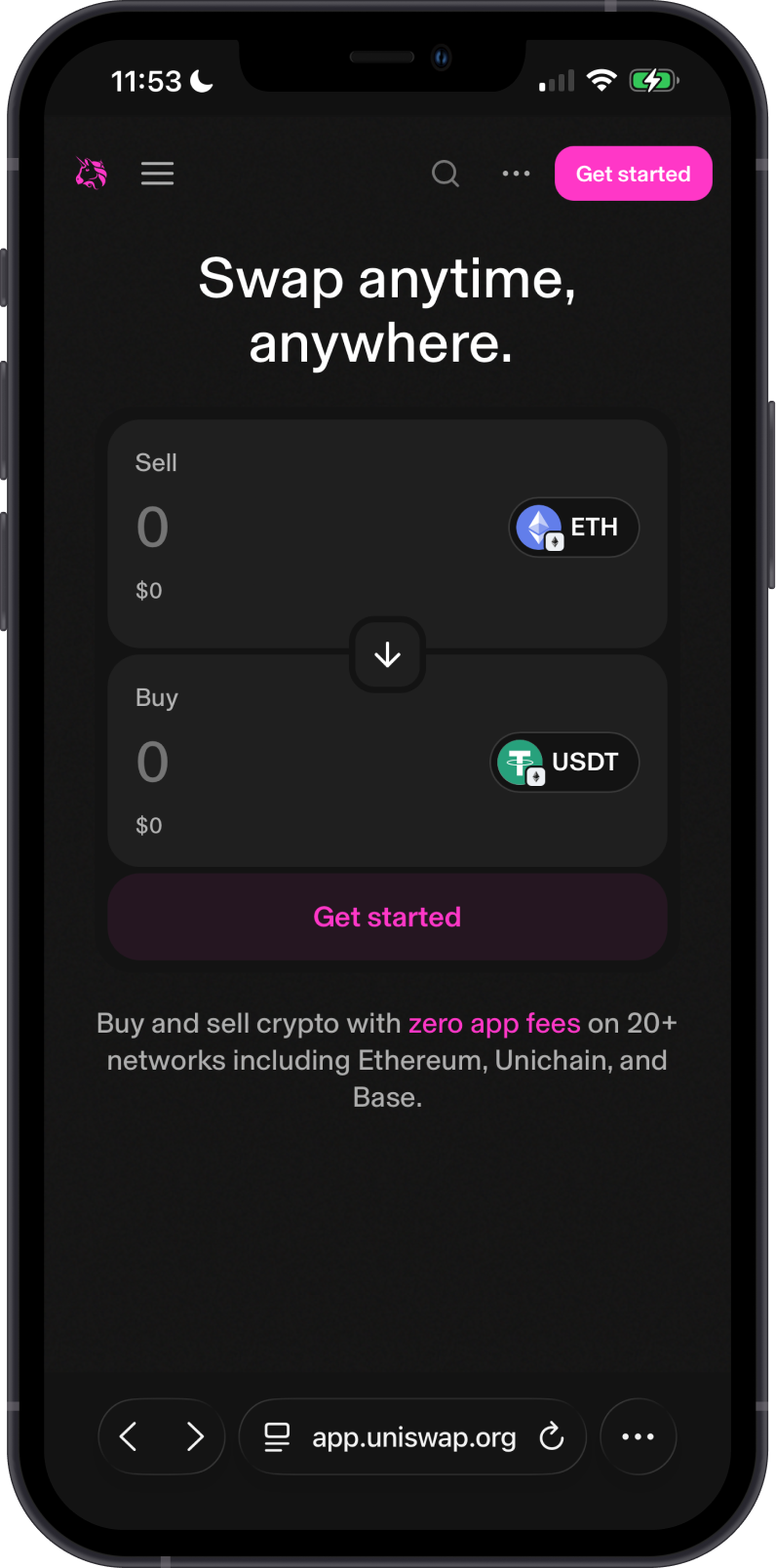
Uniswap is a decentralized exchange protocol built on the Ethereum blockchain that allows users to trade ERC-20 tokens directly from their wallets. It employs an automated market maker (AMM) model with liquidity pools and is a cornerstone of the DeFi ecosystem. While its origins are on Ethereum, Uniswap has expanded to support other EVM-compatible blockchains, including BNB Chain, Polygon, Arbitrum, and Optimism. This multi-chain presence broadens its accessibility and offers users more opportunities to trade assets efficiently across various ecosystems.
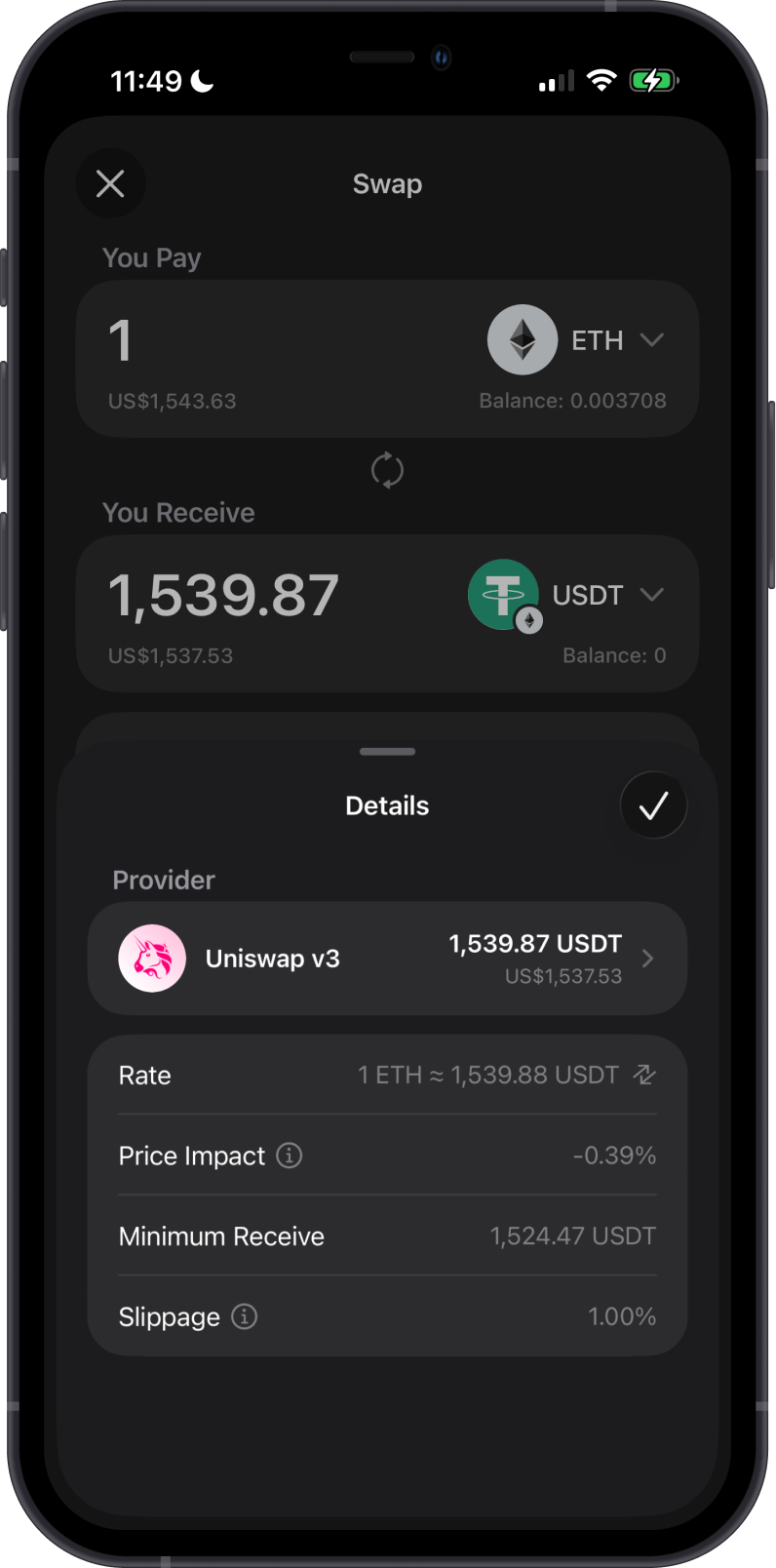
In the example below, Uniswap shows an ETH to USDT route. Gem Wallet quotes the same pair through Uniswap v3 before final confirmation.
Jupiter
Swap type: Same-chain swaps.
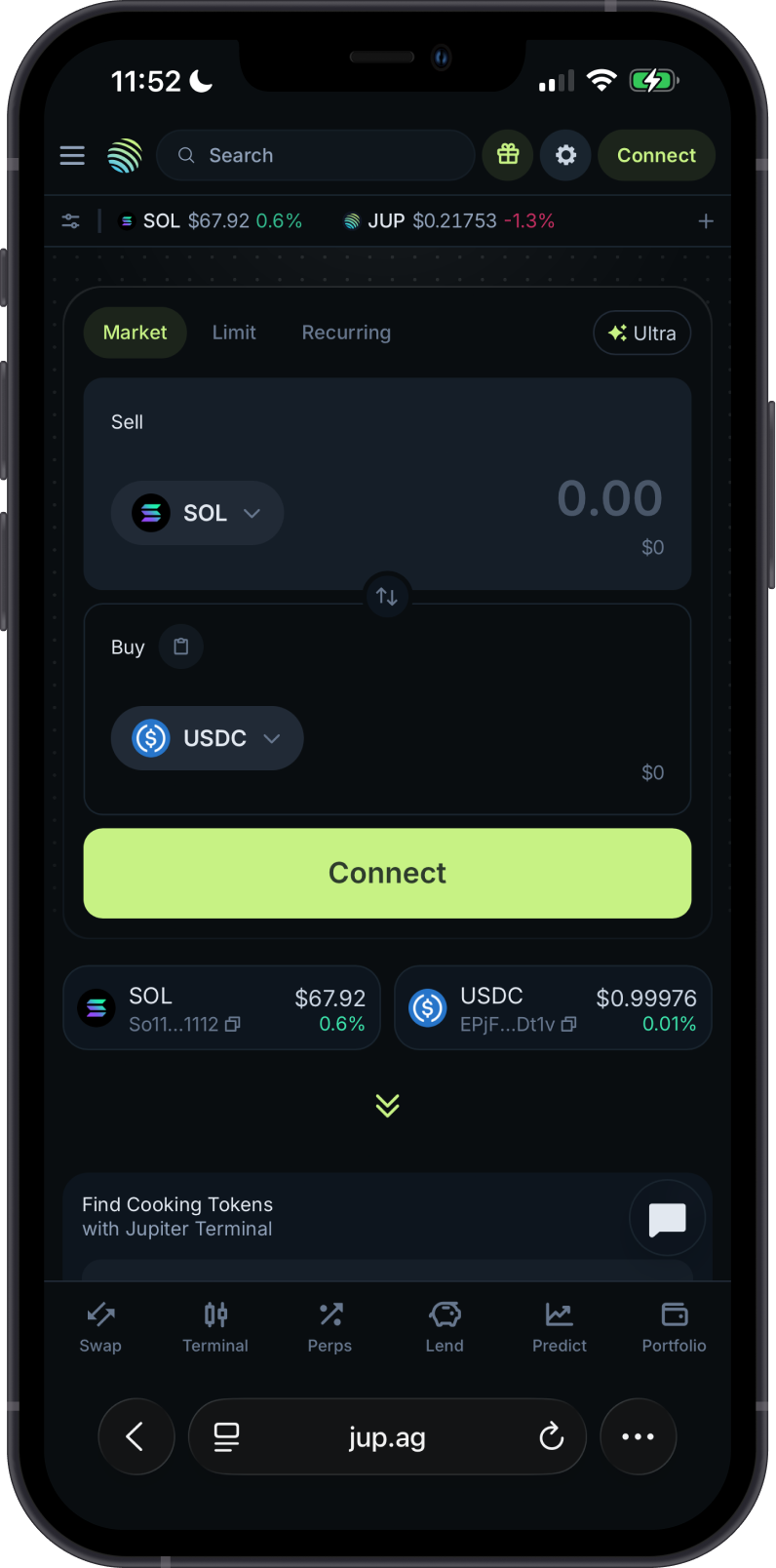
Jupiter is a leading aggregator on the Solana blockchain, offering access to a wide range of tokens with competitive rates. It efficiently routes trades through multiple liquidity sources within the Solana ecosystem, ensuring users receive the best possible prices for their swaps.
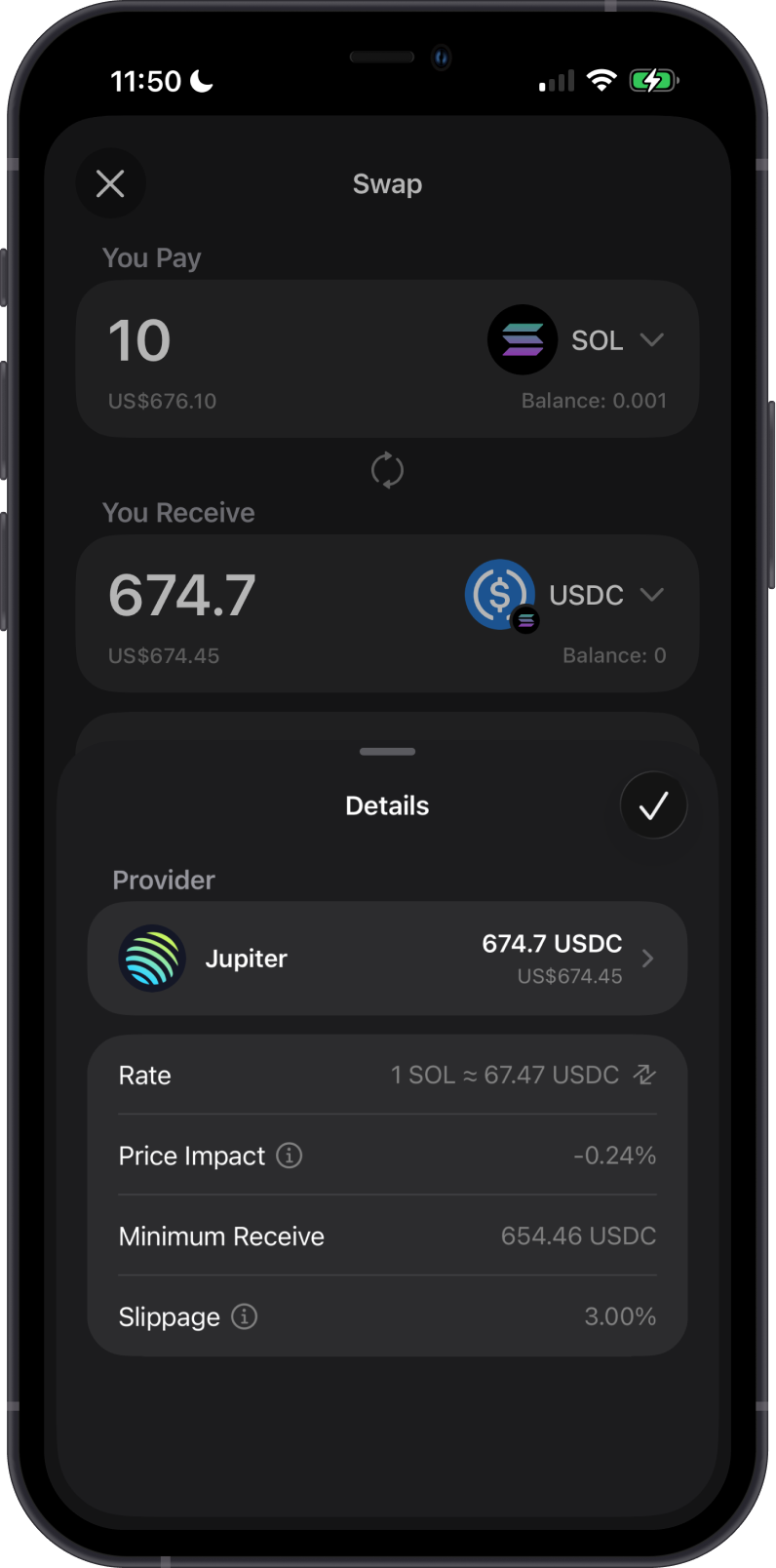
In the example below, Jupiter shows a SOL to USDC swap on Solana. Gem Wallet quotes the route through Jupiter, with the provider rate, minimum received amount, price impact, and slippage shown before signing.
PancakeSwap
Swap type: Same-chain swaps.
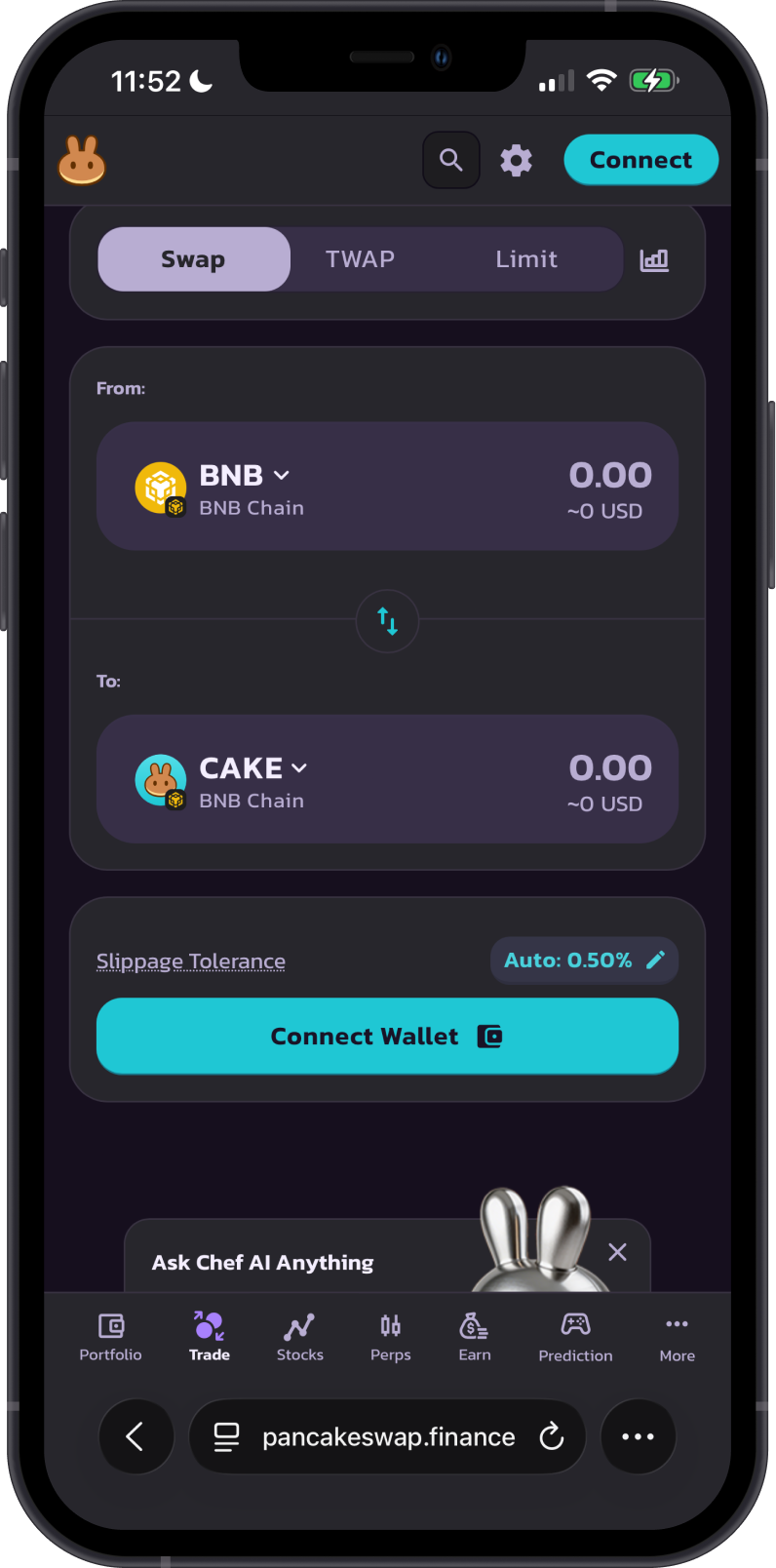
Operating on BNB Chain (BNB), PancakeSwap is known for its extensive selection of BEP-20 tokens and user-friendly interface. It utilizes an automated market maker (AMM) model, allowing users to trade against liquidity pools. PancakeSwap charges a trading fee of 0.25% per transaction.
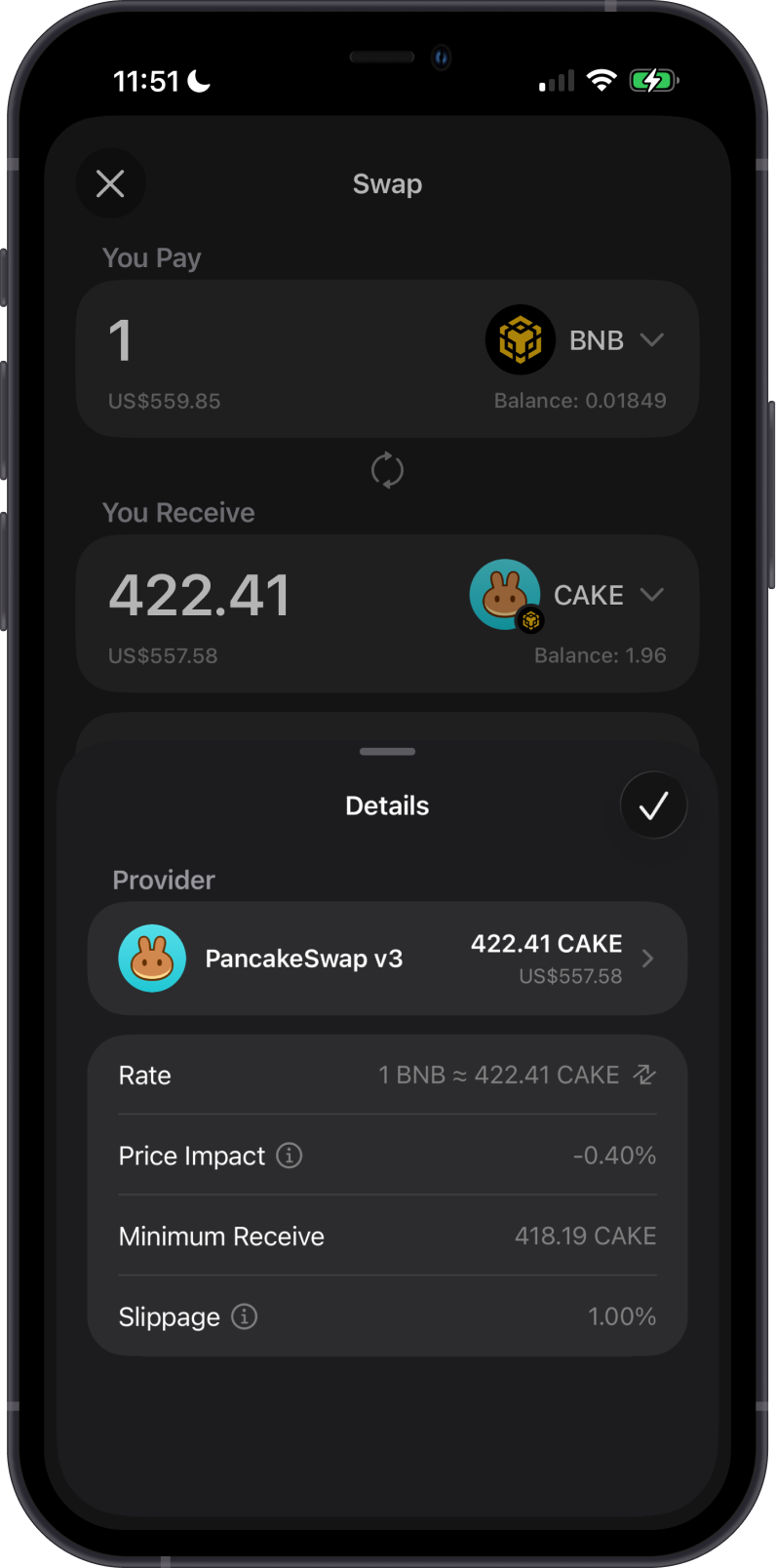
In the example below, PancakeSwap shows a BNB to CAKE route on BNB Chain. Gem Wallet quotes the same swap through PancakeSwap v3.
Aerodrome
Swap type: Same-chain swaps.
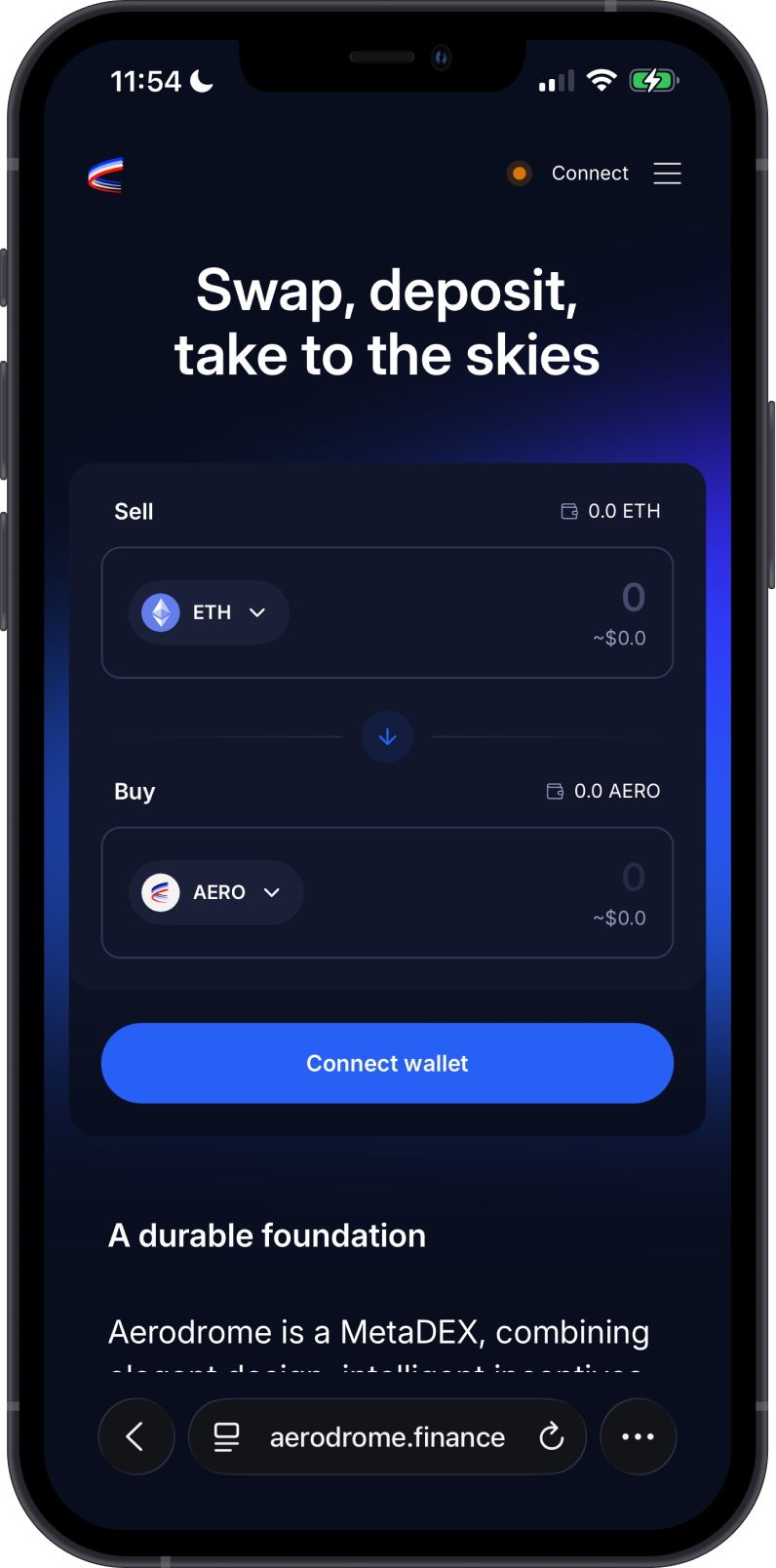
Aerodrome is a decentralized exchange and liquidity hub for EVM networks, with a strong focus on the Base ecosystem. Gem Wallet can use Aerodrome routes when they provide competitive liquidity for supported same-chain token swaps.
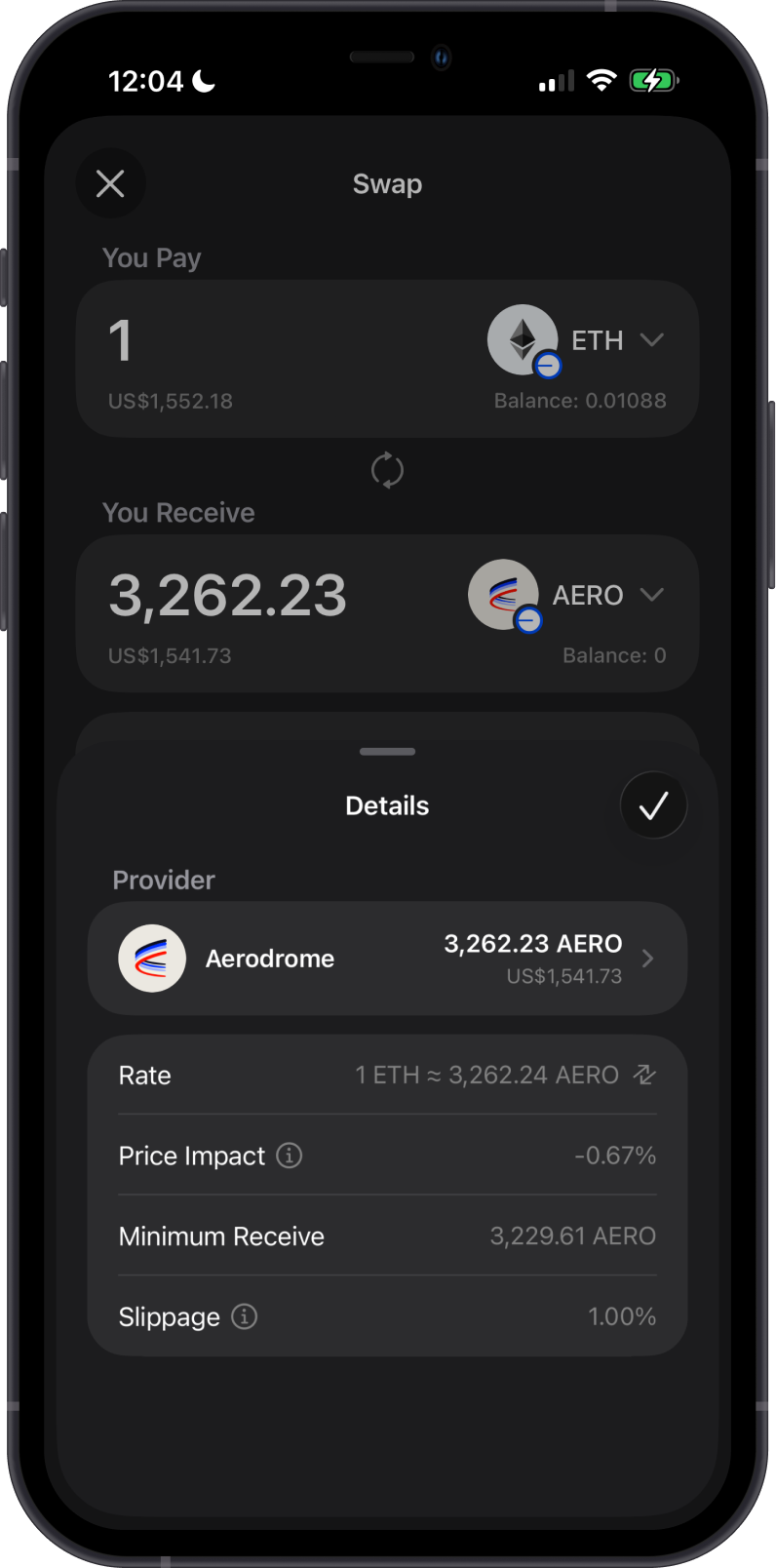
In the example below, Aerodrome shows an ETH to AERO swap on Base. Gem Wallet quotes the route through Aerodrome.
Panora
Swap type: Same-chain swaps.
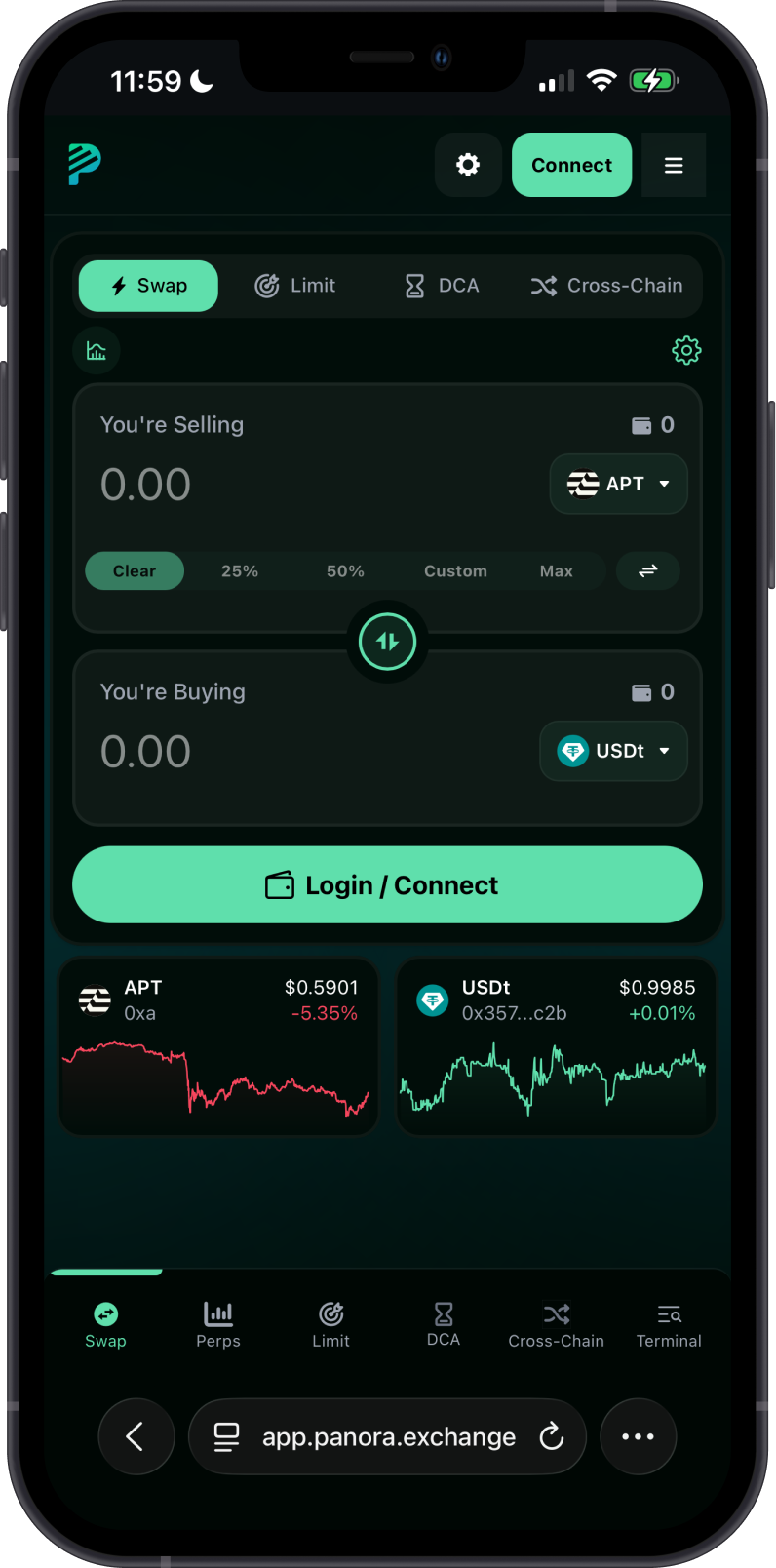
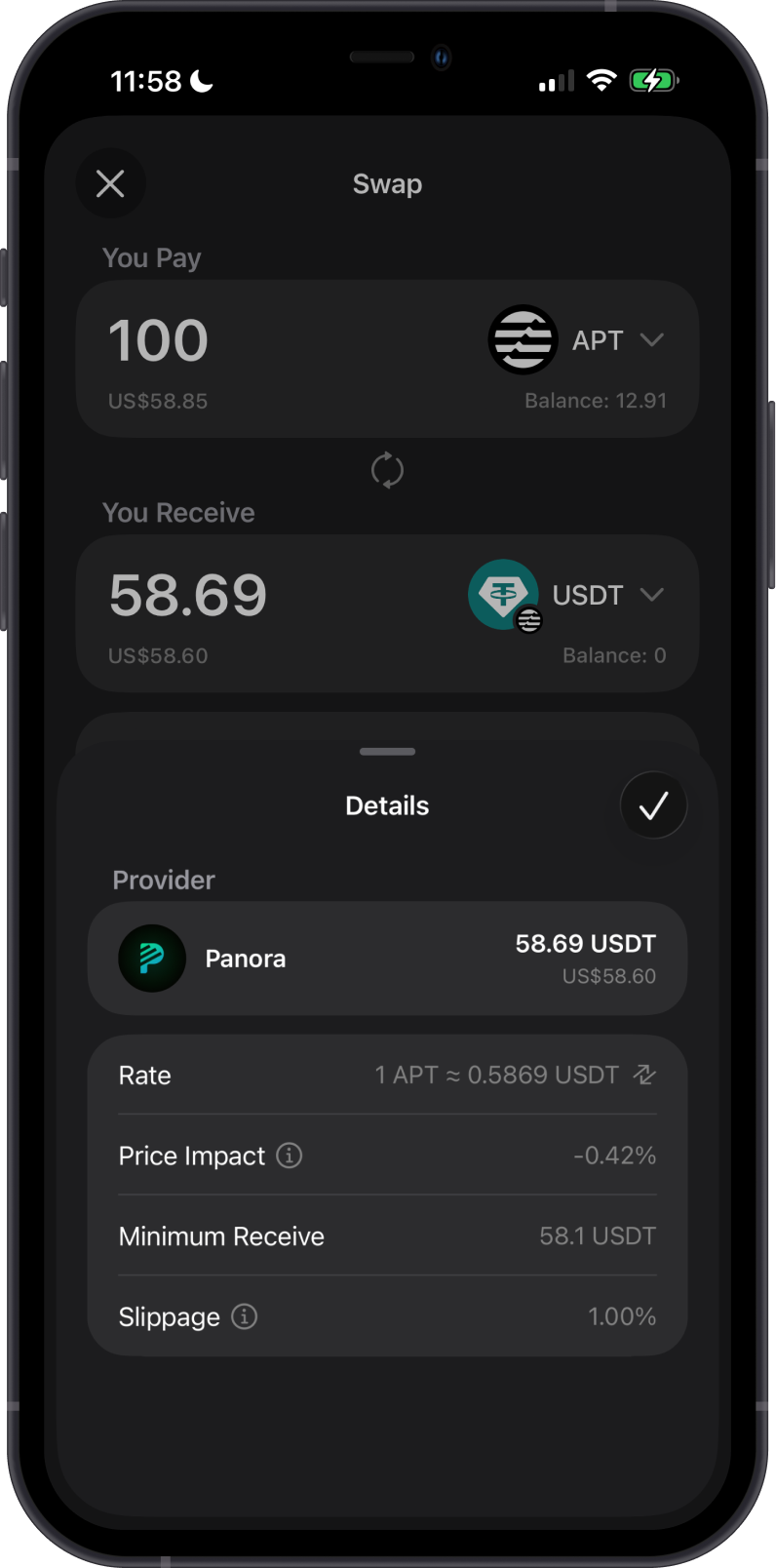
Panora is a DEX aggregator on Aptos. Gem Wallet uses Panora to quote and route Aptos token swaps, helping users access available Aptos liquidity directly from the wallet.
In the example below, Panora shows an APT to USDT swap on Aptos. Gem Wallet quotes the route through Panora.
OKX (DEX)
Swap type: Same-chain swaps.
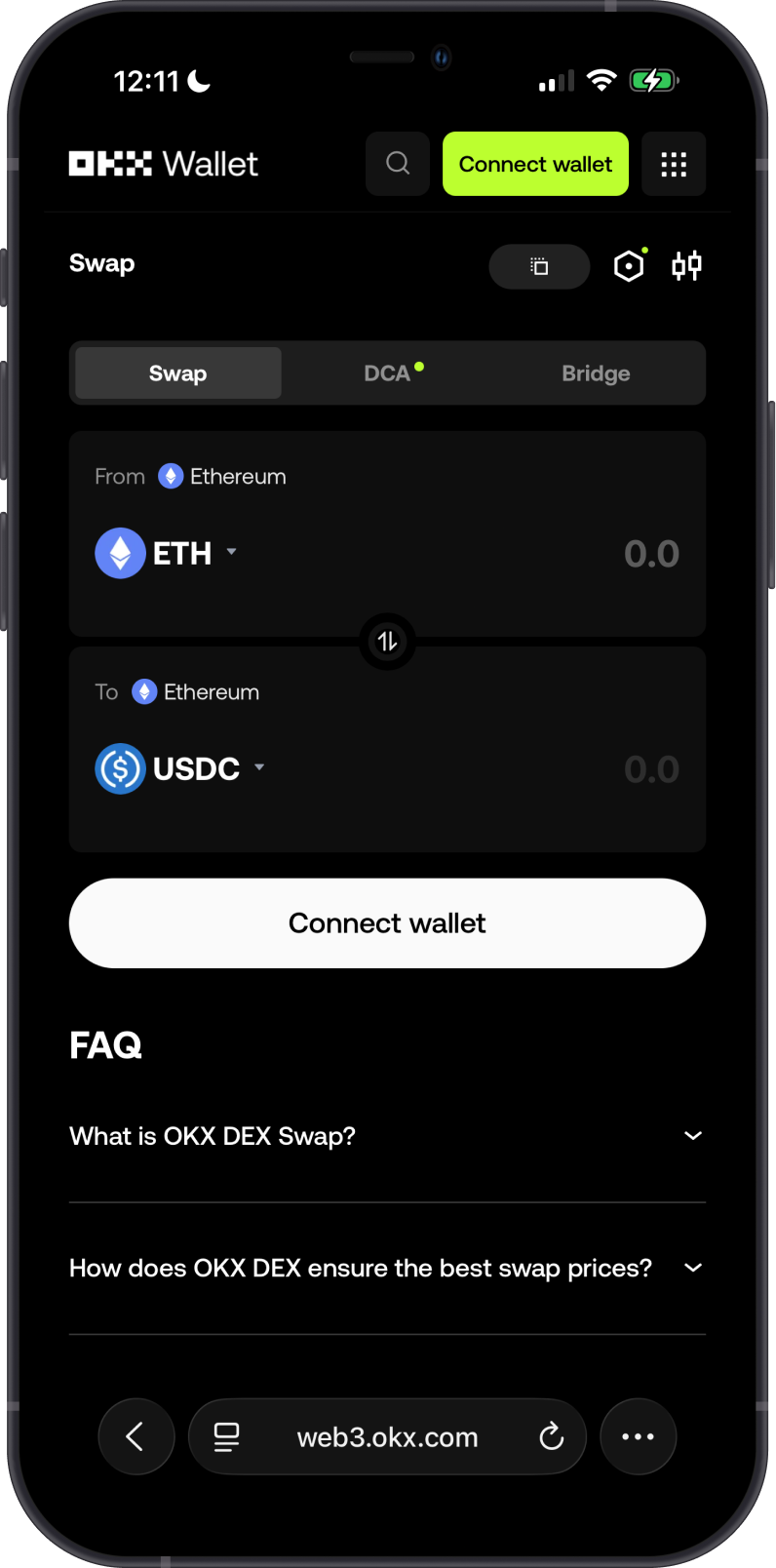
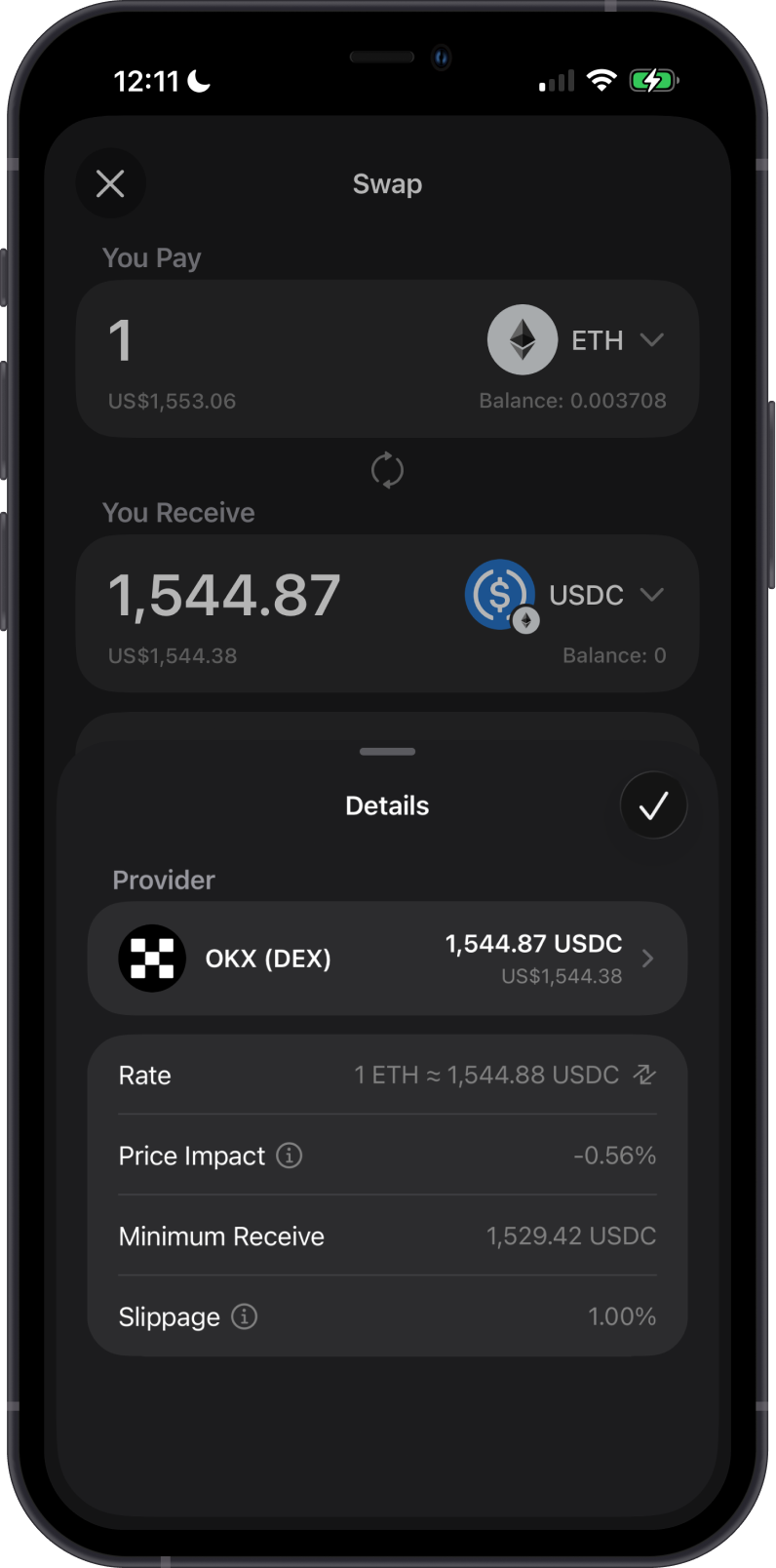
OKX (DEX) is a decentralized exchange aggregator that searches liquidity across supported networks and protocols. In Gem Wallet, OKX routes can be used for same-chain swaps when they offer an available quote for the selected pair.
In the example below, OKX DEX shows an ETH to USDC swap on Ethereum. Gem Wallet quotes the route through OKX (DEX) before final confirmation.
Oku
Swap type: Same-chain swaps.
Oku is a DEX aggregator and trading interface for supported EVM networks. Gem Wallet can use Oku routes for same-chain token swaps when the selected network, asset pair, and available liquidity match Oku-supported deployments. Because Gem Wallet compares live routes across multiple providers, Oku may only appear when it returns an available quote for that swap.
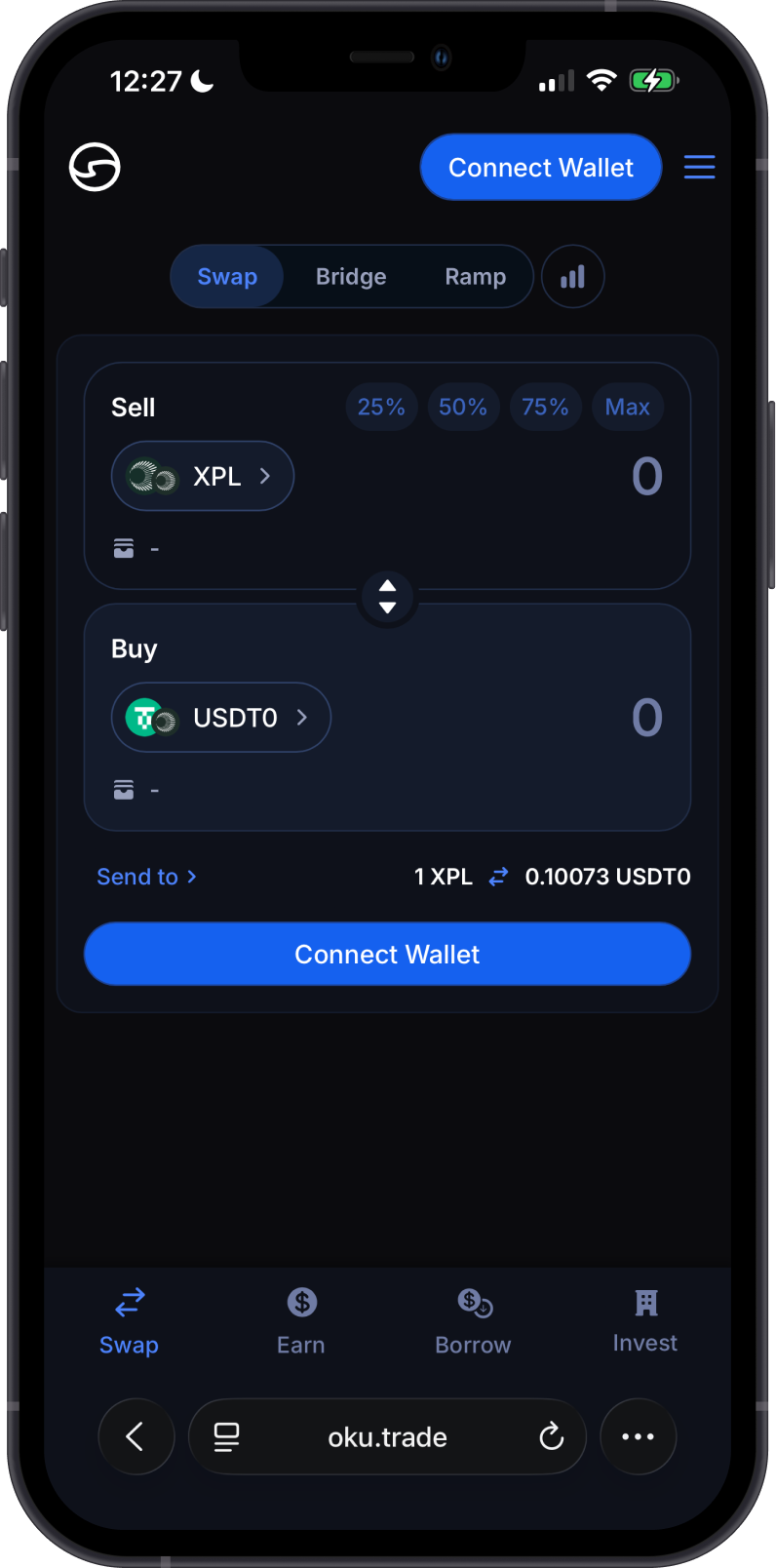
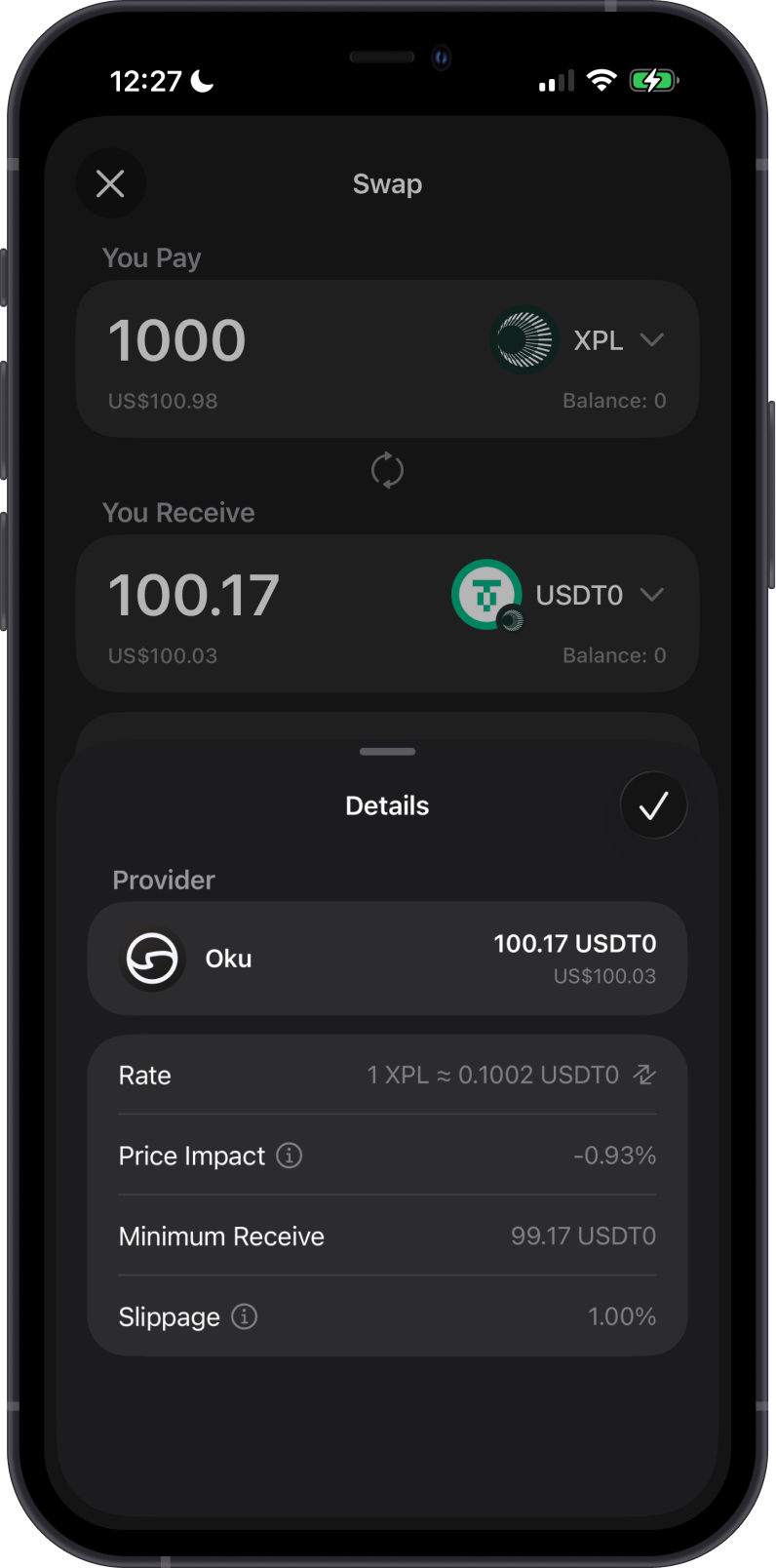
In the example below, Oku shows an XPL to USDT0 swap on Plasma. Gem Wallet quotes the route through Oku when that provider returns an available route.
Wagmi
Swap type: Same-chain swaps.
Wagmi provides EVM liquidity routes for same-chain token swaps. Gem Wallet can quote Wagmi routes when they are available for the selected chain and trading pair.
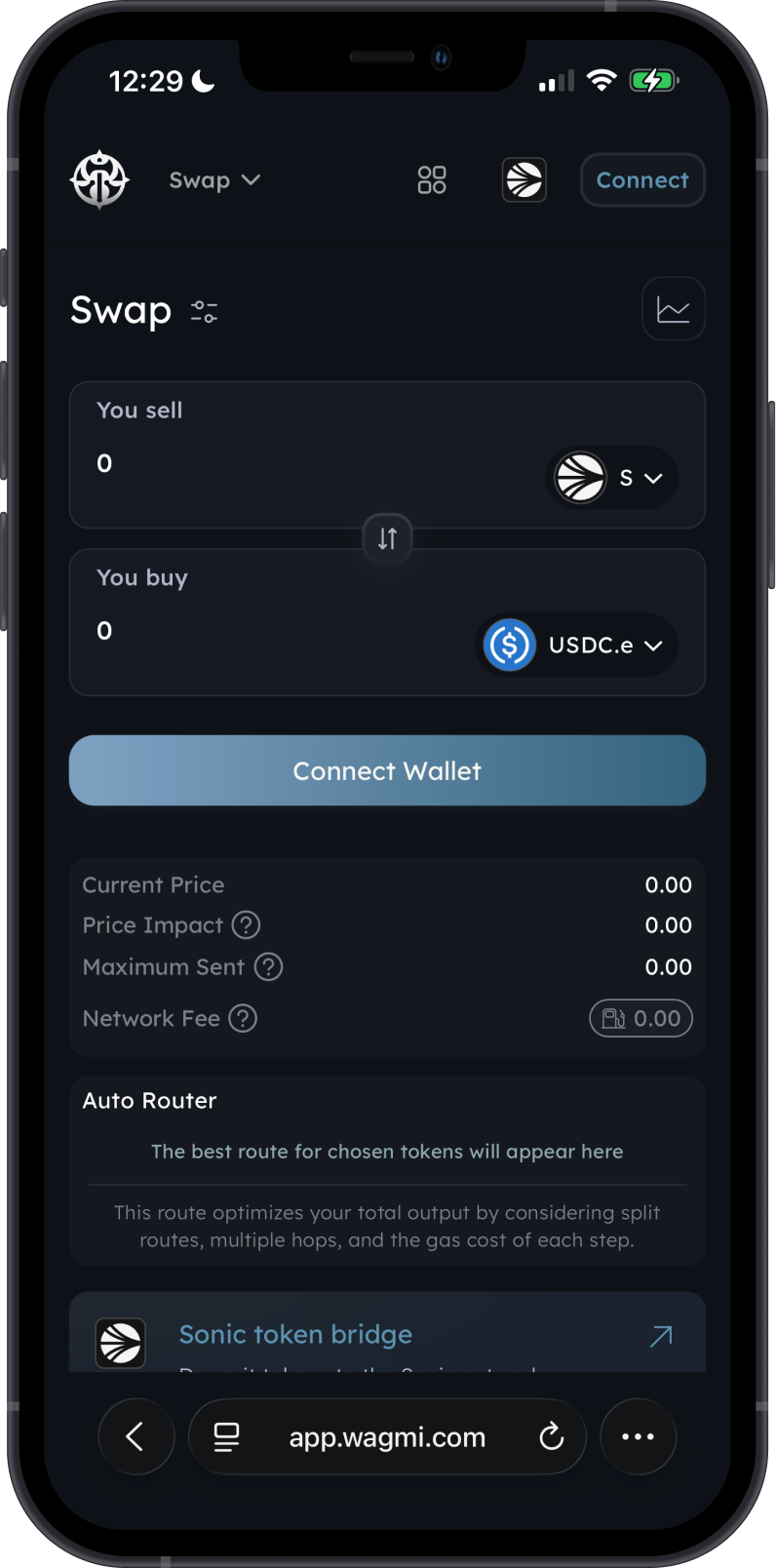
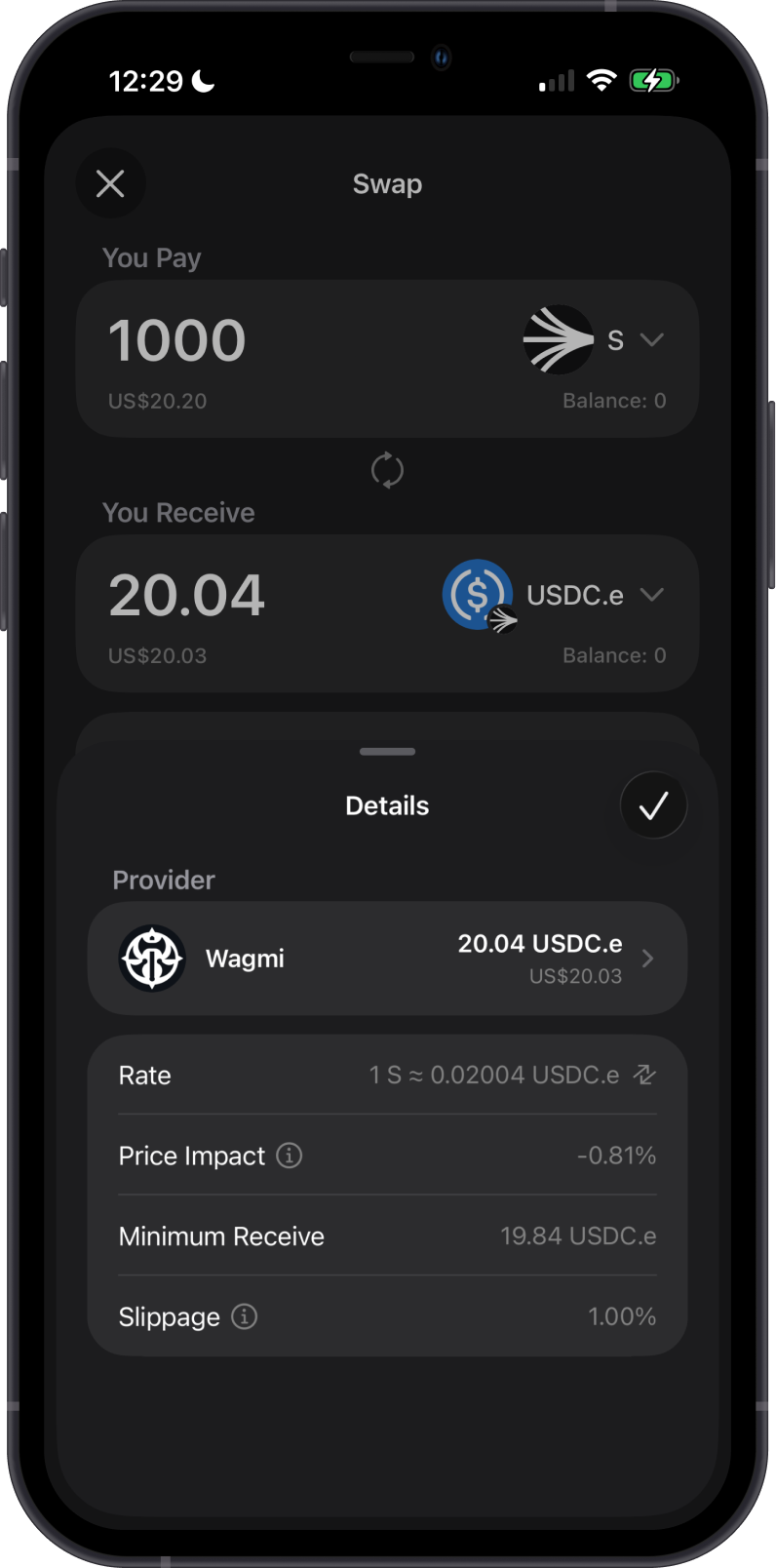
In the example below, Wagmi shows an S to USDC.e swap on Sonic. Gem Wallet quotes the route through Wagmi.
STON.fi
Swap type: Same-chain swaps.
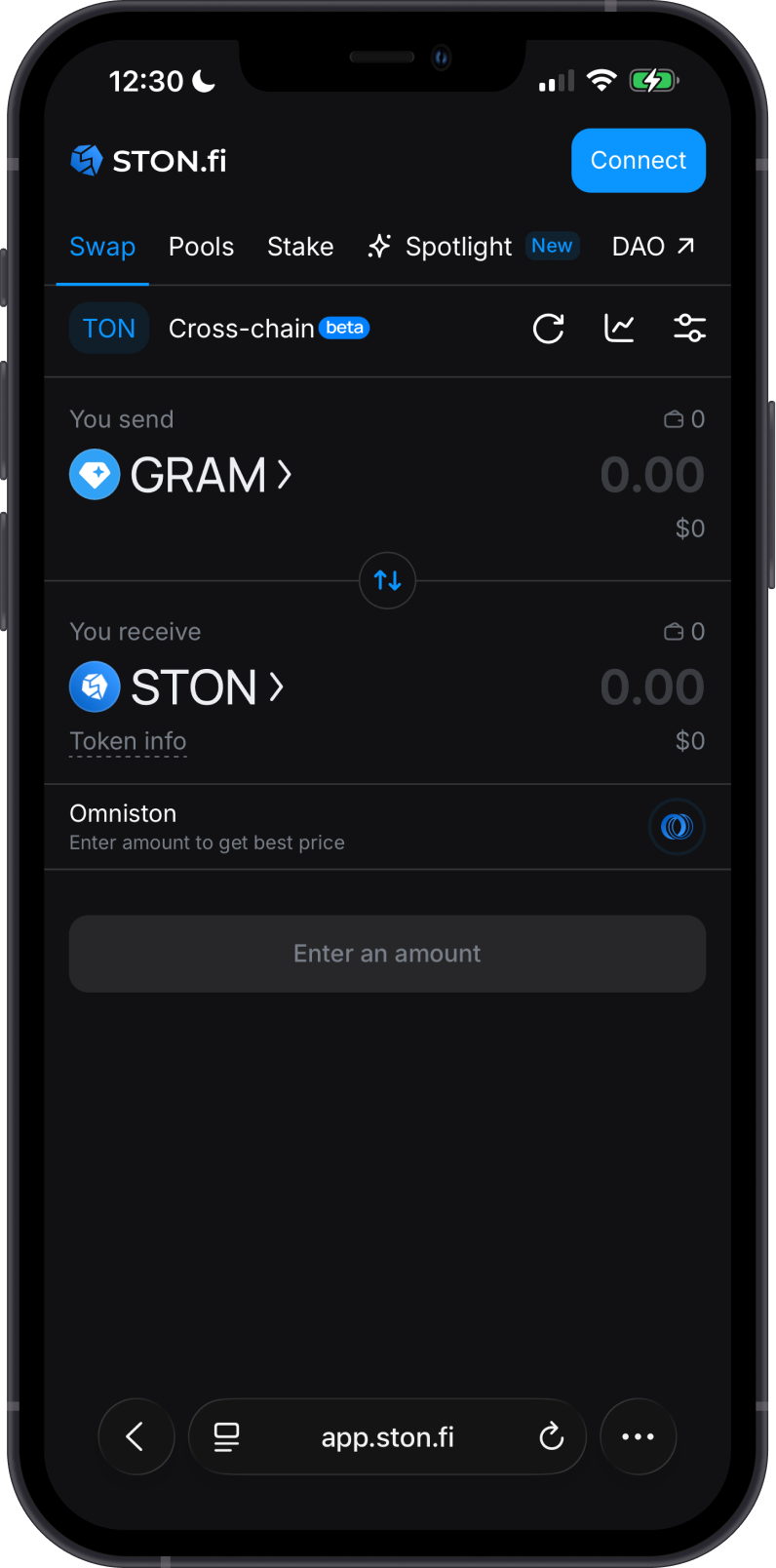
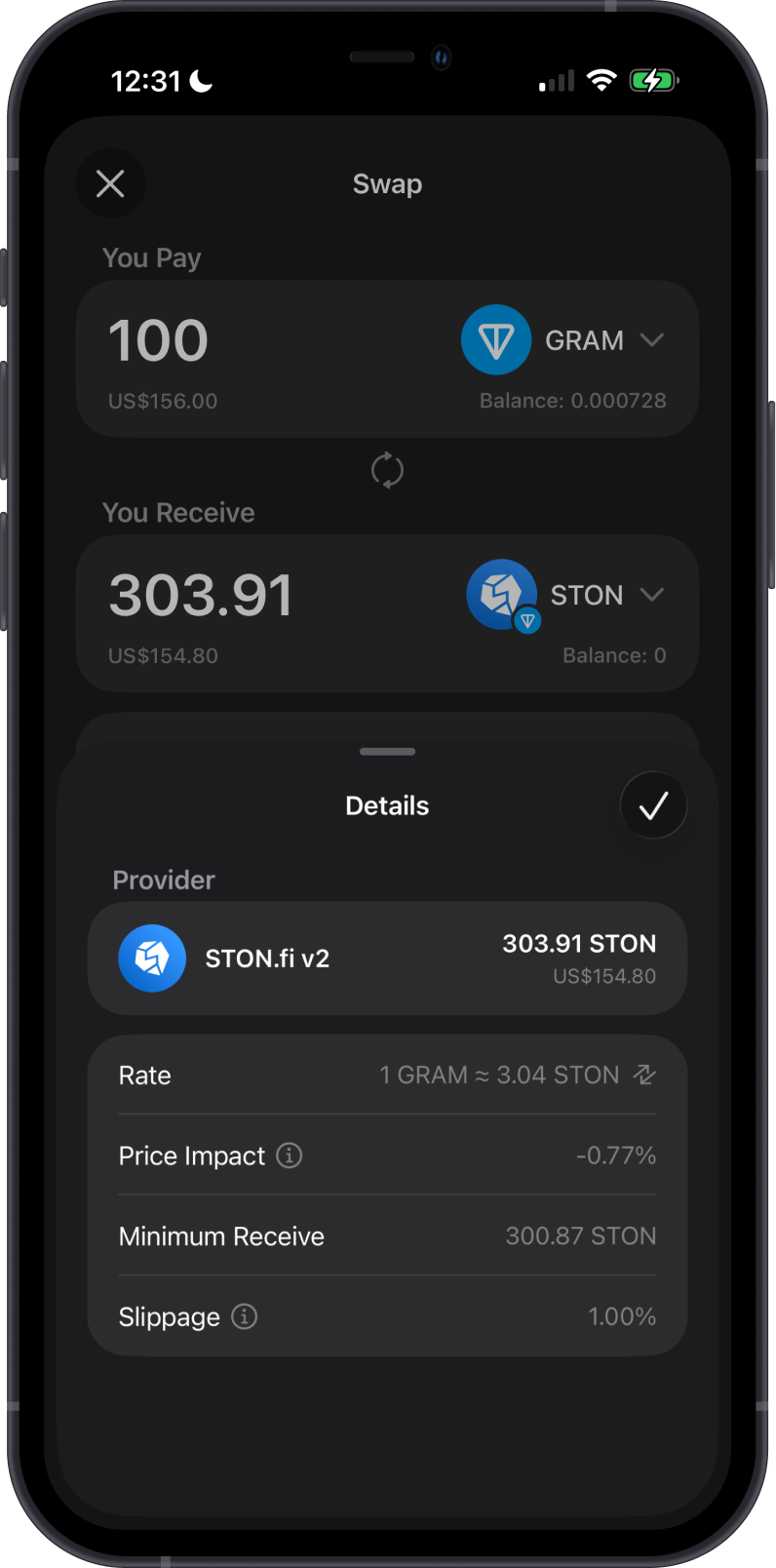
STON.fi is a decentralized exchange protocol on TON. Gem Wallet uses STON.fi for TON ecosystem token swaps, including routes that may use TON or supported stablecoins as intermediary assets.
In the example below, STON.fi shows a GRAM to STON swap on TON. Gem Wallet quotes the route through STON.fi v2.
Cetus
Swap type: Same-chain swaps.
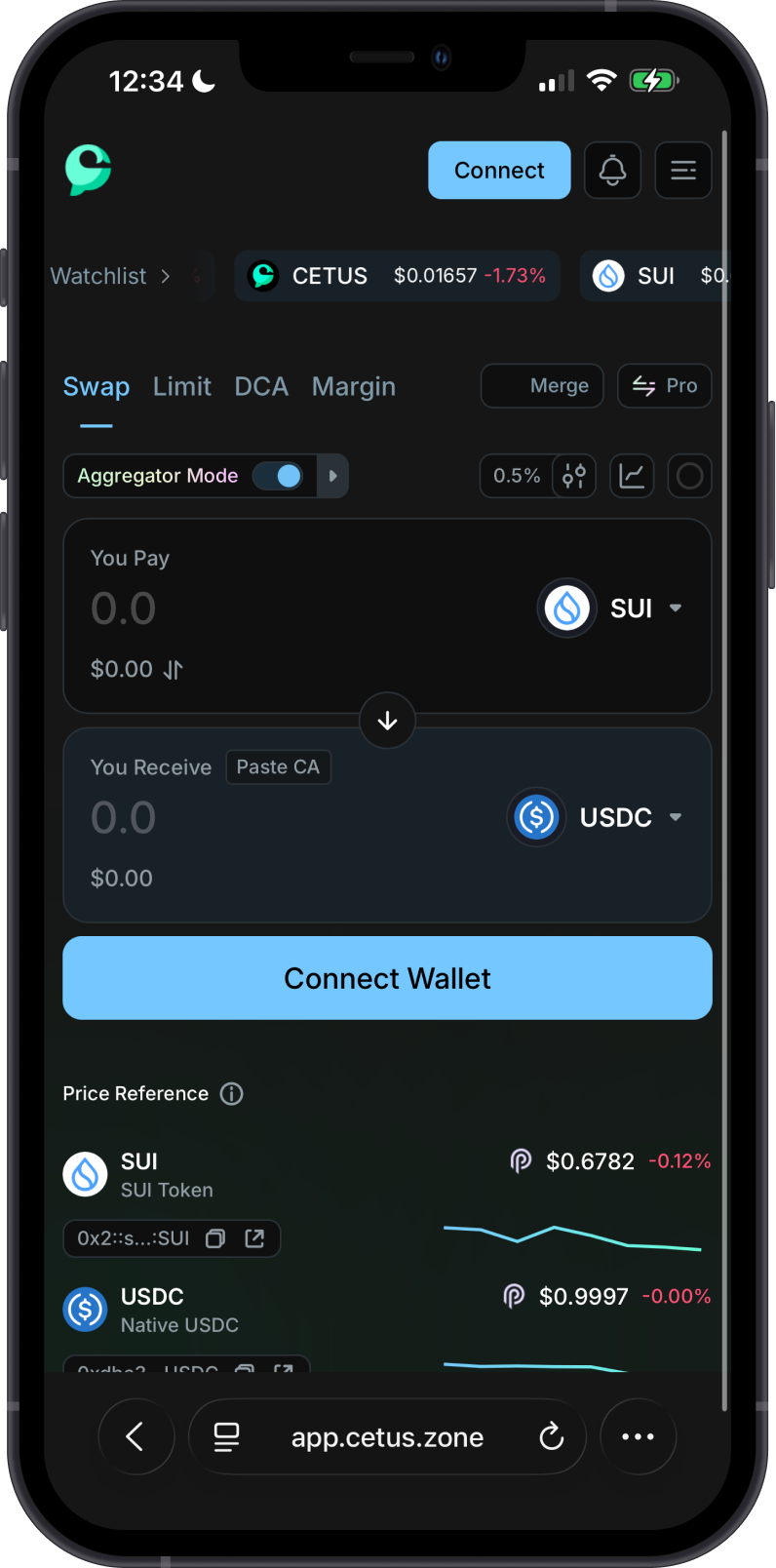
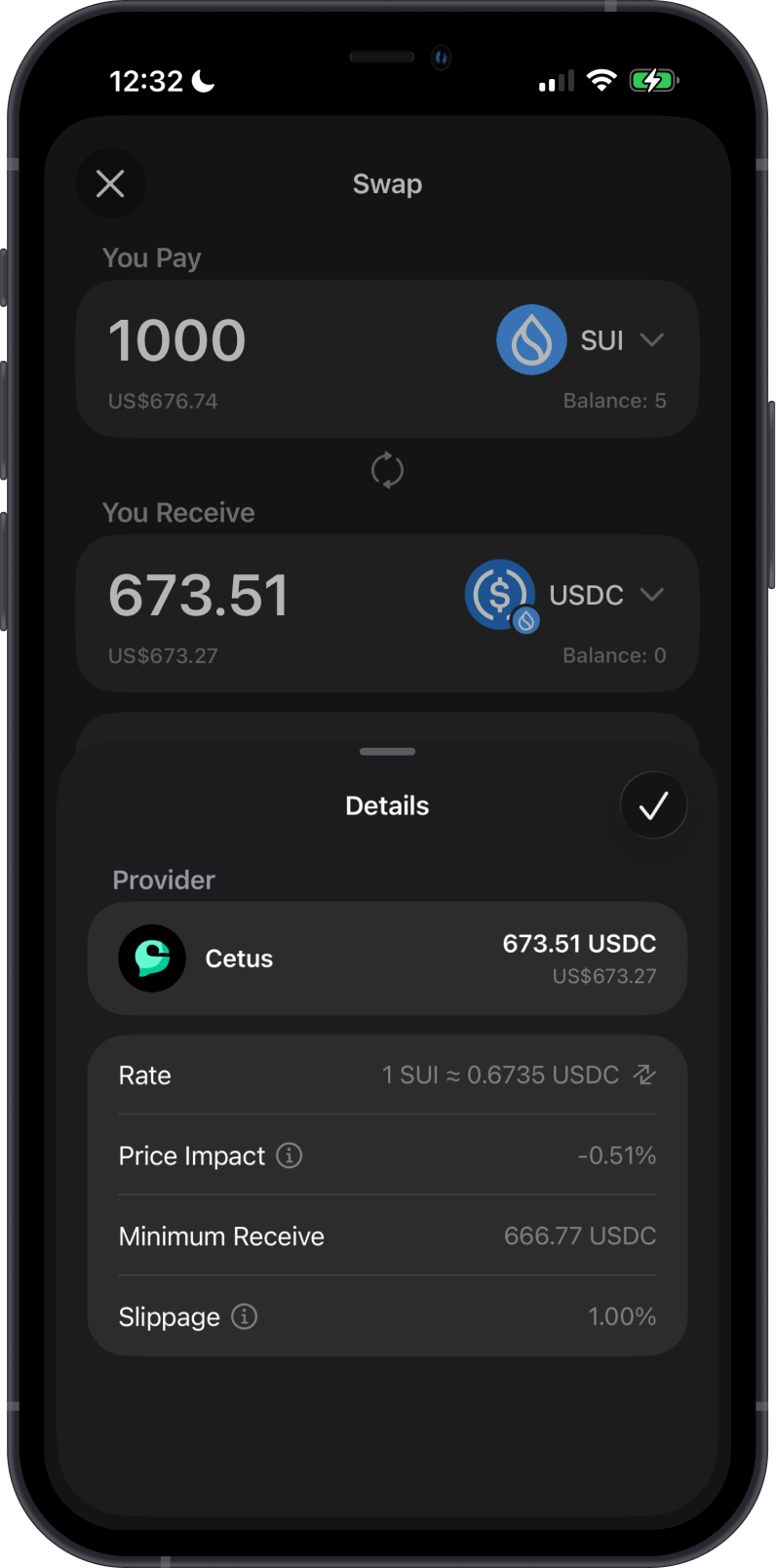
Cetus is a concentrated liquidity protocol on Sui. Gem Wallet uses Cetus CLMM routes for supported Sui token swaps, checking available pools before presenting a quote.
In the example below, Cetus shows a SUI to USDC swap on Sui. Gem Wallet quotes the route through Cetus.
THORChain
Swap type: Cross-chain swaps.
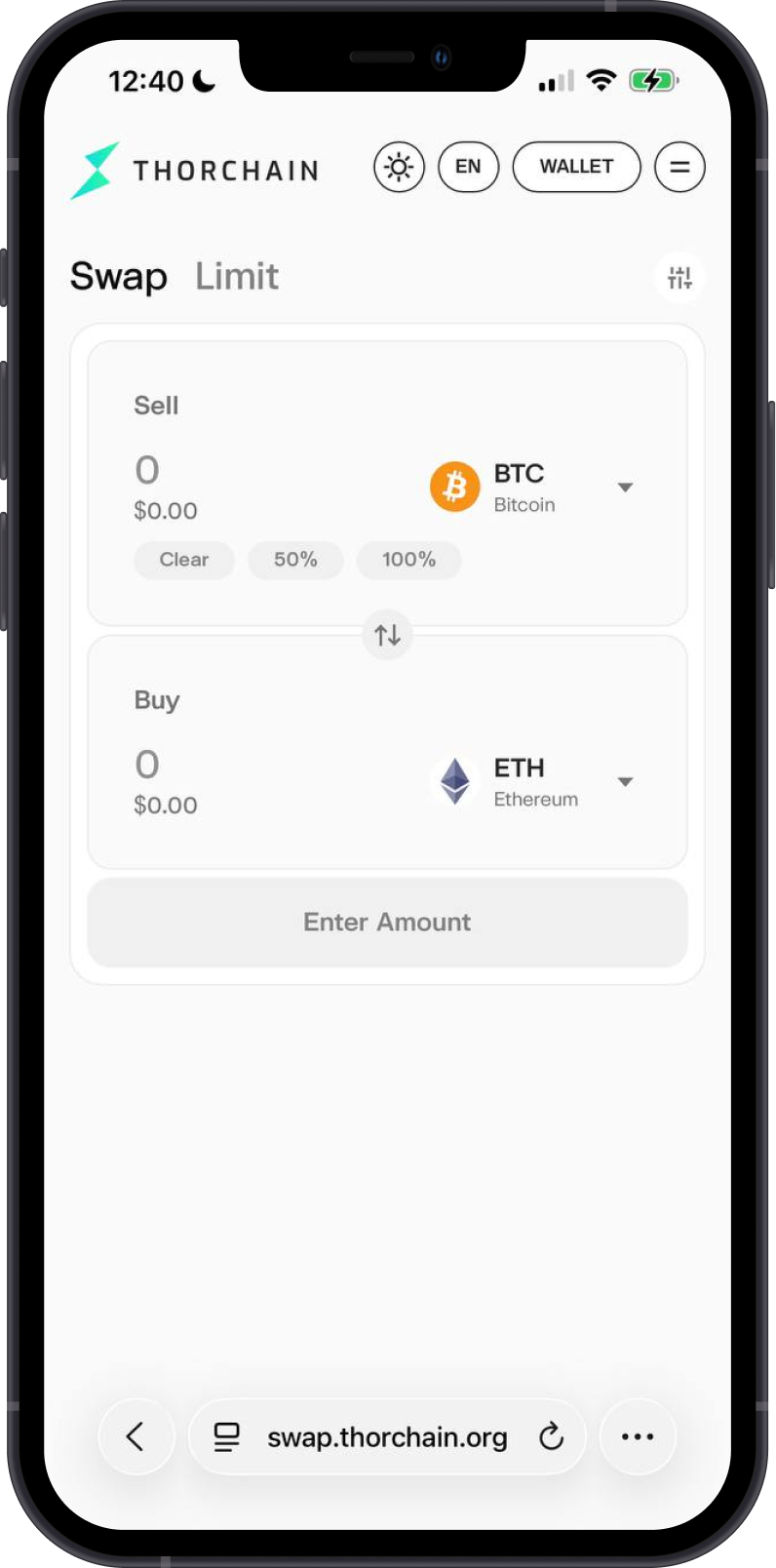
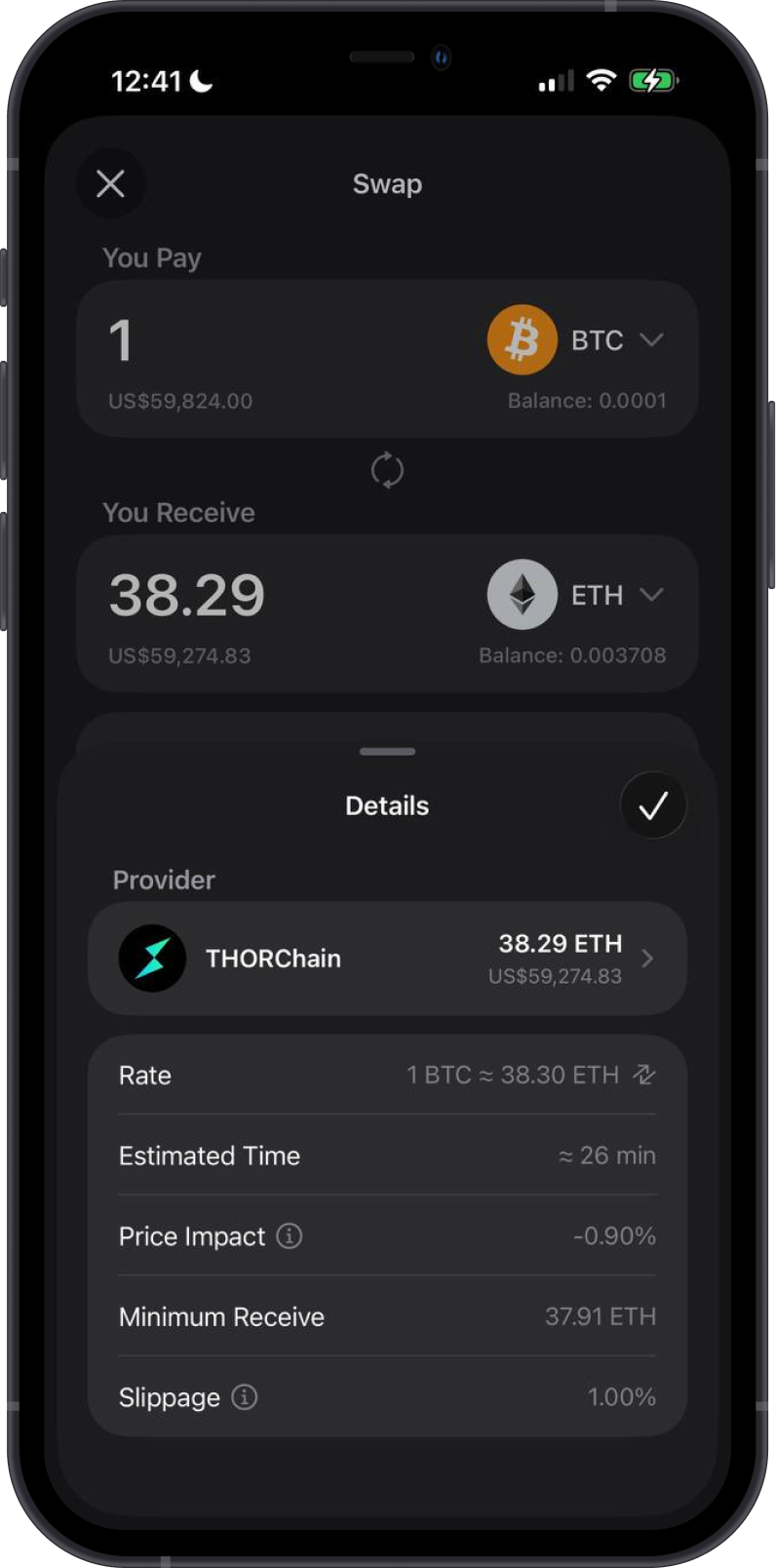
THORChain is a cross-chain liquidity protocol that enables swaps across different blockchain networks without the need for wrapped assets. It facilitates native asset exchanges, enhancing liquidity and interoperability between various blockchains.
In the example below, THORChain shows a BTC to ETH cross-chain swap. Gem Wallet quotes the route through THORChain before final confirmation.
Maya Protocol
Swap type: Cross-chain swaps.
Maya Protocol is a decentralized cross-chain liquidity protocol. In Gem Wallet, Maya routes support native cross-chain swaps across Maya-supported networks and assets, complementing THORChain-style native swap flows.
Chainflip
Swap type: Cross-chain swaps.
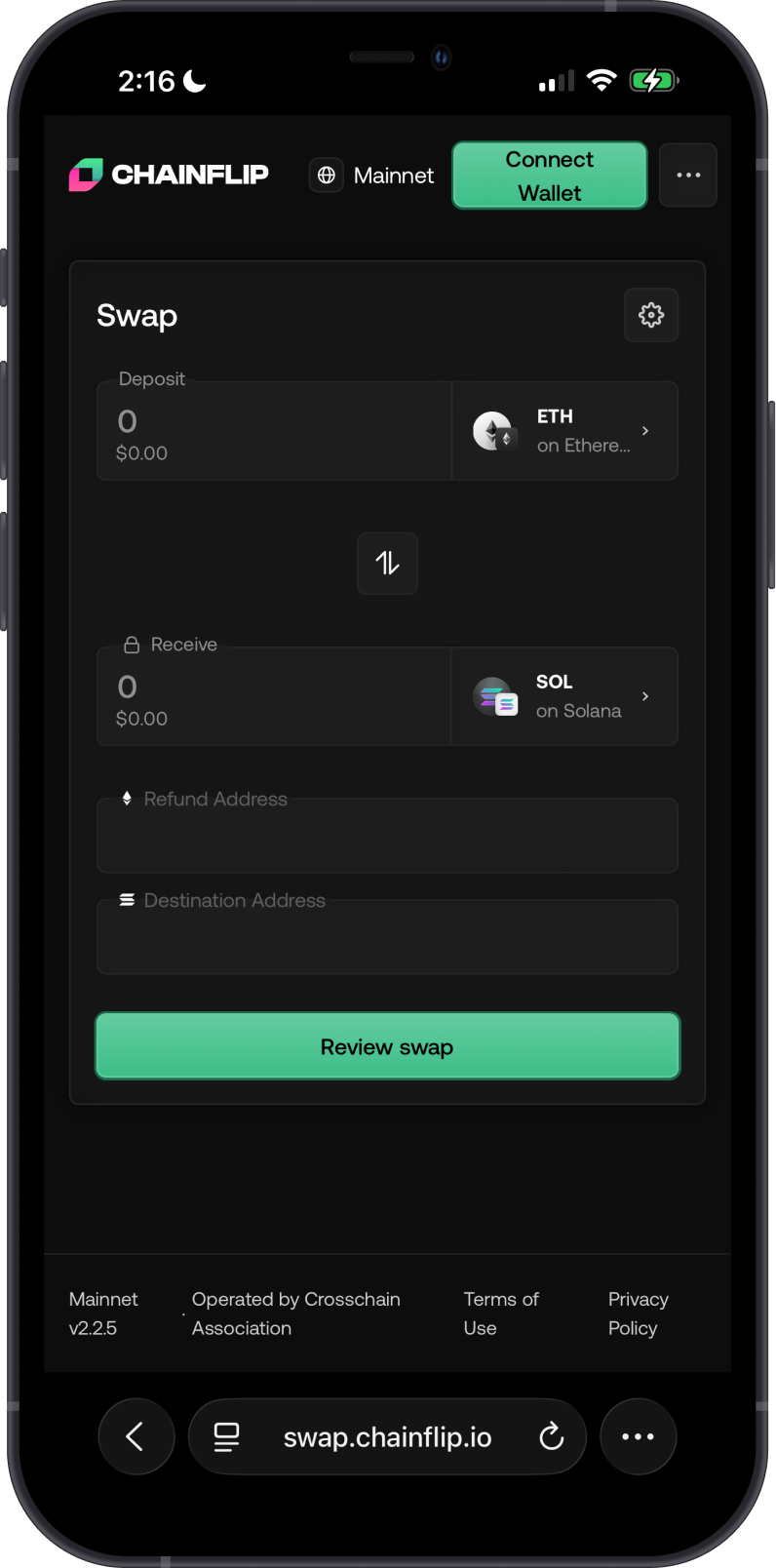
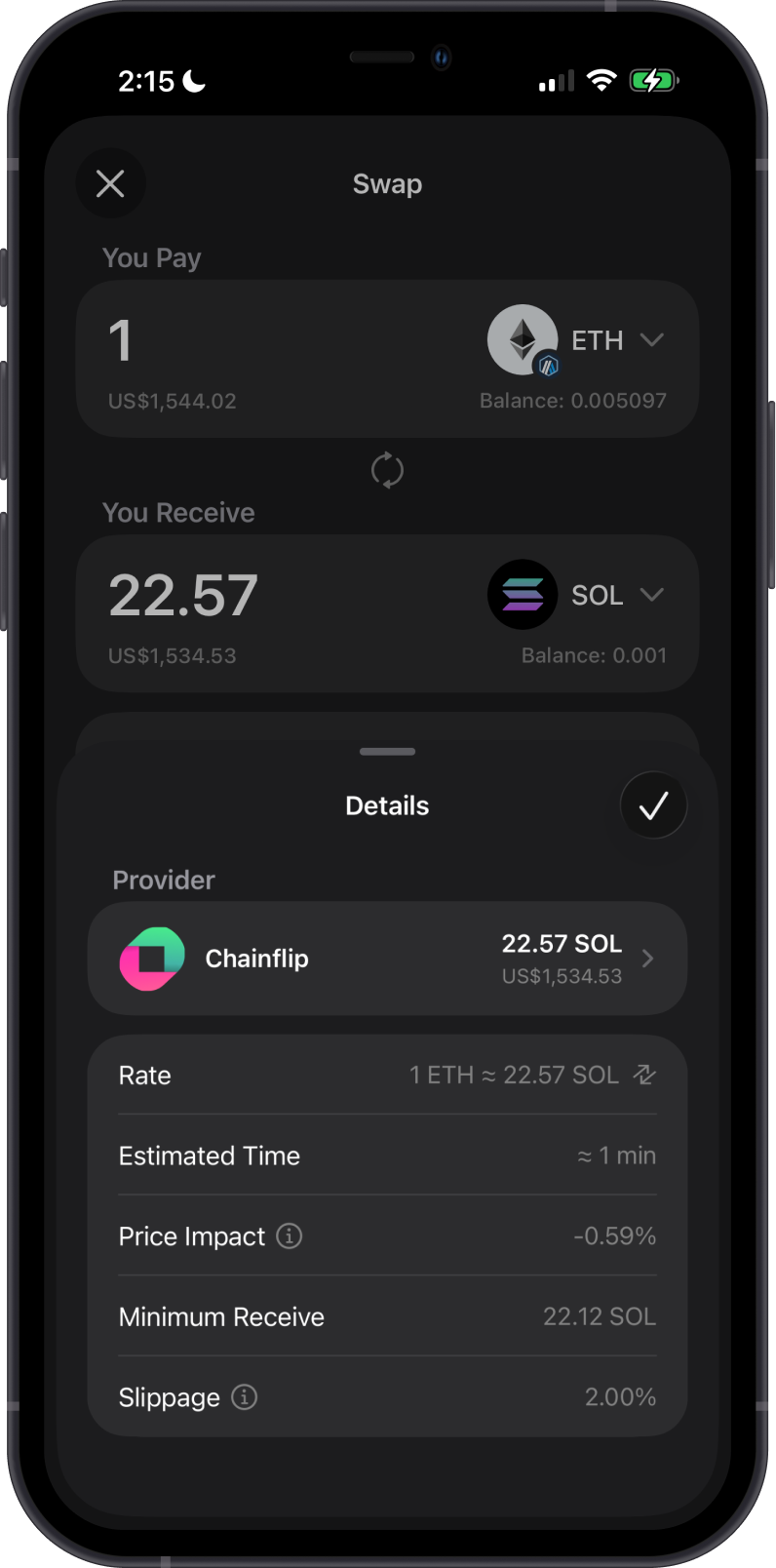
Chainflip is a cross-chain swap protocol focused on native asset swaps across major networks. In Gem Wallet, it supports routes across Bitcoin, Ethereum, Solana, TRON, and Arbitrum. Bitcoin is currently supported as a destination rather than a source. Asset and direction availability depends on the live broker quote.
In the example below, Chainflip shows an ETH to SOL cross-chain swap. Gem Wallet quotes the route through Chainflip.
Mayan
Swap type: Cross-chain swaps.
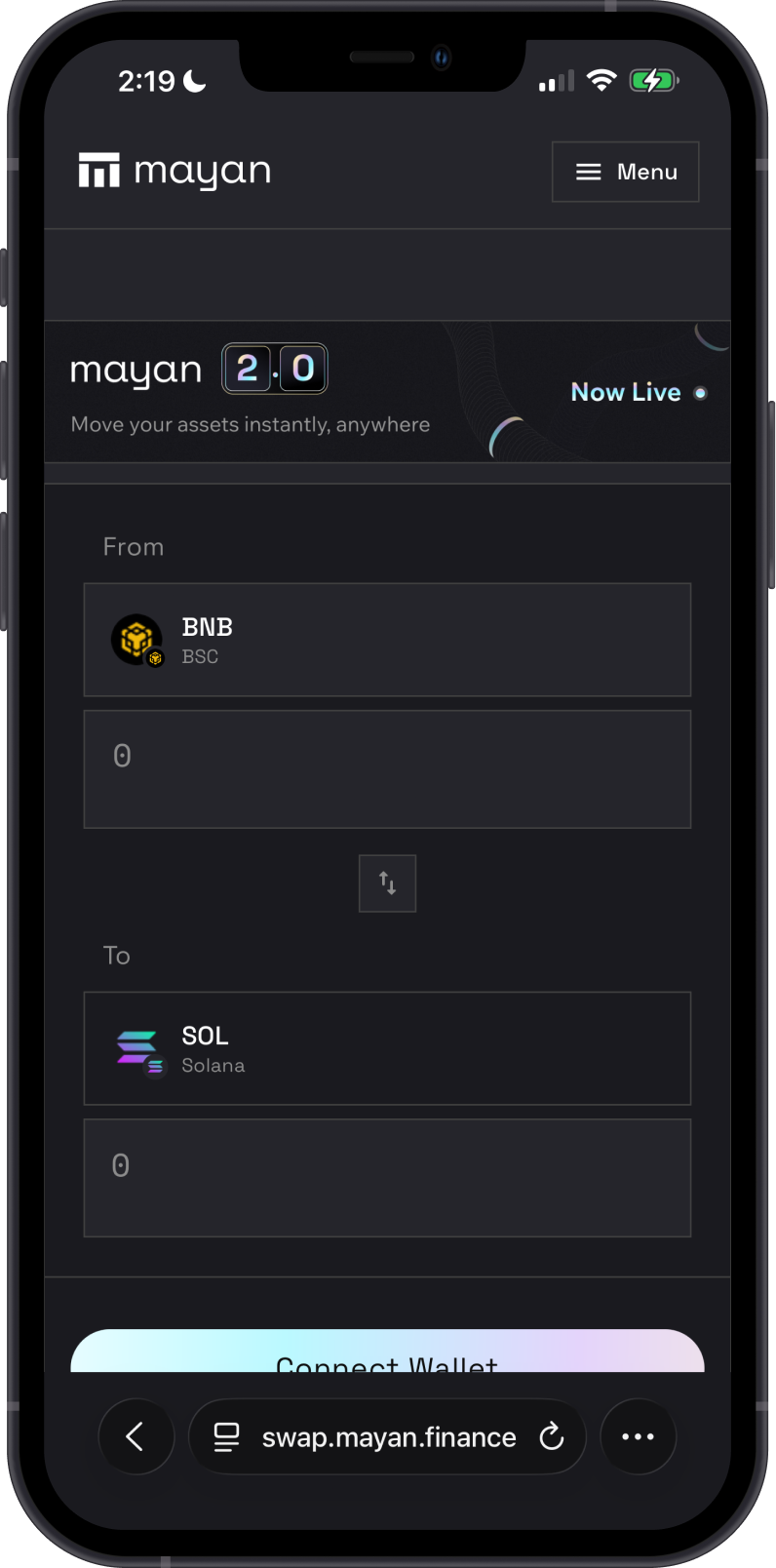
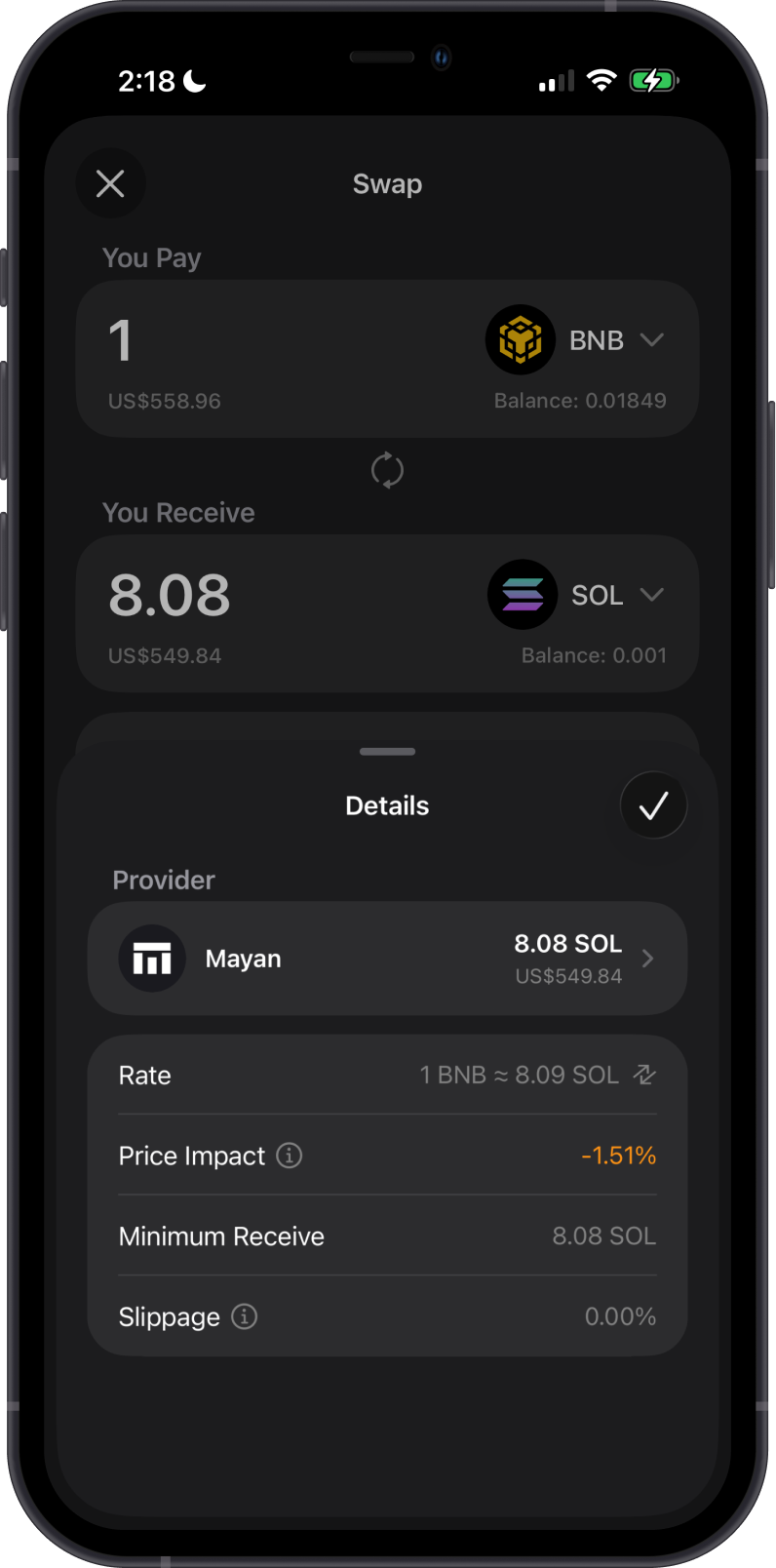
Mayan is a cross-chain swap protocol that routes assets across several ecosystems, including Ethereum, Solana, Sui, BNB Chain, Base, Polygon, Avalanche, Arbitrum, Optimism, Linea, Unichain, Monad, HyperEVM, and HyperCore. It is commonly used for fast cross-chain swaps involving stablecoins and selected native assets.
In the example below, Mayan shows a BNB to SOL cross-chain swap. Gem Wallet quotes the route through Mayan.
NEAR Intents
Swap type: Cross-chain swaps.
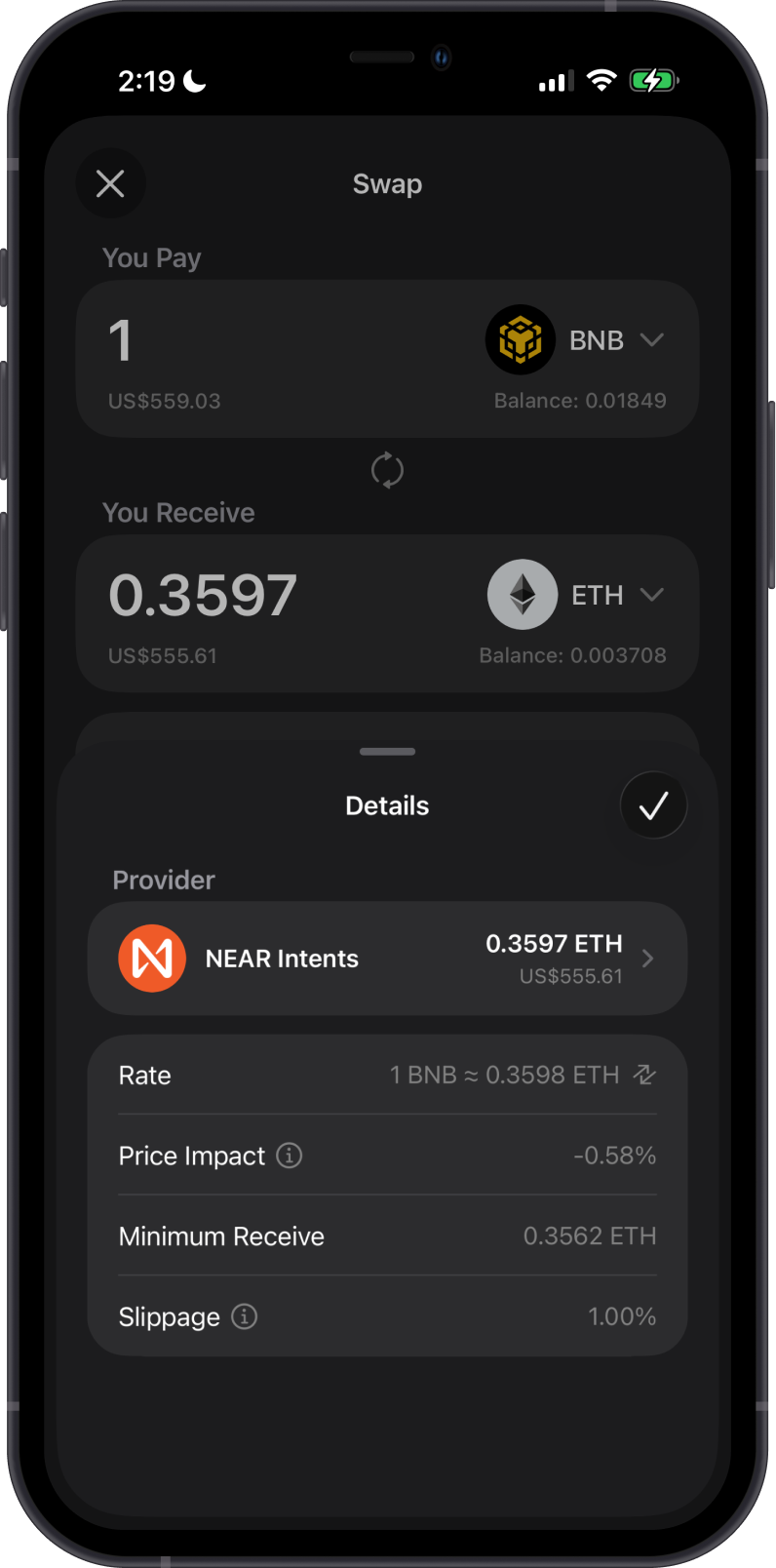
NEAR Intents is an intents-based cross-chain swap provider. Instead of manually bridging assets step by step, users specify the desired swap outcome and solvers compete to fulfill it. Gem Wallet uses NEAR Intents for broad cross-chain coverage across networks such as Bitcoin, Ethereum, Solana, Sui, BNB Chain, Polygon, TON, TRON, Aptos, Cardano, Zcash, Stellar, Litecoin, Bitcoin Cash, Monad, X Layer, Plasma, Abstract, and more. It also supports HyperCore spot USDC as a source only; HyperCore is not offered as a NEAR Intents destination because delivery would go to the separate perpetuals balance. See How to Swap HyperCore Spot USDC.
In the example below, NEAR Intents shows a BNB to ETH cross-chain swap. Gem Wallet quotes the route through NEAR Intents, where solvers compete to fulfill the requested outcome.
Across Protocol
Swap type: Cross-chain swaps.
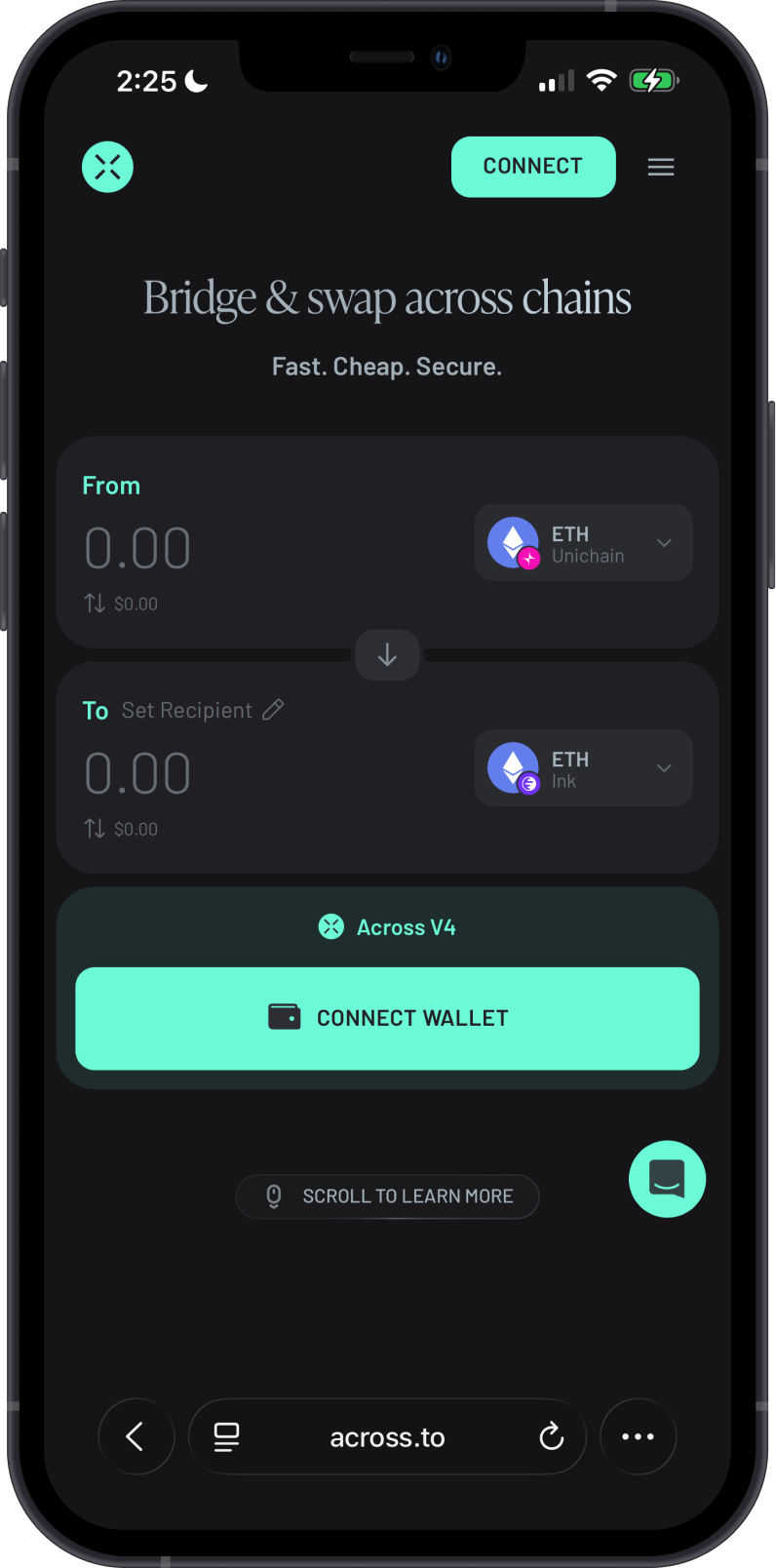
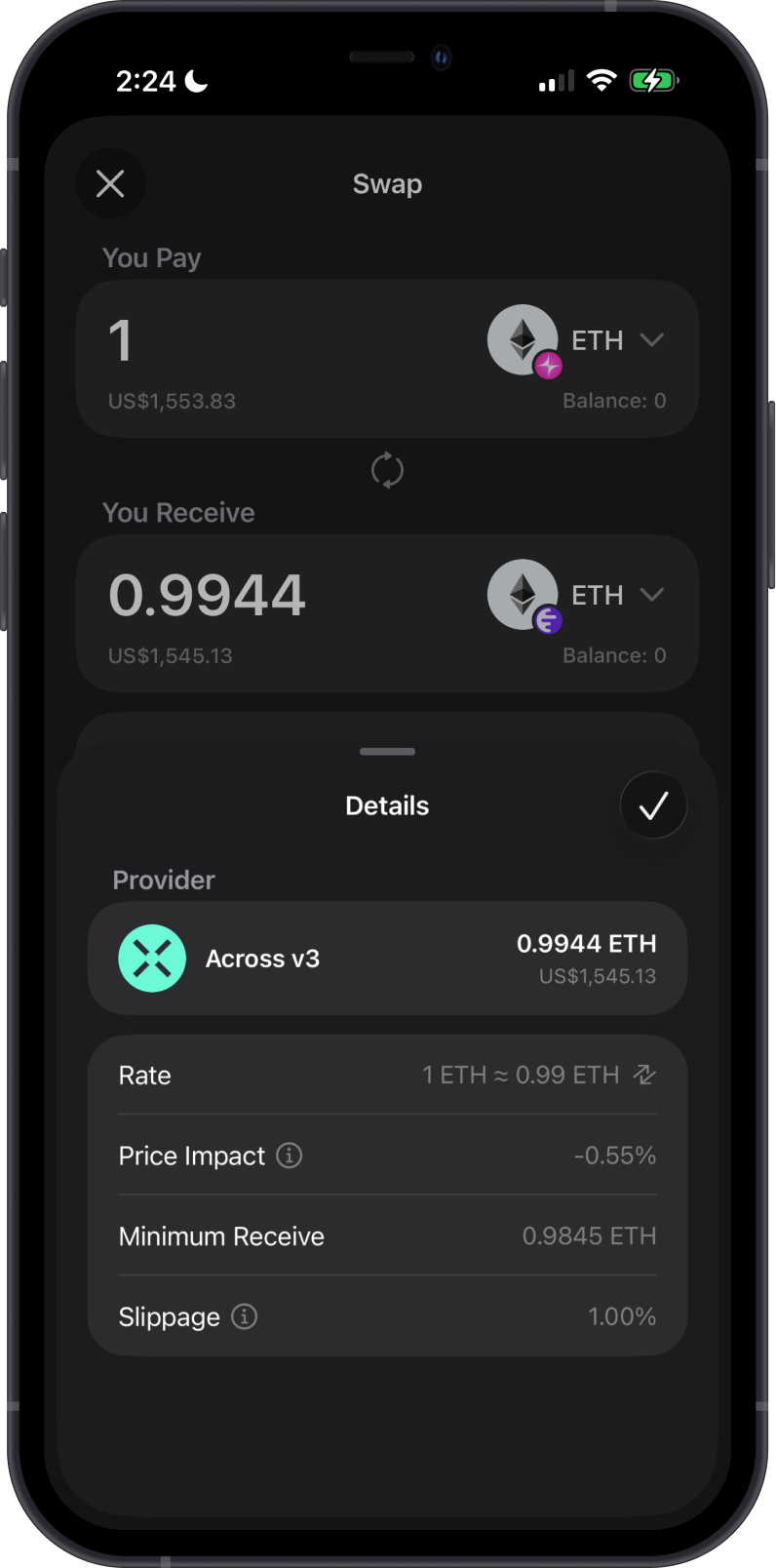
Across Protocol is a bridge provider for supported routes across EVM networks and selected non-EVM routes. Gem Wallet's current mapping includes networks such as Ethereum, Arbitrum, Optimism, Polygon, Base, Avalanche, HyperEVM, Linea, zkSync, World Chain, Ink, Unichain, Monad, BNB Chain, Plasma, Robinhood Chain, TRON, and Arc. Route availability still depends on the selected assets and live quote.
In the example below, Across shows a Unichain ETH to Ink ETH cross-chain swap. Gem Wallet quotes the route through Across v3.
Hyperliquid
Swap type: Same-chain and cross-chain swaps.
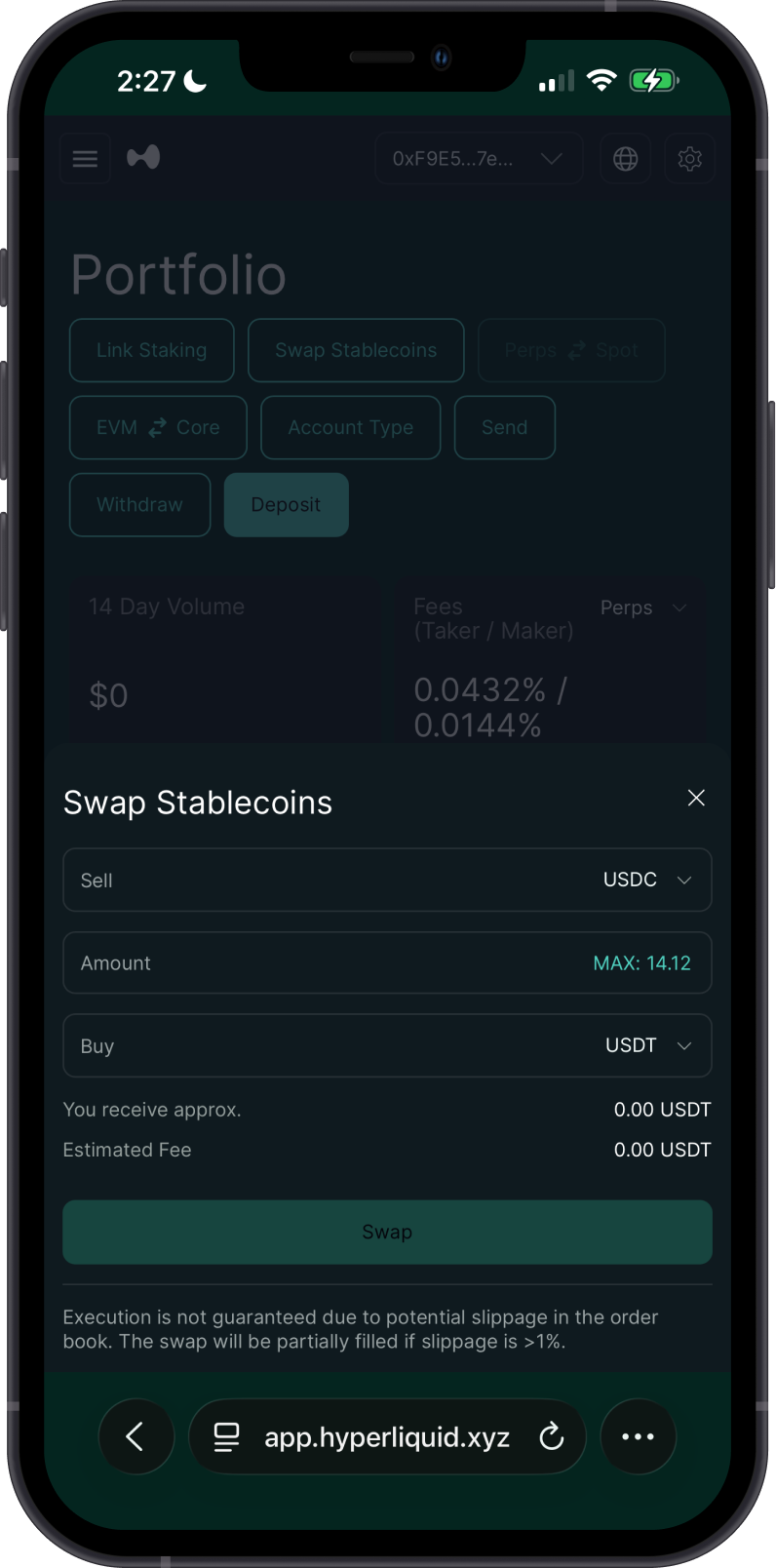
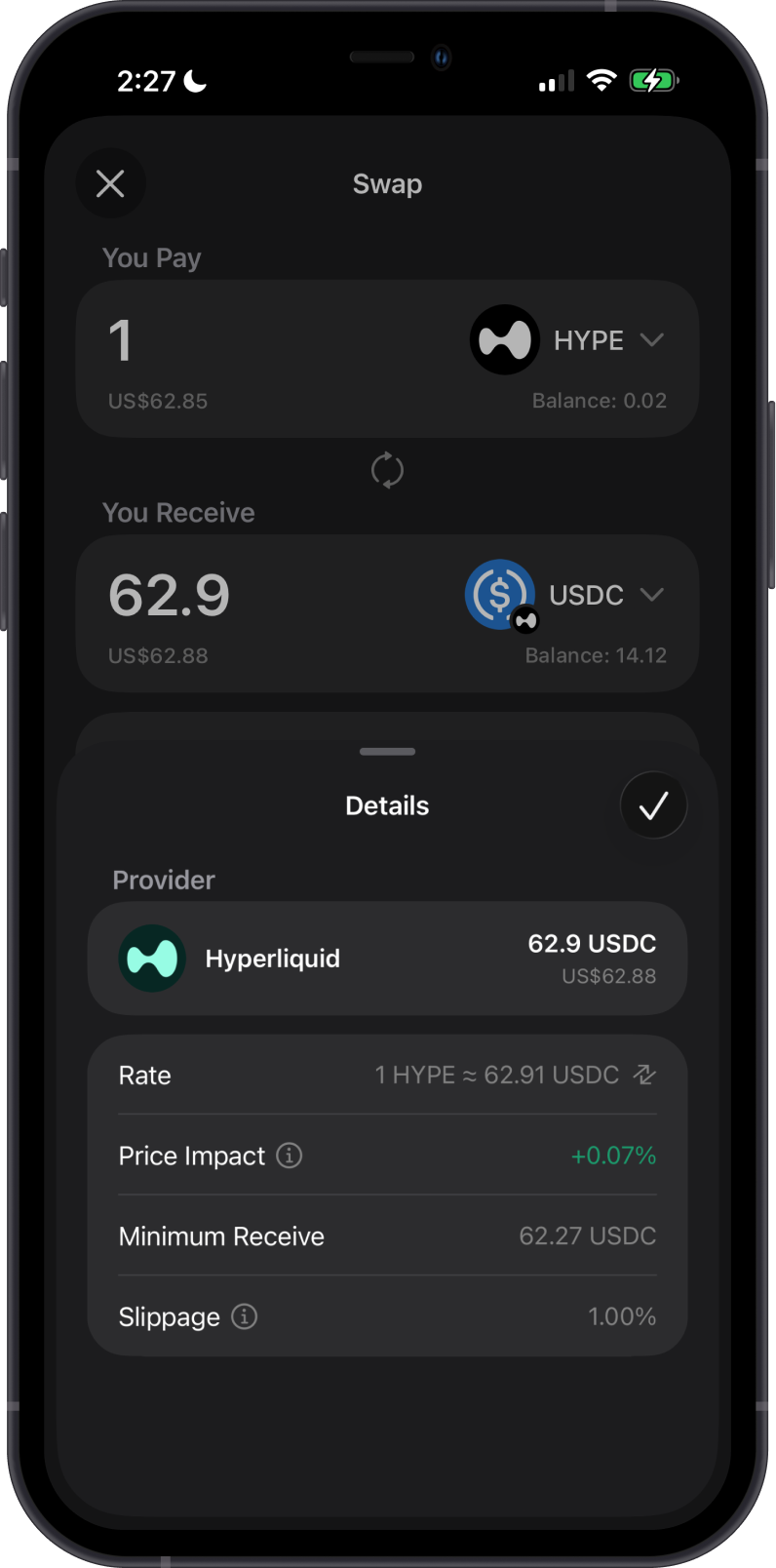
Hyperliquid supports spot swaps on Hyperliquid and bridge routes between Hyperliquid and HyperEVM for supported assets. Gem Wallet uses Hyperliquid when the selected route is available in the Hyperliquid ecosystem.
In the example below, Hyperliquid shows a HYPE to USDC swap. Gem Wallet quotes the route through Hyperliquid.
Relay
Swap type: Cross-chain swaps.
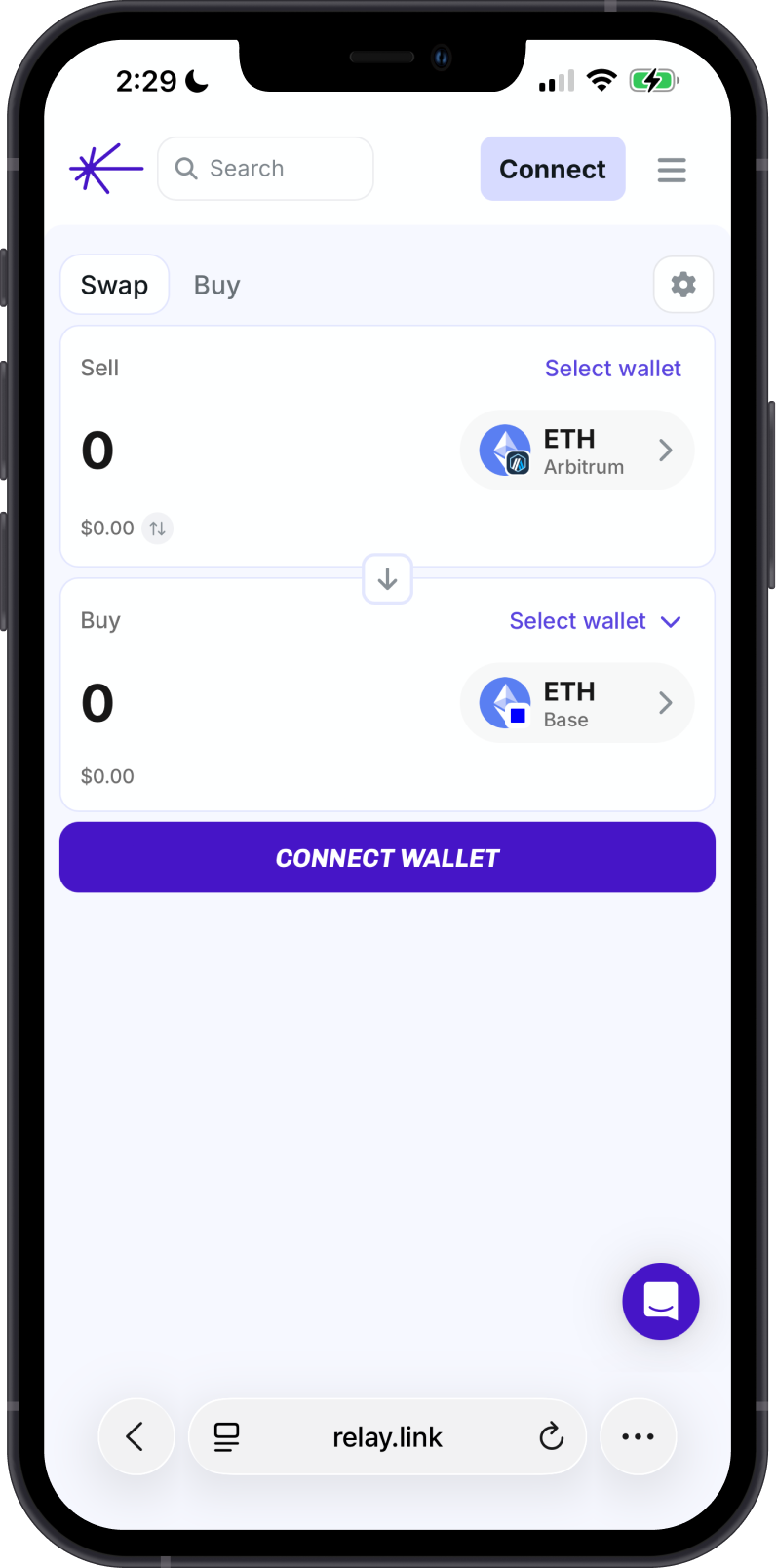
Relay provides cross-chain routes across supported EVM and non-EVM networks. Its Gem Wallet mapping includes Bitcoin, Ethereum and major EVM networks, Solana, TON, TRON, Tempo, Arc, Stable, Robinhood Chain, X Layer, and other supported networks. A mapped network does not guarantee every asset pair or direction.
Route availability depends on the selected assets and Relay's live quote. The presence of a supported network does not guarantee every pair or direction.
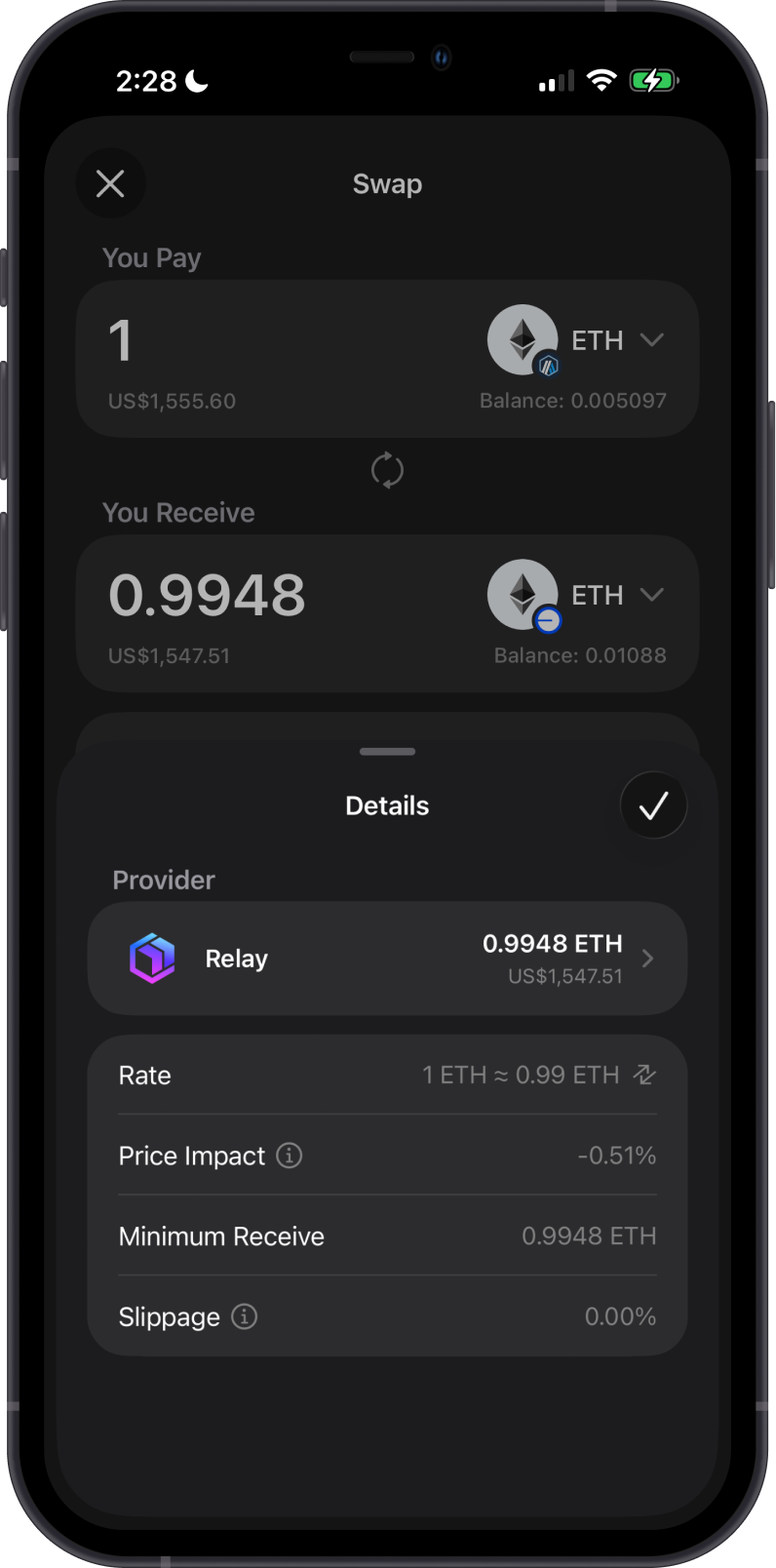
In the example below, Relay shows an Arbitrum ETH to Base ETH cross-chain swap. Gem Wallet quotes the route through Relay.
Squid
Swap type: Cross-chain swaps.
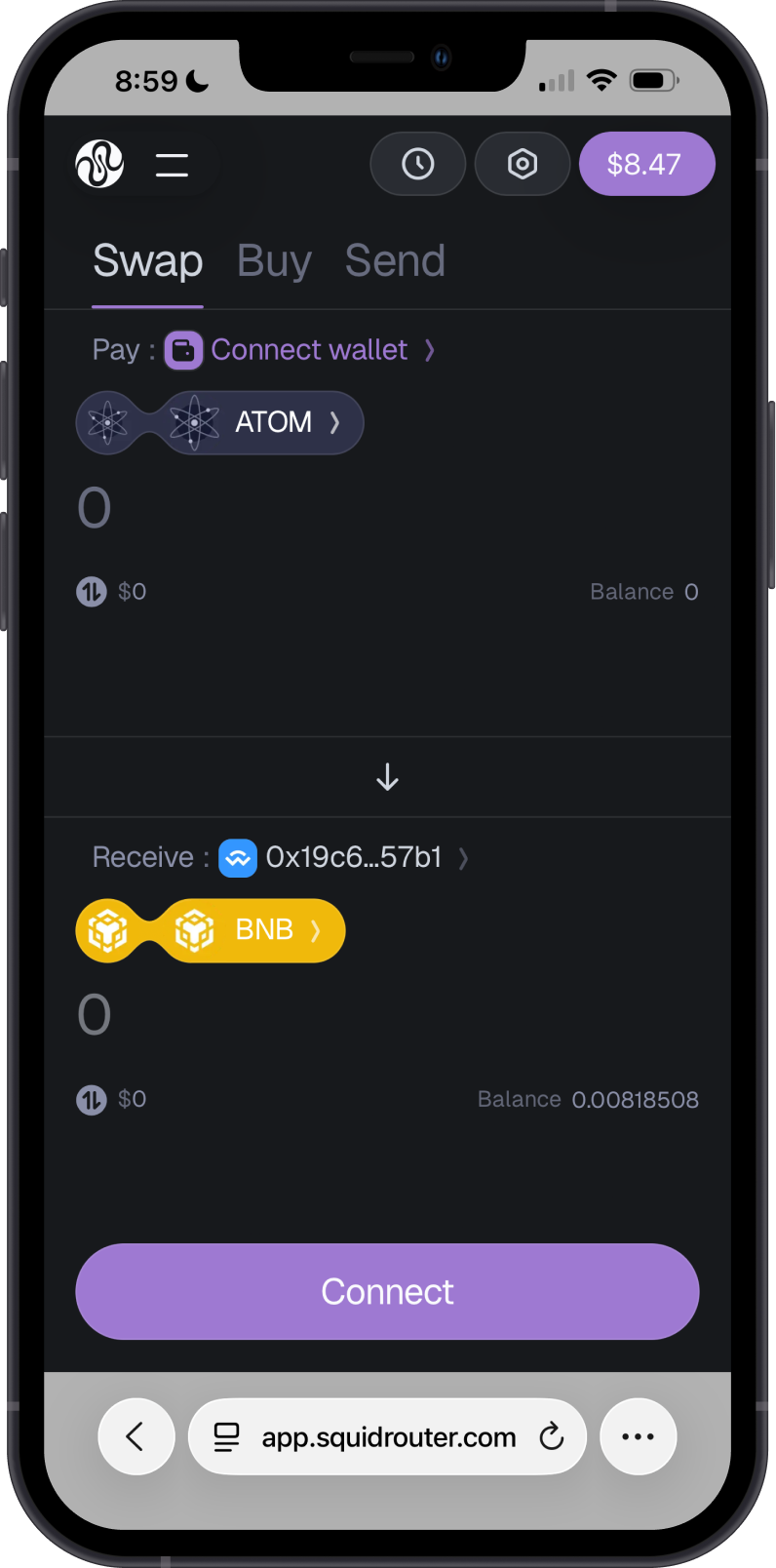
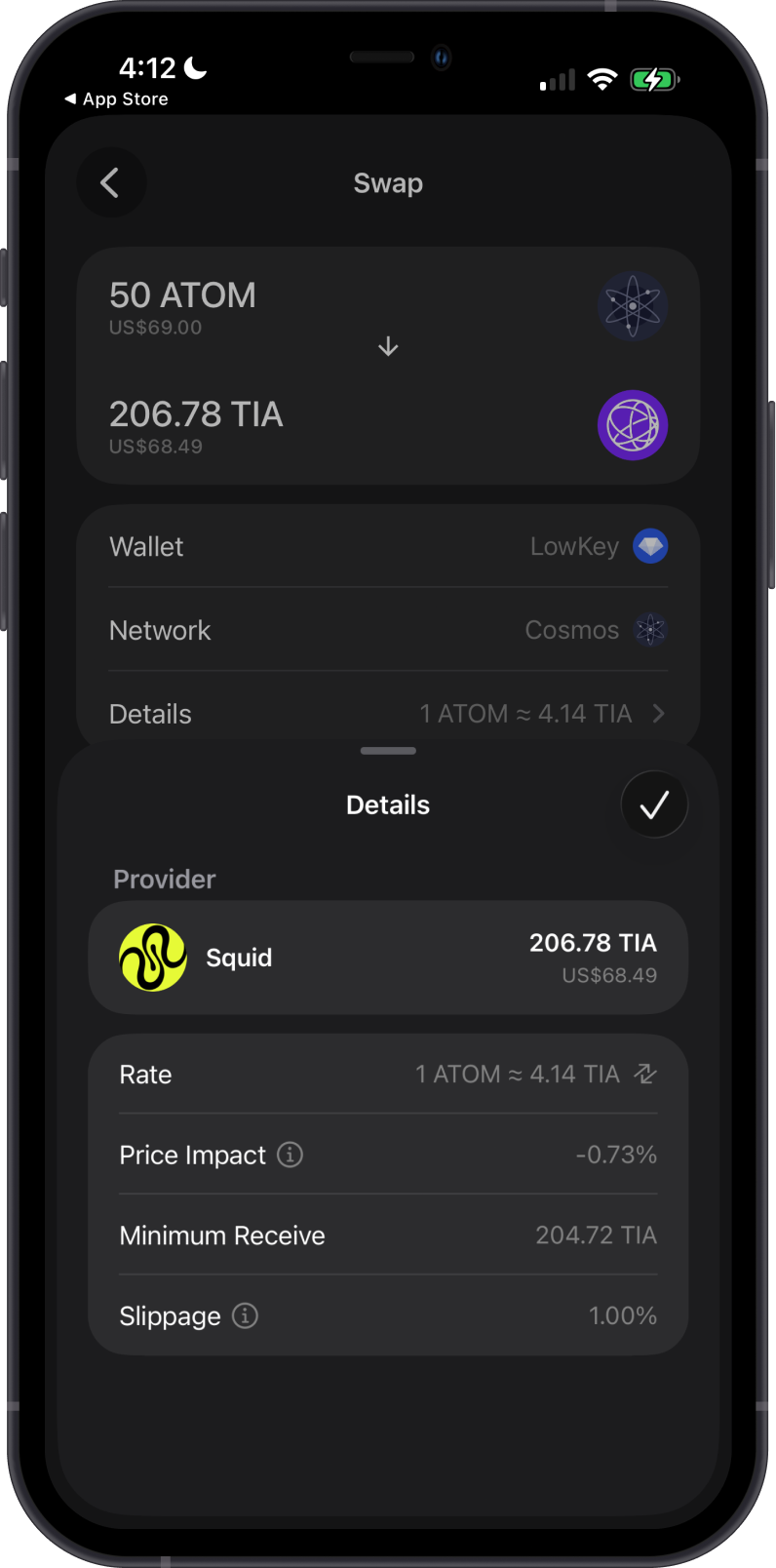
Squid enables cross-chain swaps across Cosmos ecosystem networks. In Gem Wallet, Squid supports routes involving Cosmos, Osmosis, Celestia, Injective, Sei, and Noble for selected assets.
Squid Router connects liquidity across Cosmos and other supported ecosystems by using Axelar's cross-chain infrastructure. In Gem Wallet, Squid routes can help users move between supported Cosmos ecosystem assets without manually visiting a bridge or handling each transfer step separately.
Swaps.xyz
Swap type: Cross-chain swaps.
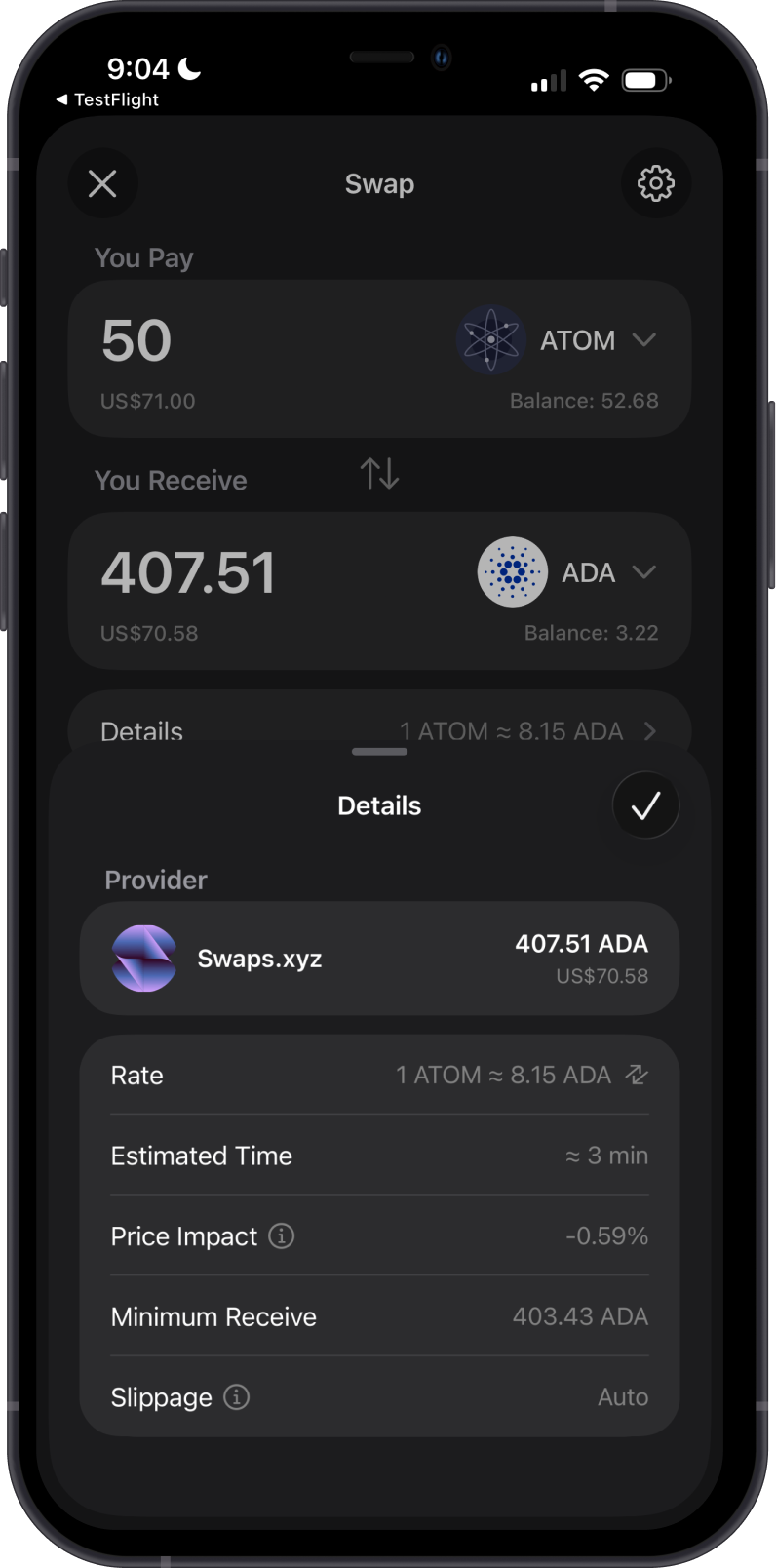
Swaps.xyz is a cross-chain swap provider focused on native asset routes across non-EVM and app-chain ecosystems. Gem Wallet currently maps native routes for Algorand, Stellar, Cardano, TON, Cosmos, Osmosis, Aptos, Sui, XRP Ledger, and TRON. Both chains must be supported and a live route must be available.
In Gem Wallet, Swaps.xyz supports native cross-chain routes across Algorand, Stellar, Cardano, TON, Zcash, NEAR, Cosmos, Osmosis, Aptos, Sui, and XRP Ledger.
Gem Wallet fetches live quotes through Swaps.xyz when a supported cross-chain route is available, such as an ATOM to ADA swap.
Bridgers
Swap type: Cross-chain swaps.
Bridgers is a cross-chain swap provider for EVM networks. In Gem Wallet, Bridgers swaps can start from BNB Chain, Polygon, Arbitrum, Avalanche, Optimism, Base, opBNB, Mantle, Linea, Celo, X Layer, Sonic, Robinhood Chain, and HyperEVM, and can be delivered to those networks or to Ethereum, Solana, Bitcoin, Litecoin, and Dogecoin. Supported assets are mainly each network's coin plus USDC and USDT.
For the full route table, minimum amounts, timing, and swap tracking, see What Is Bridgers in Gem Wallet?.
Benefits of Multiple Swap Providers
Using multiple swap providers gives Gem Wallet broader coverage than relying on a single exchange or bridge. Each provider specializes in different networks, assets, liquidity sources, or cross-chain routes. By integrating many of them in one wallet, Gem Wallet can check more paths before showing you a swap option.
Use How to Verify a Swap Provider and Contract Address to inspect the selected provider, router contract, or deposit-address route before submitting a swap.
If several providers return a valid route for the same swap, use How to Select a Swap Provider in Gem Wallet to compare their current quote details before continuing.
This matters because the best route can change depending on the asset pair, network conditions, liquidity, fees, and swap size. A provider that works well for a same-chain token swap may not be the best option for a native cross-chain swap, and a route that is available today may not be available for every asset or amount.
With Gem Wallet, users get several advantages:
- More available routes: Gem Wallet can support same-chain swaps, cross-chain swaps, bridges, and intent-based routes through different providers.
- Better quote discovery: The wallet can compare available provider quotes and show routes based on live market conditions.
- Wider asset coverage: Multiple providers make it possible to support more blockchains, tokens, and native assets directly inside the app.
- A simpler experience: You do not need to visit several DEXs, bridges, or aggregator websites manually. Gem Wallet brings supported routes into one swap flow.
- Non-custodial control: Gem Wallet helps prepare and present the transaction, but you approve it from your own wallet and Gem Wallet does not custody your funds.
This is what makes Gem Wallet a strong swap experience: it combines the reach of many decentralized providers with the simplicity of a single wallet interface.