Litecoin (LTC)
What is Litecoin?
Litecoin (LTC) is one of the earliest Bitcoin-inspired blockchains. It launched in 2011 and is often known as digital silver because it focuses on fast, low-cost peer-to-peer payments.
Here are 5 key points about Litecoin:
-
LTC is the native asset used to pay transaction fees on Litecoin.
-
Litecoin has faster block times than Bitcoin, with new blocks targeted around every 2.5 minutes.
-
Litecoin has a maximum supply of 84 million LTC.
-
Litecoin is commonly used for simple payments, transfers, and exchange withdrawals because fees are usually low.
-
Litecoin supports upgrades such as SegWit, making it efficient for everyday wallet transfers.
Learn more about Litecoin by reading the Gem Wallet Learn article: What Is The Litecoin Blockchain?
Litecoin on Gem Wallet
Gem Wallet has the following features enabled for Litecoin:
- Store Litecoin (LTC) securely.
- Send and receive LTC.
- Buy LTC directly in the app.
- Cross-chain swap supported assets into Litecoin (LTC).
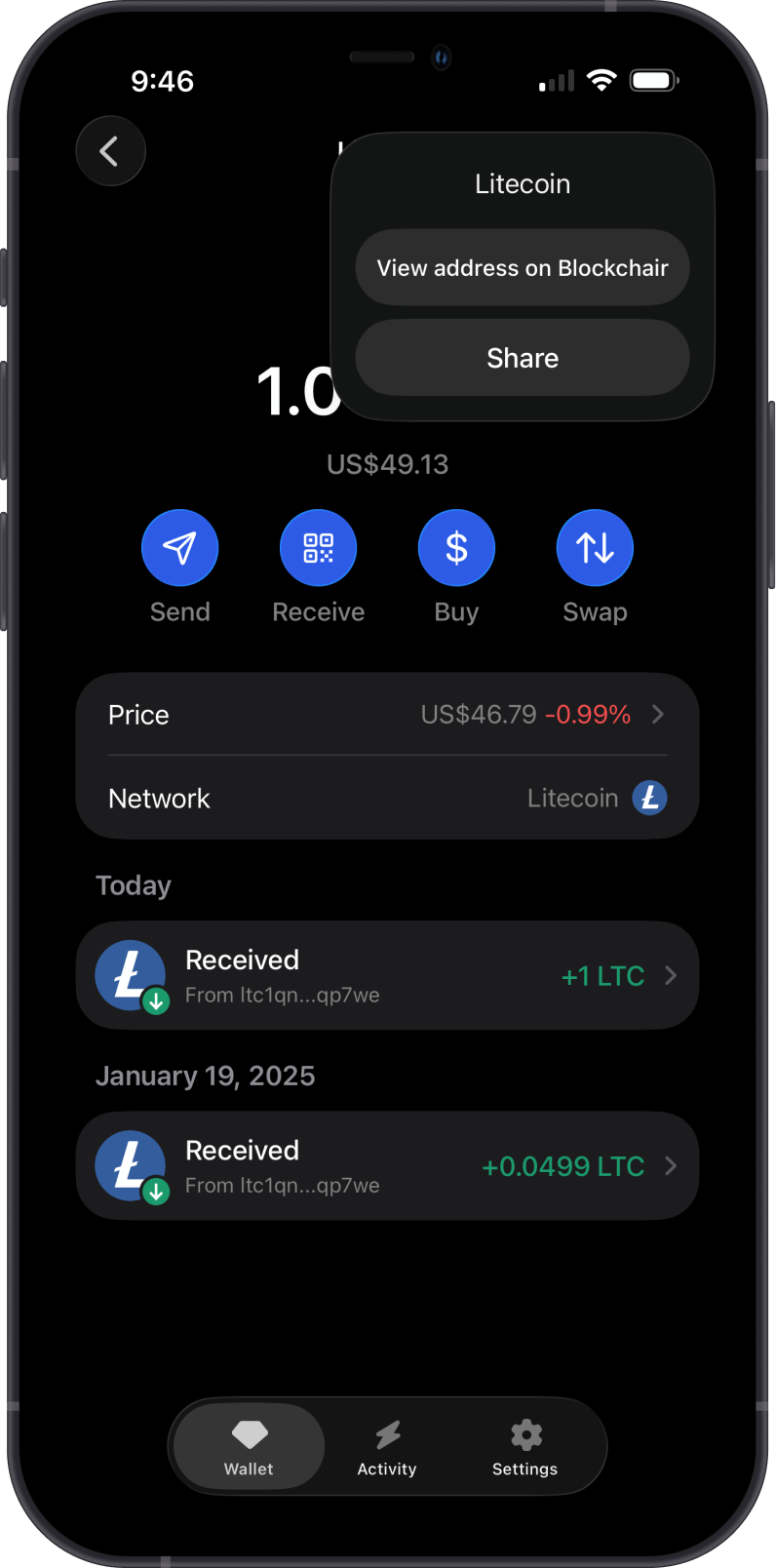
- View Litecoin balances and transactions on Blockchair.
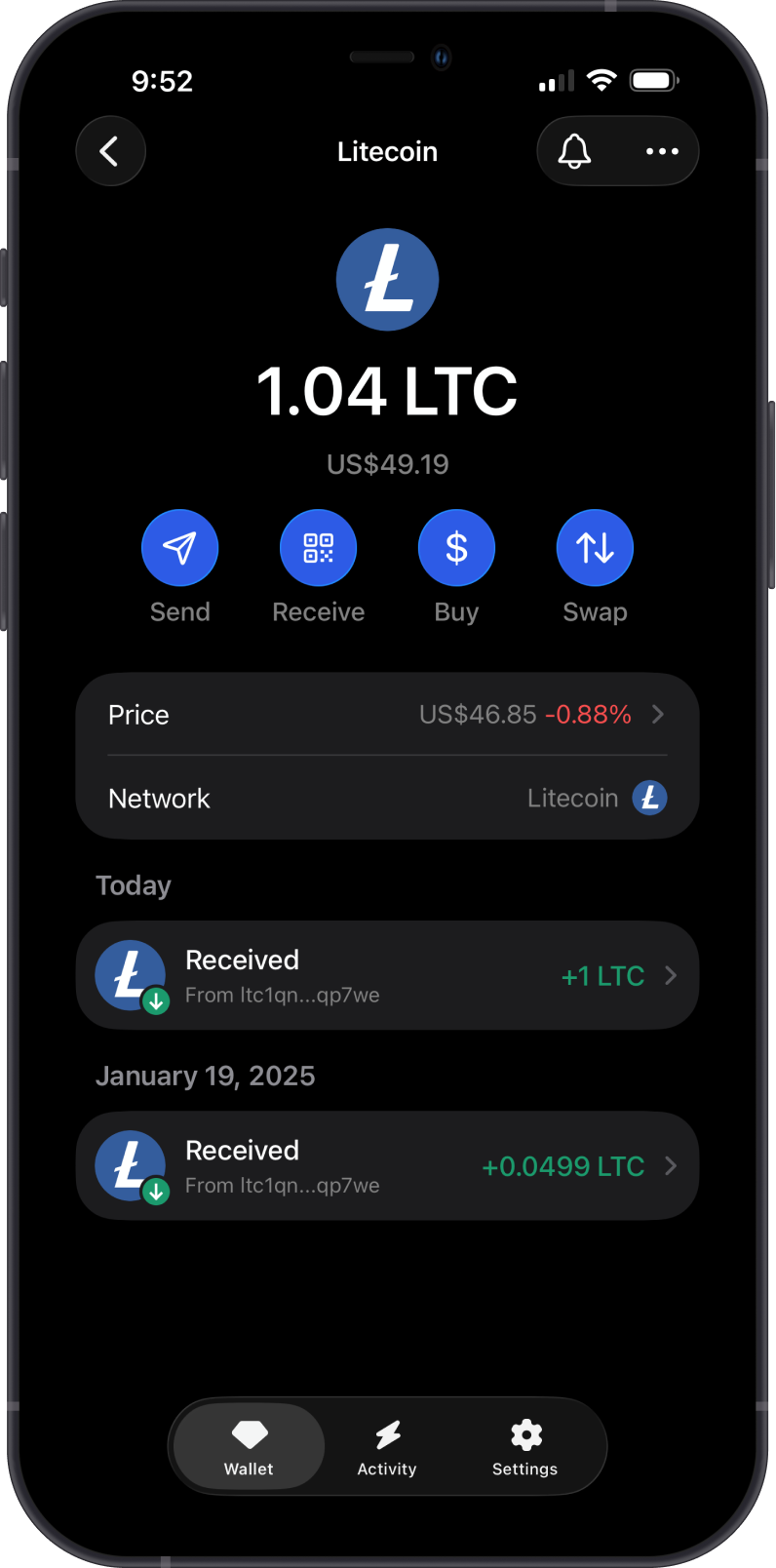
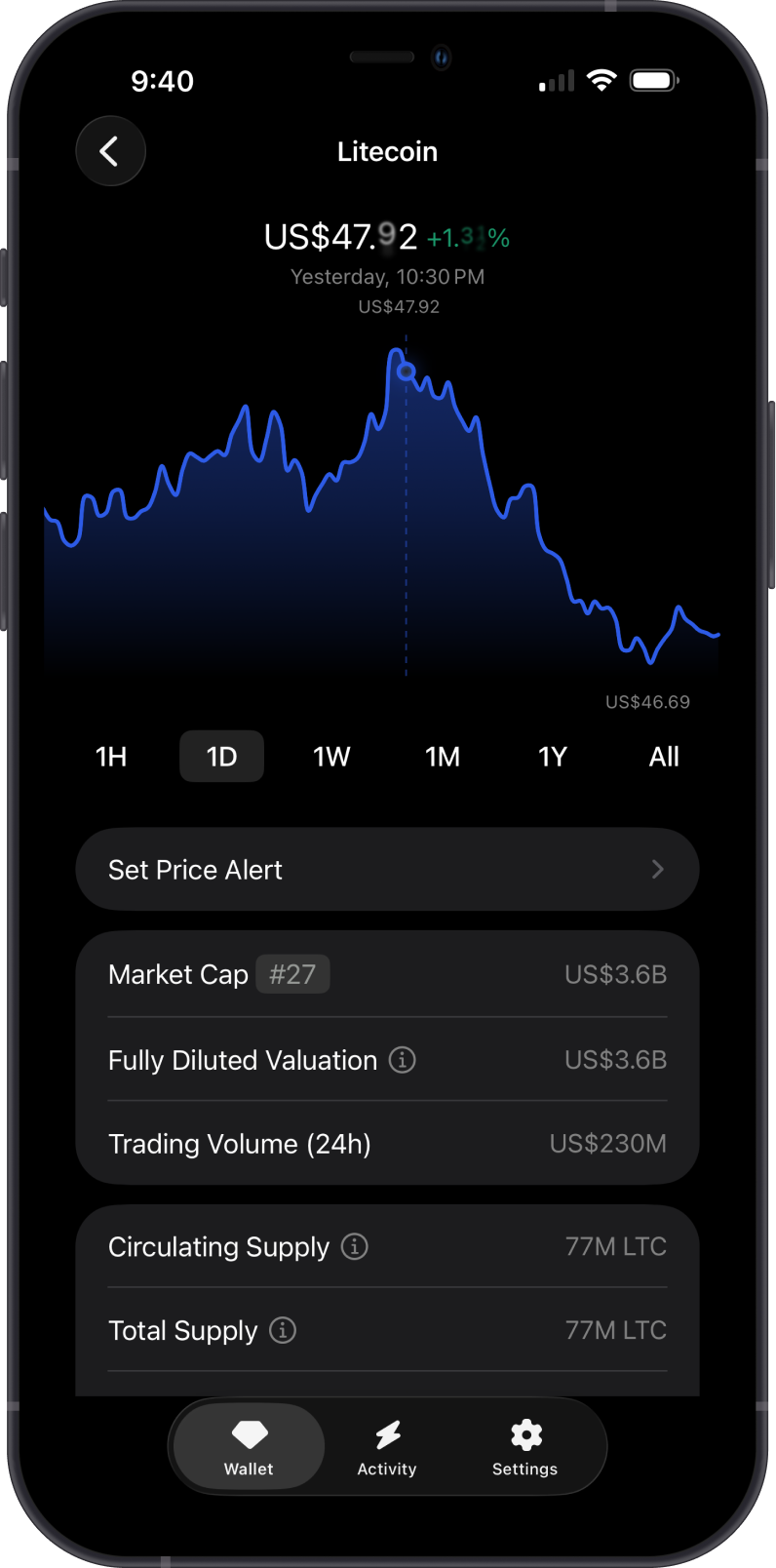
LTC is the native asset of Litecoin and is used for:
-
Transaction fees: LTC pays the network fee when sending Litecoin.
-
Payments: LTC can be used for fast, low-cost transfers between wallets.
-
Wallet activity: LTC is the main asset shown in your Litecoin wallet.
How to Get Litecoin (LTC)?
Here are some ways to get Litecoin (LTC):
- Buy Litecoin (LTC) directly on the Gem Wallet app.
- Receive LTC with your Litecoin address in Gem Wallet.
- Swap supported assets into LTC using Gem Wallet.
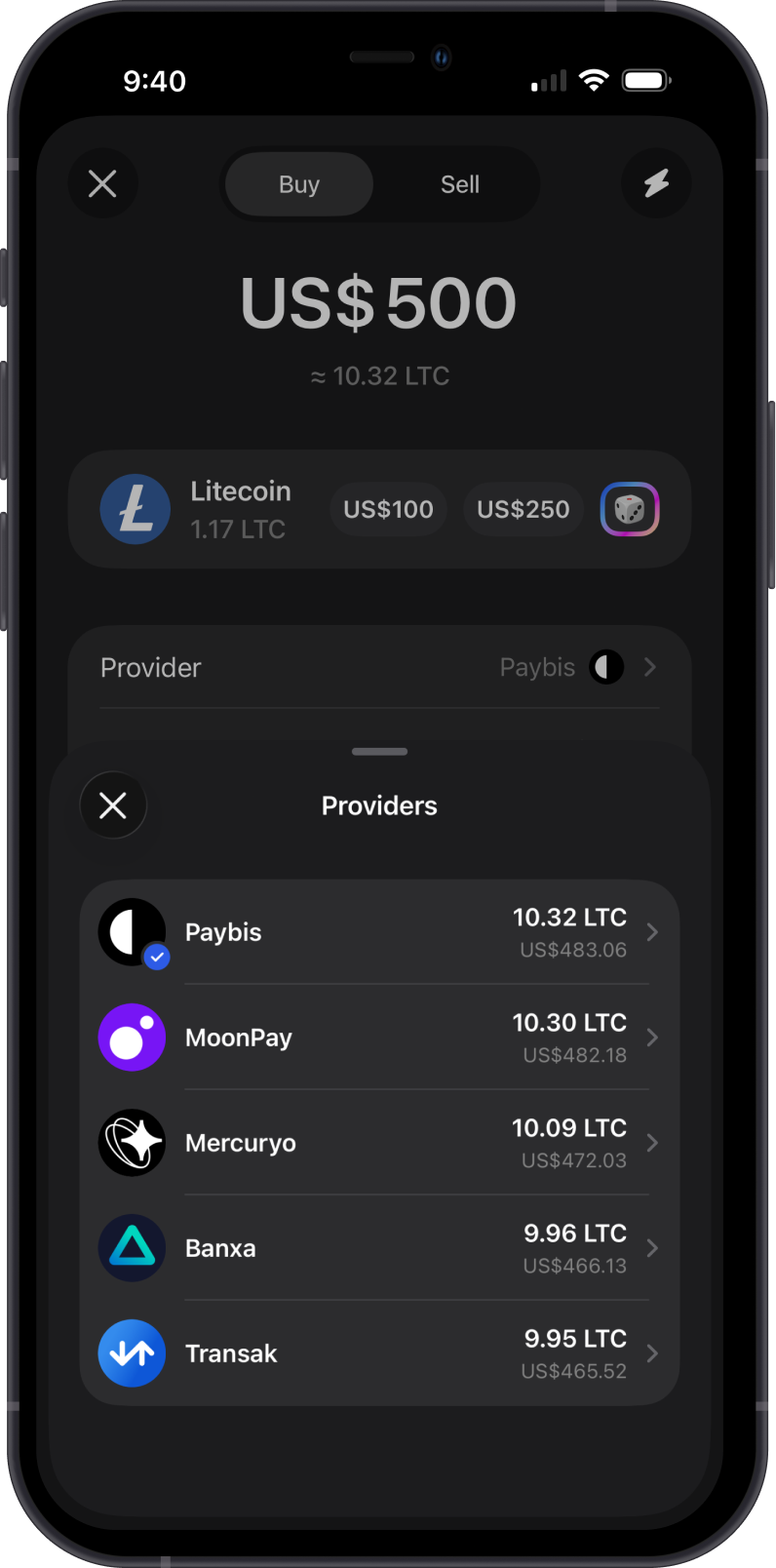
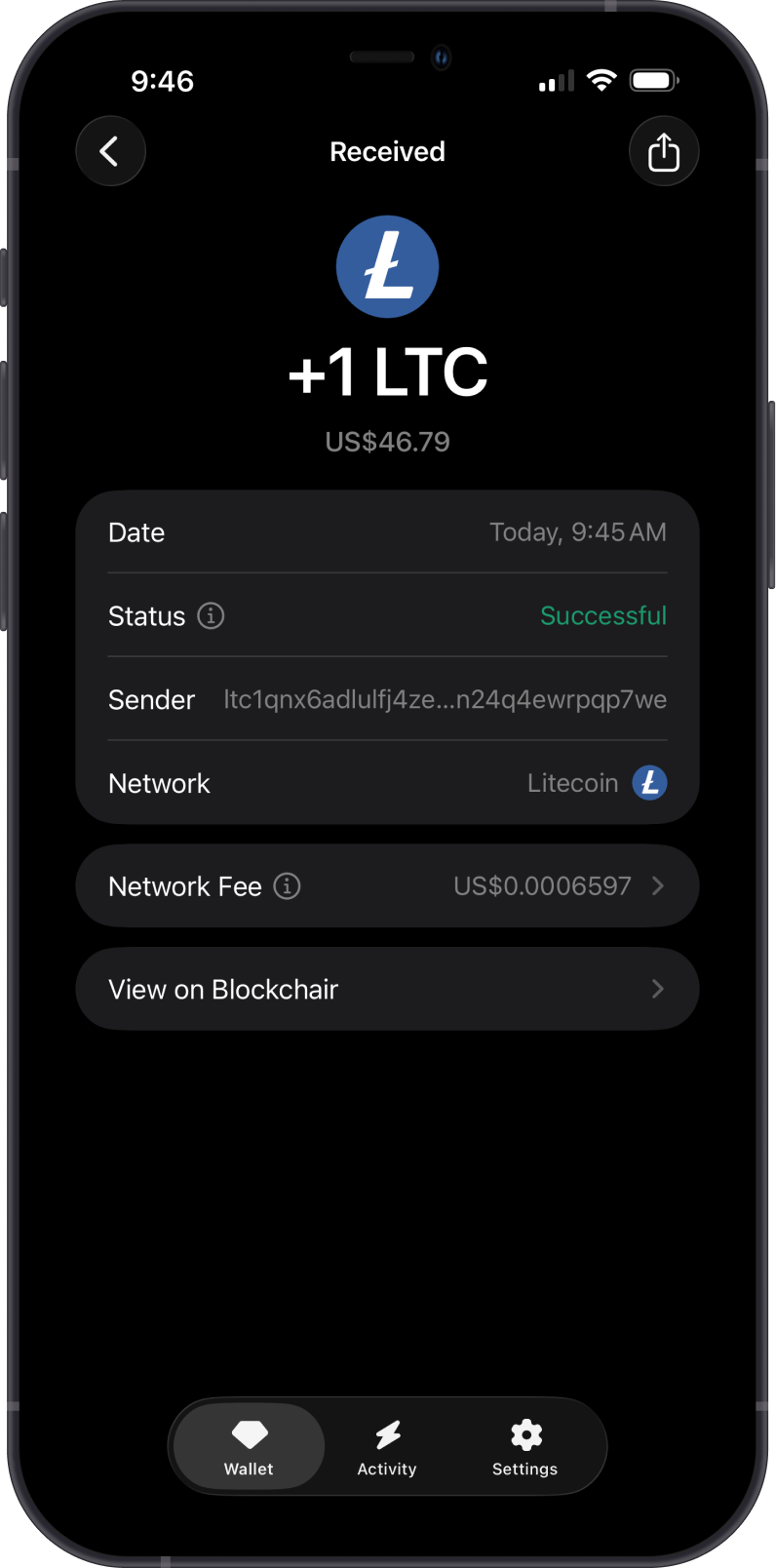
Send only Litecoin network assets to your Litecoin address. Assets sent on the wrong chain may not appear in your wallet.
Can I Swap Litecoin on Gem Wallet?
Yes. Gem Wallet supports cross-chain swaps for Litecoin:
-
Use Cross-Chain Swap to swap supported assets from other blockchains into Litecoin (LTC).
-
You can also swap Litecoin (LTC) to other supported assets in the app.
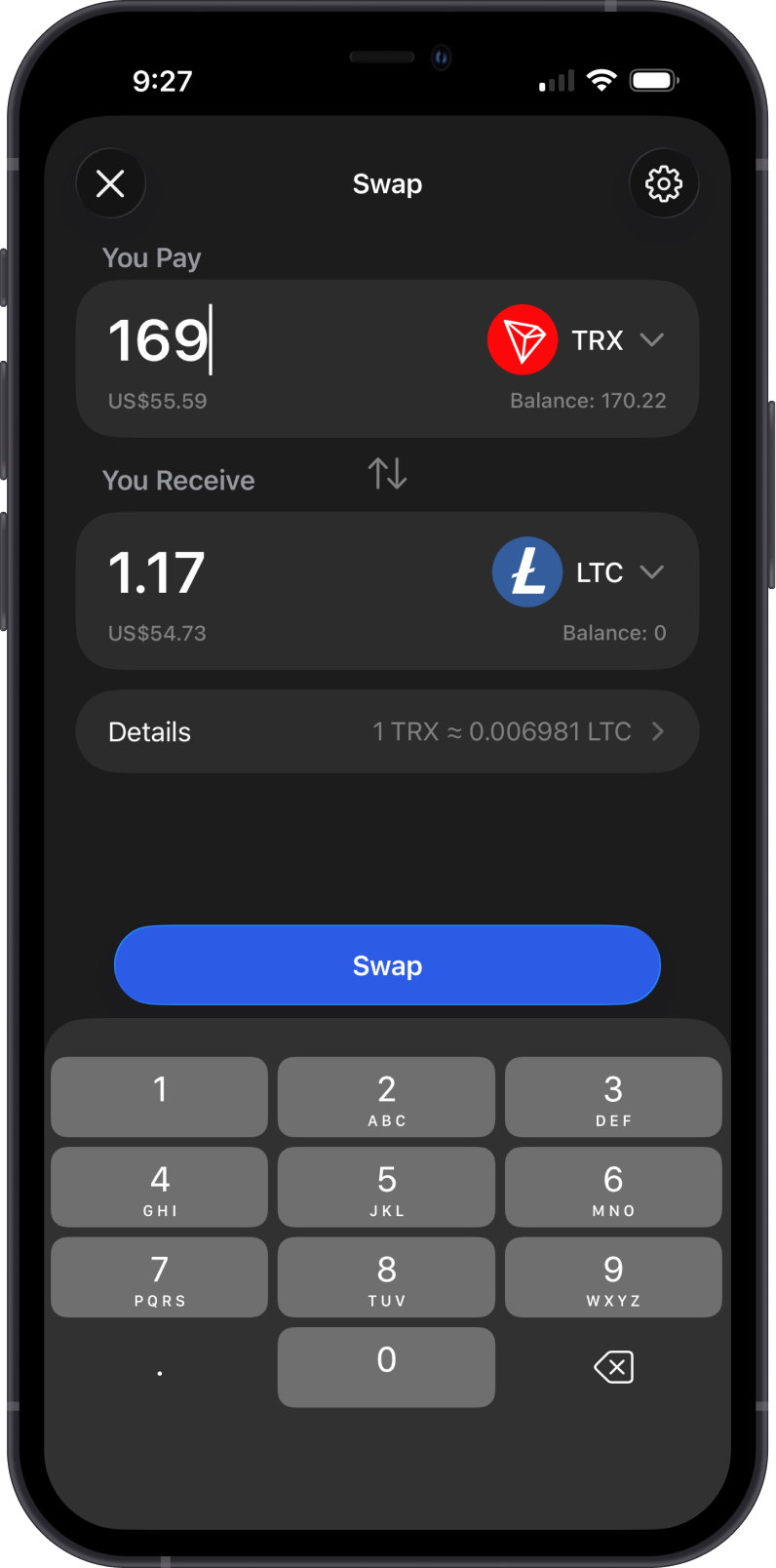
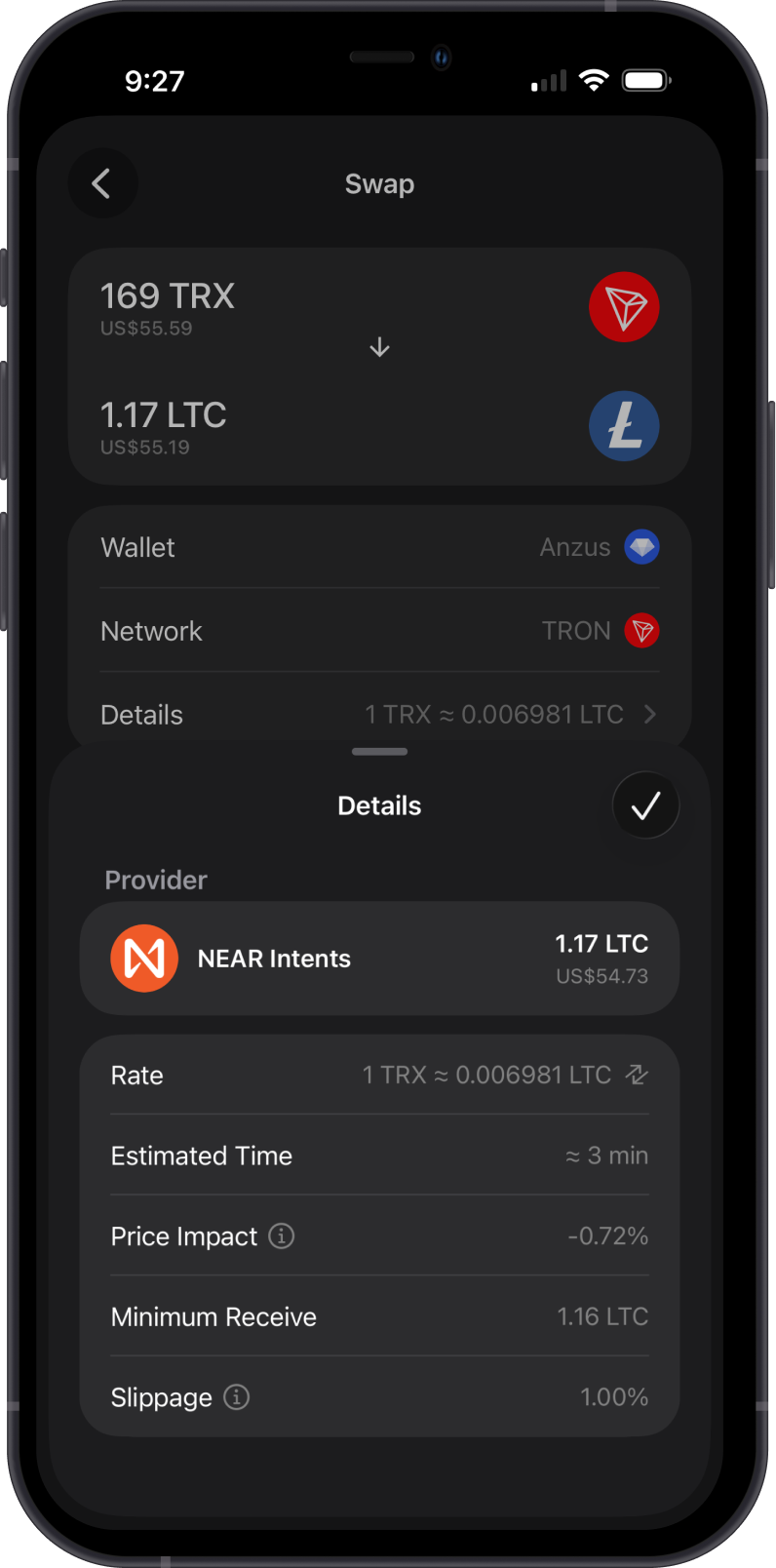
Network fees vary by blockchain. Make sure you have enough of the sending asset to cover the fee before starting a cross-chain swap.
Transaction Fees on Litecoin
The fees on Litecoin are summarized as follows:
-
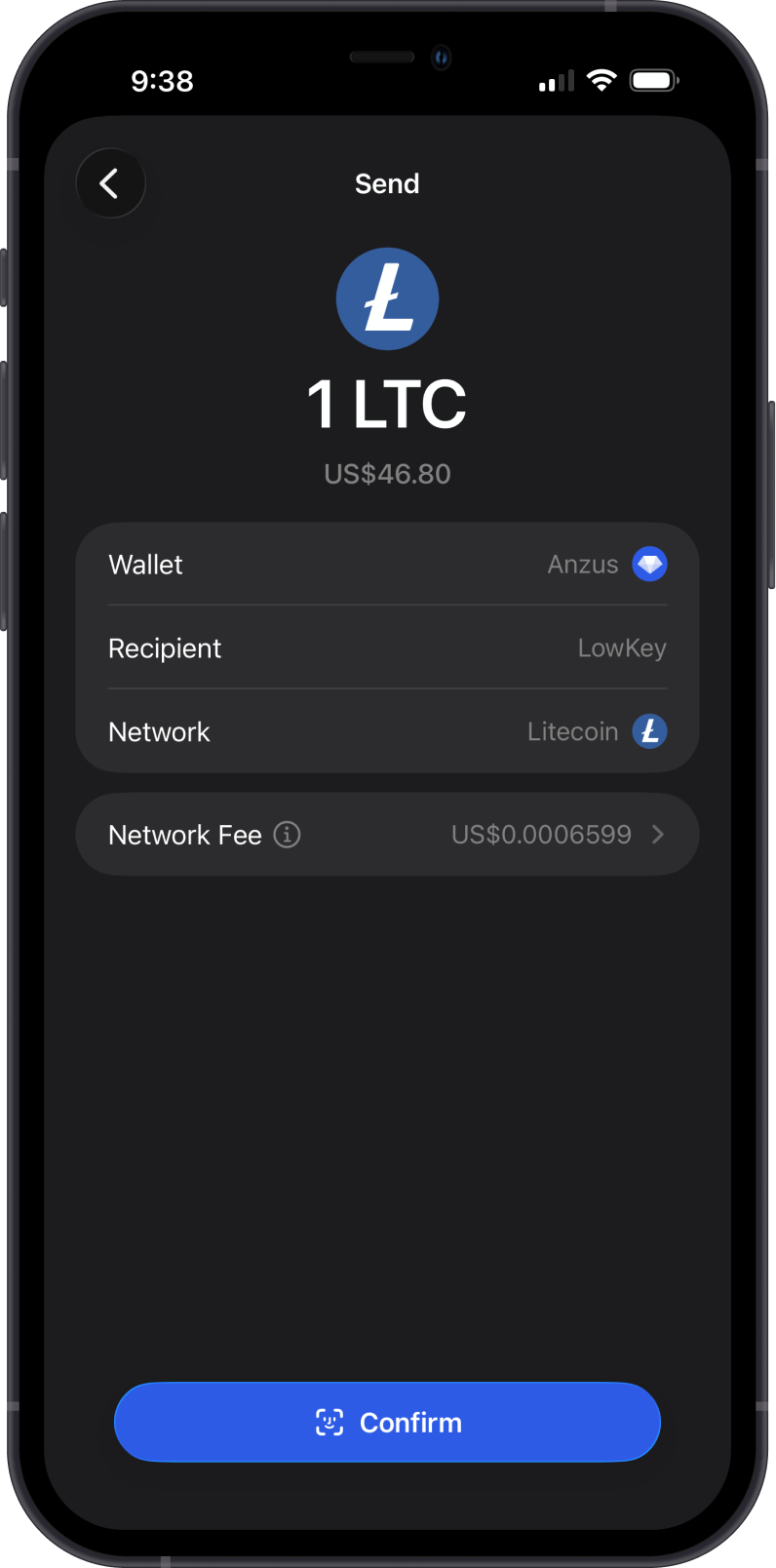
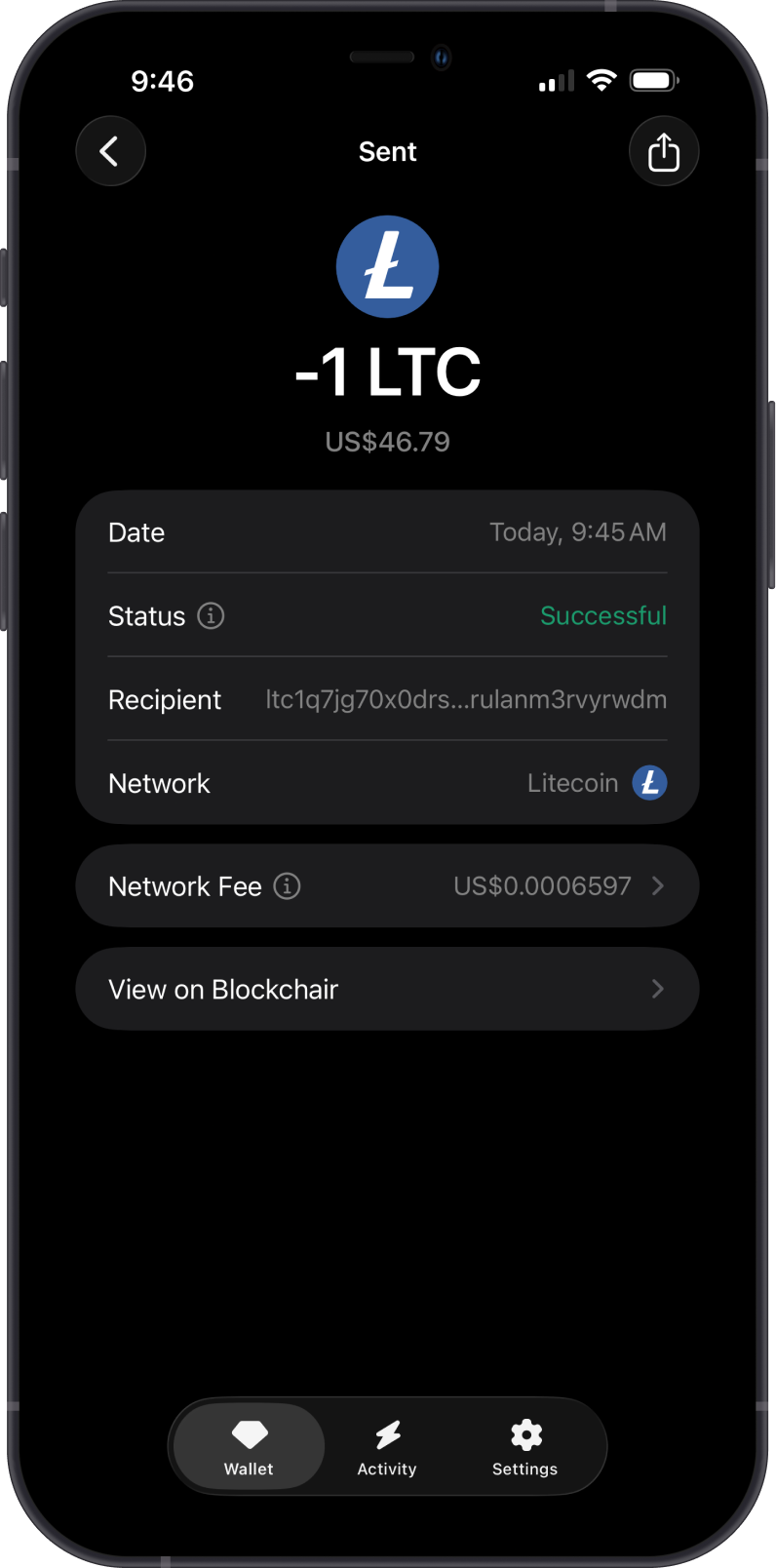
Litecoin transactions require fees paid in LTC.
-
Fees are usually low, which makes Litecoin practical for smaller transfers.
-
Litecoin fees can still vary depending on network activity and transaction size.
-
Gem Wallet shows the network fee before you confirm a Litecoin transaction.
How to Check Litecoin (LTC) Balance?
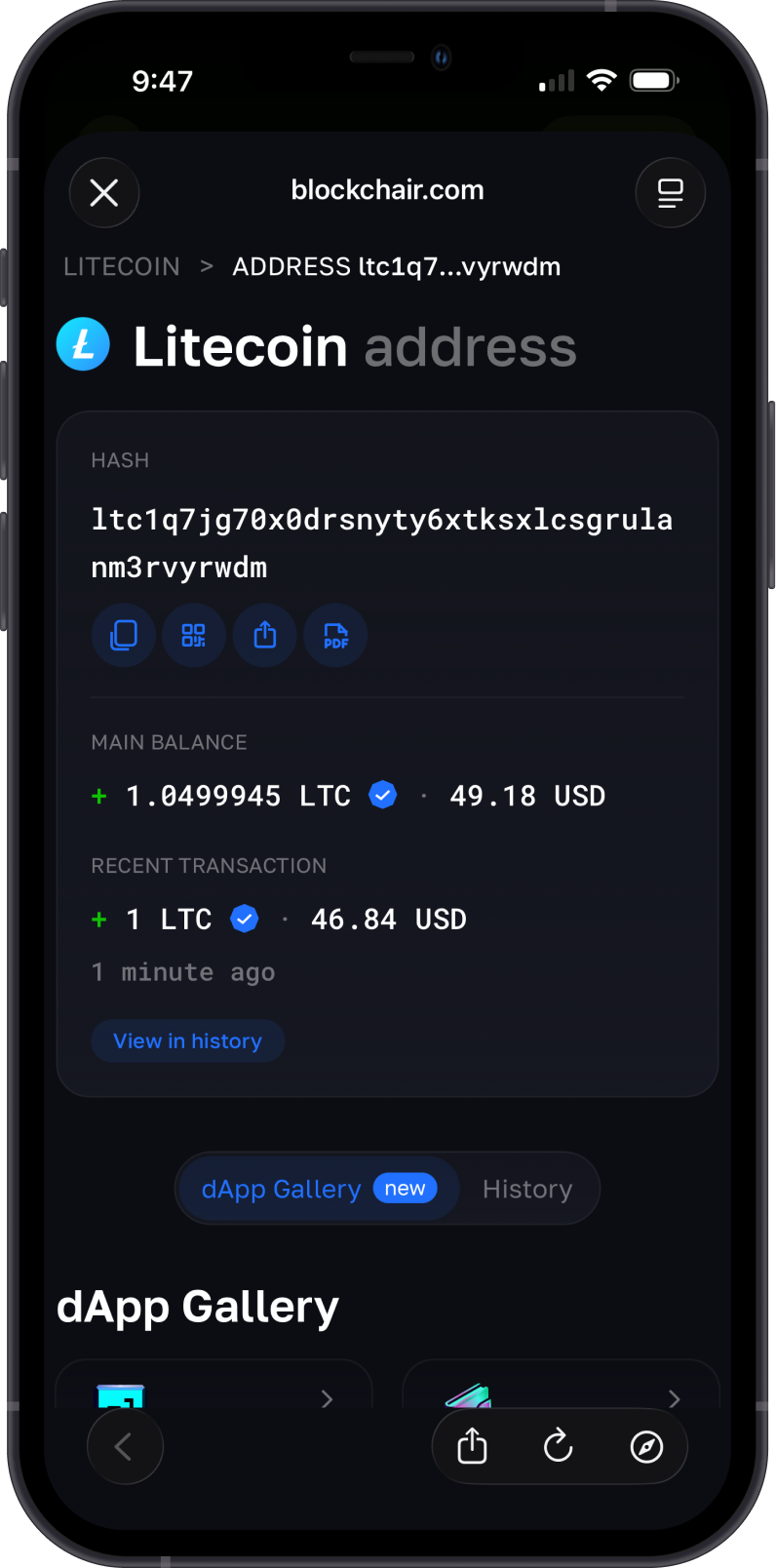
Gem Wallet connects to Litecoin to show your LTC balance. Tap on the 3 dots at the upper right corner, then tap View address on Blockchair.
Blockchair is the default Litecoin explorer of Gem Wallet. You can manually check balances and transactions by going to Blockchair and searching for your Litecoin address.
Why Choose Gem Wallet for Litecoin?
-
Self-Custody & Security: Gem Wallet gives you full control over your private keys and Litecoin.
-
Simple Litecoin Support: Send, receive, buy, and store LTC in one wallet.
-
Cross-Chain Support: Gem Wallet supports cross-chain swaps into LTC, making it easier to move value from other supported networks.
-
Open-Source Wallet: Gem Wallet is open source and built for users who want transparent, self-custody crypto management.
Conclusion
Litecoin is a long-running blockchain built for fast and low-cost payments. With Gem Wallet, users can buy, store, send, receive, and cross-chain swap into LTC while keeping full control of their wallet.