Gem Wallet Swap Fees Explained
Gem Wallet is a non-custodial, open-source mobile wallet (for iOS and Android) that lets you store, send, receive, and swap crypto across many blockchains (like Bitcoin, Ethereum, Solana, and more) without needing to leave the app.
When it comes to swap fees (exchanging one crypto for another, like BTC to USDT), here's a simple breakdown for beginners:
Gem Wallet Swap Fee
Gem Wallet's current swap implementation applies a default 0.5% swap fee to supported routes. The fee is 50 basis points and is incorporated into the amount sent to or received from the provider, depending on the route.
The quoted receive amount already reflects the route calculations used by the selected provider. Always review the current quote rather than calculating the expected output from a market price alone.
What Fees Do You Actually Pay When Swapping?
The total economic cost of a swap can include:
- The Gem Wallet swap fee.
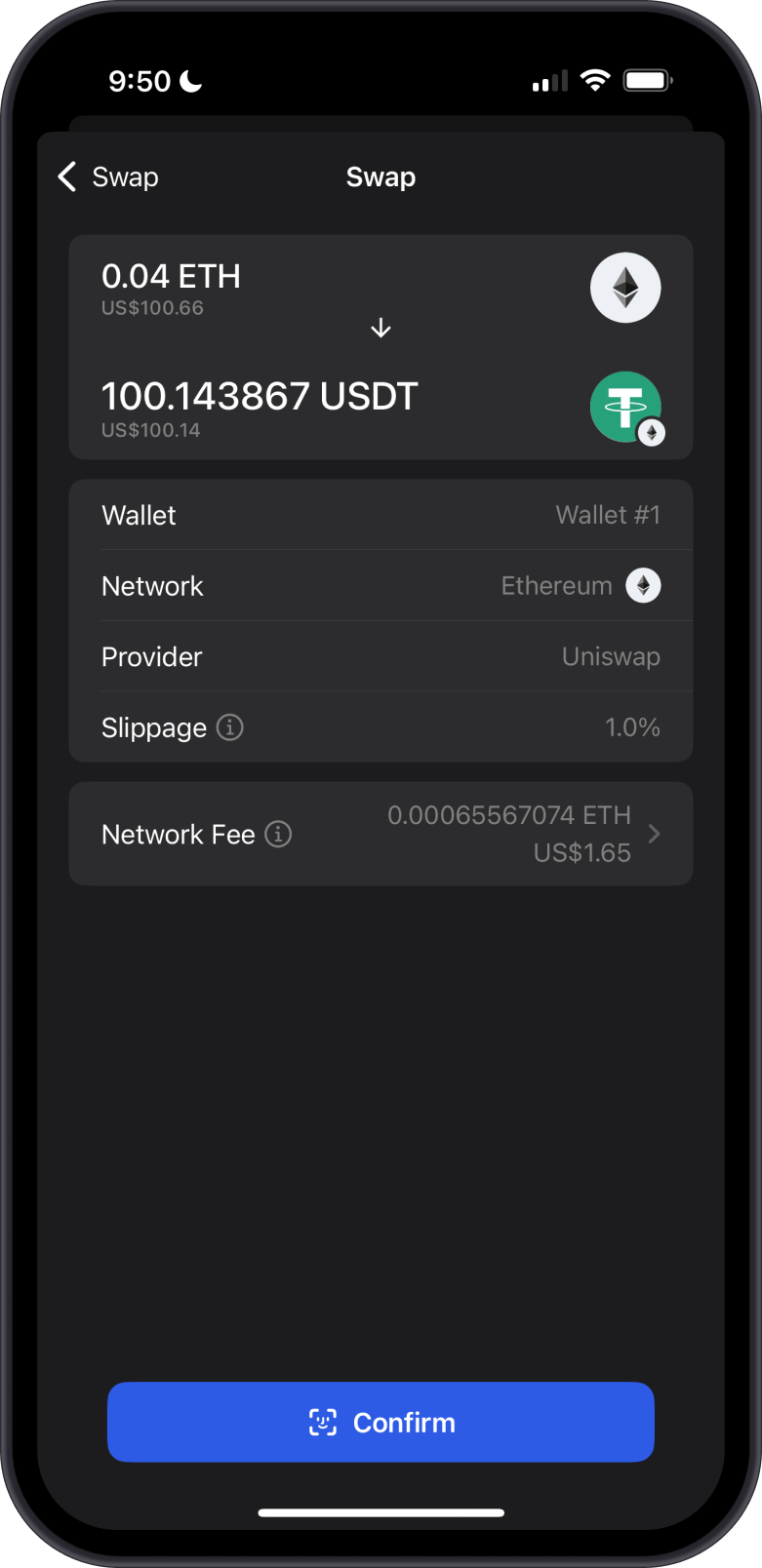
- Blockchain network fees.
- Swap-provider, liquidity-pool, bridge, or protocol fees.
- Price impact and slippage, which affect execution but are not network fees.
Network Fees (Transaction / Gas Fees)
These are required by the blockchain(s) involved to process the transaction(s).
- Paid to miners or validators on the network — not to Gem Wallet.
- Examples:
- On Ethereum → Gas fees in ETH (can be higher during busy times).
- On Bitcoin → Fees are paid in BTC and can be expressed using sat/vB.
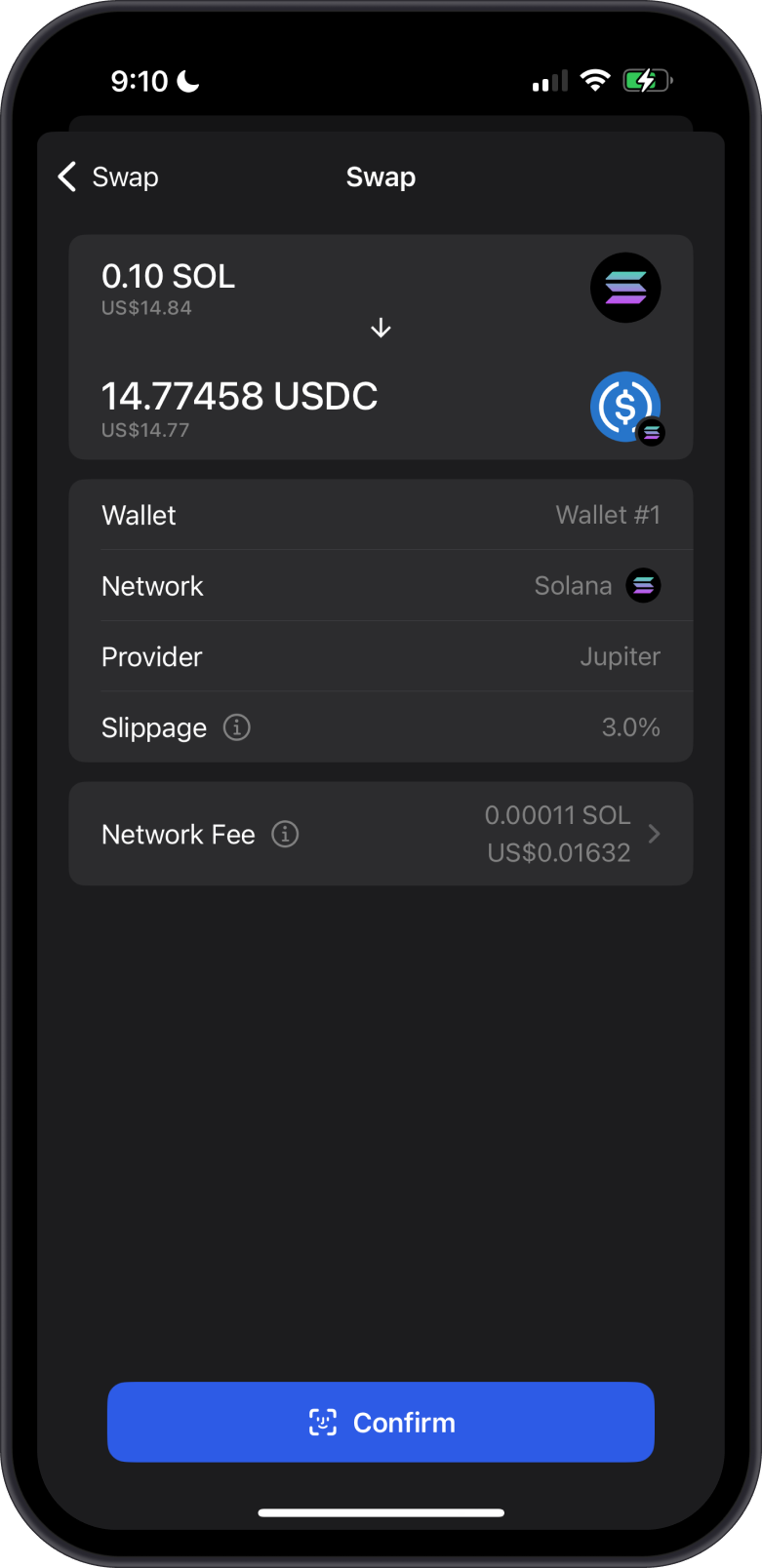
- On Solana → Fees are paid in SOL.
- Gem Wallet displays the estimated network fee before confirmation. Fee options depend on the blockchain and transaction type.
Here are some examples of swap fees on Ethereum and Solana. These token swaps are processed on their own respective blockchains.
Swap Provider / Protocol Fees (if any)
- Many swaps route through decentralized exchanges (DEX) or aggregators that find the best rate.
- These can include protocol, liquidity-provider, bridge, or routing fees.
- The provider may incorporate these costs into its quoted output instead of displaying each one as a separate debit.
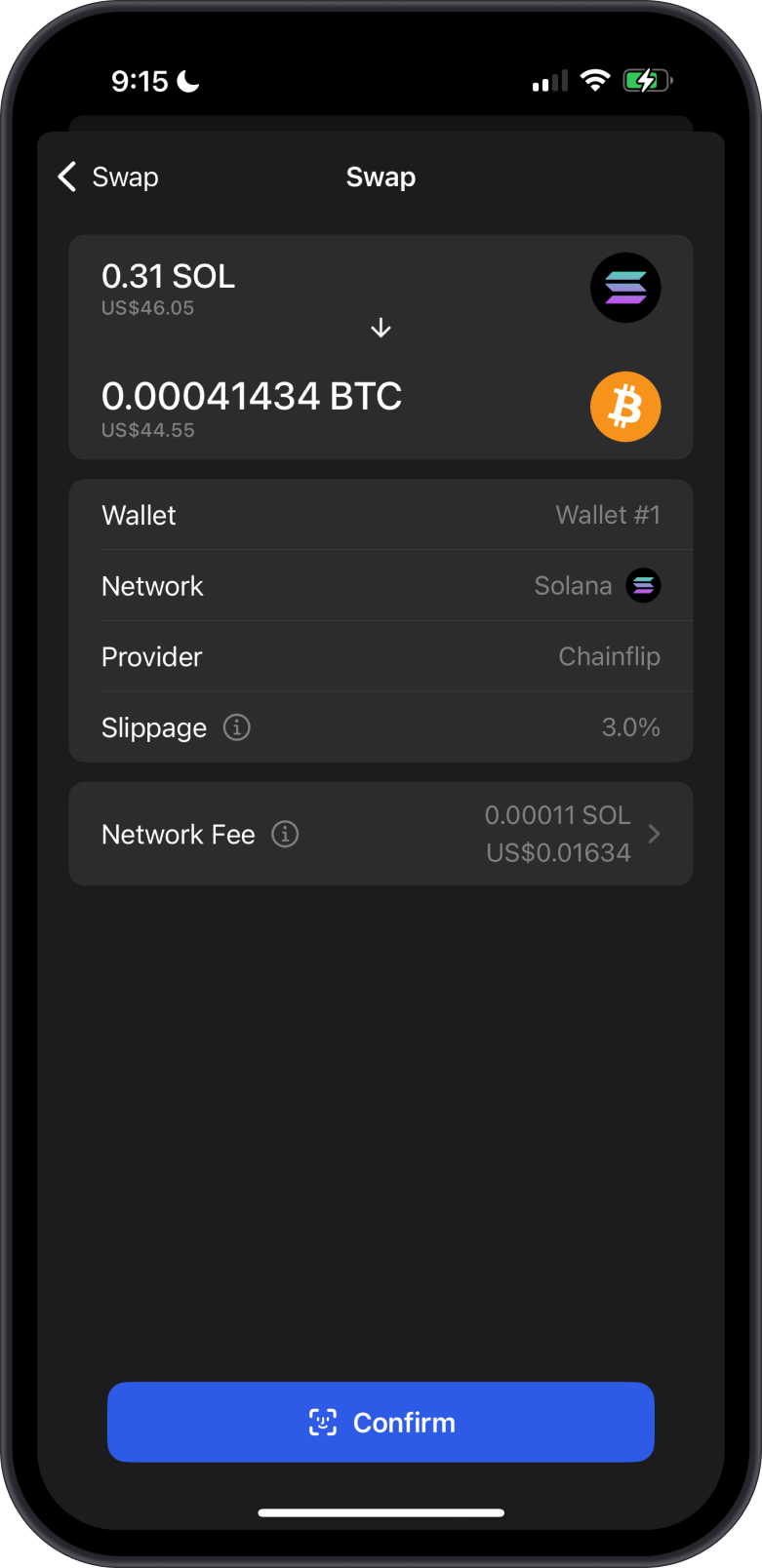
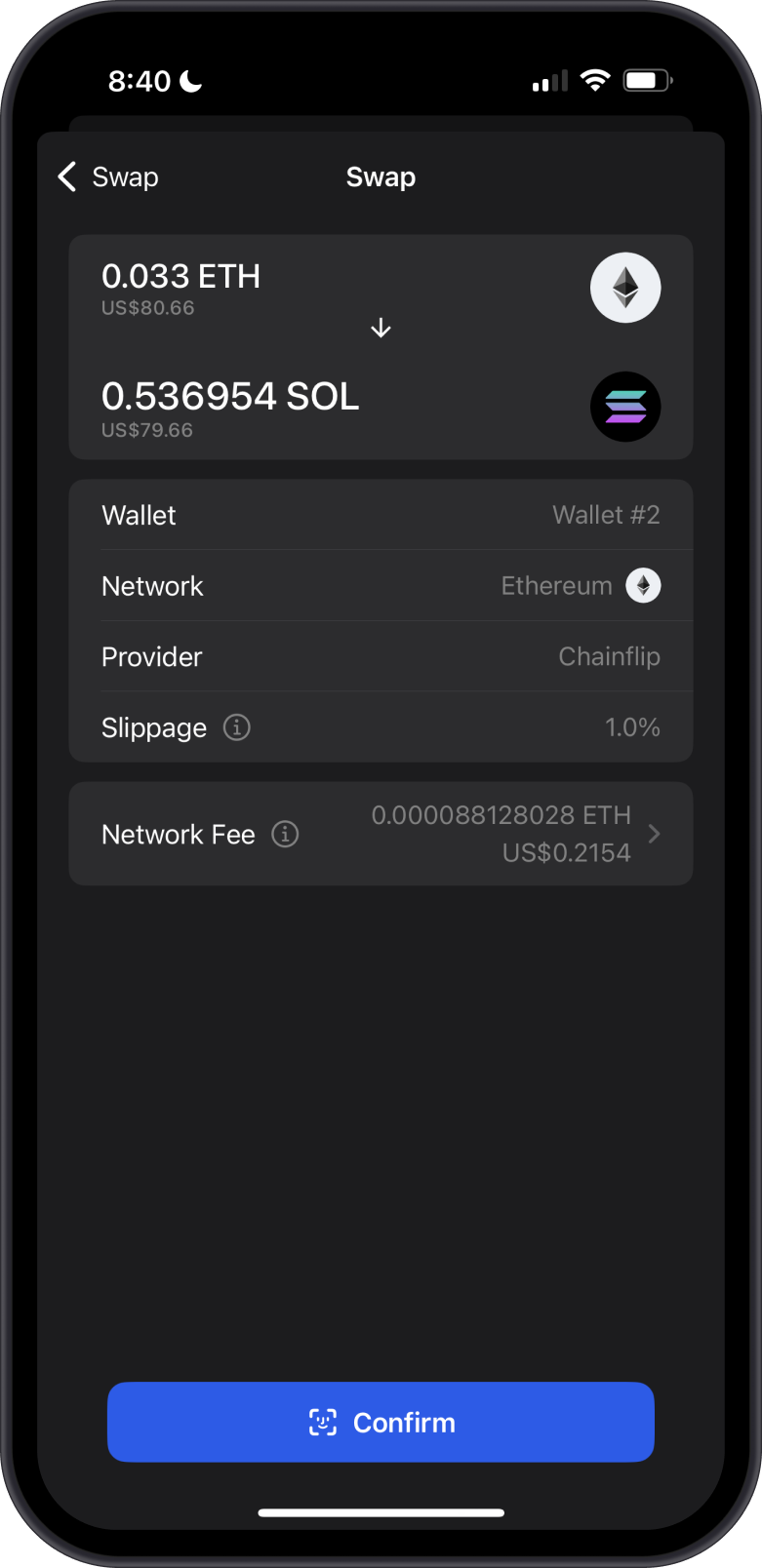
Here are examples of cross-chain swaps where network and route costs affect the final quote. Provider fees can be percentage-based or fixed and vary by swap size and route.
The final amount you receive will often be slightly less than the input amount you entered.
Why Fees Can Vary
- Network congestion — Busy times (e.g., big market moves) mean higher fees to get your transaction processed quickly.
- Blockchain used — Low-fee chains like Solana or BNB Chain are cheaper than Ethereum mainnet.
- Swap size and type — Cross-chain swaps or volatile pairs may involve more steps and fees.
- Provider and route — Different providers can return different outputs and costs for the same pair.
Quick Tips to Keep Fees Low
- Check the fee preview in the app before confirming — Gem Wallet shows estimated costs and rates clearly.
- Swap during quieter network times if possible.
- Compare available providers and routes when Gem Wallet offers a choice.
- Ensure you have enough extra balance to cover network fees (the app will warn you if not).
In short: review the pay amount, estimated receive amount, Minimum Received, selected provider, price impact, slippage, and network fee before confirming. See How to Select a Swap Provider in Gem Wallet when multiple routes are available.