What are Network Fees?
Understanding Cryptocurrency Network Fees
Network fees, also called transaction fees or gas fees, are charges that users must pay to perform transactions on a cryptocurrency network. They are required when you send, swap, stake, approve, or interact with tokens on a blockchain.
If you hold a token such as USDT, USDC, or another custom token, the token itself usually cannot pay the network fee. Fees are paid with the blockchain's native coin. For example, USDT on TRON (TRC20) needs TRX for fees, USDT on Ethereum (ERC20) needs ETH, and USDT on BNB Chain (BEP20) needs BNB.
These fees are essential for several reasons:
-
Rewards for Miners/Validators: Network fees are a way to incentivize miners (in Proof-of-Work systems like Bitcoin) or validators (in Proof-of-Stake systems like Ethereum 2.0) for their role in processing and confirming transactions.
-
Network Security: By incentivizing miners and validators, network fees help maintain the security and integrity of the blockchain. Without these fees, there would be less motivation to participate in the network, making it more vulnerable to attacks.
-
Transaction Priority: During network congestion, users can pay a higher fee to have their transactions prioritized. This creates a competitive market where users have an option to get their transactions confirmed quickly, and thus gives further incentive to the miners and validators.
Why Do I Need Another Coin to Send My Tokens?
Tokens are issued on top of a blockchain network. The network still needs its own native coin to process the transaction.
Common examples:
| Token or network type | Native coin needed for network fees | Example |
|---|---|---|
| ERC20 tokens on Ethereum | Ethereum (ETH) | USDT-ERC20, USDC-ERC20, UNI |
| TRC20 tokens on TRON | TRON (TRX) | USDT-TRC20 |
| BEP20 tokens on BNB Chain | BNB Chain (BNB) | USDT-BEP20, CAKE |
| SPL tokens on Solana | Solana (SOL) | USDC-SPL, BONK |
| Jettons on TON | TON (GRAM) | USDT on TON, other Jettons |
| Tokens on Polygon | Polygon (POL) | USDT on Polygon, USDC on Polygon |
| Tokens on Arbitrum | Ethereum (ETH) on Arbitrum | USDT on Arbitrum, ARB tokens |
| Tokens on Base | Ethereum (ETH) on Base | USDC on Base, Base ERC20 tokens |
| Tokens on Optimism | Ethereum (ETH) on Optimism | OP Mainnet ERC20 tokens |
| Tokens on Linea | Ethereum (ETH) on Linea | USDC on Linea, Linea ERC20 tokens |
| Tokens on Blast | Ethereum (ETH) on Blast | Blast ERC20 tokens |
| Tokens on Avalanche C-Chain | Avalanche (AVAX) | USDT on Avalanche, Avalanche ERC20 tokens |
| Tokens on Fantom | Fantom (FTM) | Fantom ERC20 tokens |
| Tokens on Gnosis Chain | Gnosis Chain (xDAI) | Gnosis Chain ERC20 tokens |
| Tokens on zkSync Era | Ethereum (ETH) on zkSync Era | zkSync Era ERC20 tokens |
| Tokens on Celo | Celo (CELO) | USDT on Celo, Celo ERC20 tokens |
| Tokens on Monad | Monad (MON) | USDC on Monad, Monad ERC20 tokens |
| Tokens on HyperEVM | HyperEVM (HYPE) | USDC on HyperEVM, HyperEVM ERC20 tokens |
| Tokens on Plasma | Plasma (XPL) | Supported Plasma ERC20 tokens |
| Tokens on Robinhood Chain | Ethereum (ETH) on Robinhood Chain | USDG, Robinhood Chain ERC20 tokens |
| Tokens on Aptos | Aptos (APT) | Aptos tokens |
| Sui Coins | Sui (SUI) | Sui network tokens |
| Algorand Standard Assets | Algorand (ALGO) | ASA tokens |
| XRP Ledger issued tokens | XRP Ledger (XRP) | XRPL issued assets |
| Stellar assets | Stellar Lumens (XLM) | Stellar issued assets |
The native fee coin must be on the same network as the token you are trying to move. For example, ETH on Ethereum cannot pay fees for USDT on TRON. To send USDT-TRC20, you need TRX in the same TRON wallet.
What Does "Insufficient" Mean When I Have Tokens?
If Gem Wallet shows an Insufficient ETH, Insufficient TRX, Insufficient BNB, Insufficient SOL, or similar message, it usually means your token balance is available but you do not have enough of the native coin to pay the network fee.
For a complete diagnostic checklist, see Gem Wallet Shows Insufficient Funds.
To fix it:
- Check which network your token is on.
- Enable the native coin for that network in Gem Wallet if it is hidden.
- Buy or receive a small amount of the native coin into the same wallet.
- Try the send, swap, or token approval again.
If you are trying to send USDT on TRON and do not have TRX, follow the dedicated guide: Why can’t I send USDT from Gem Wallet?.
Examples of Network Fees
- Ethereum (ETH)
Ethereum uses the term "gas" to measure the computational effort required to process transactions and smart contracts. Gas fees are paid in ETH and can vary significantly based on network activity.
ERC20 token transfers, token approvals, and swaps on Ethereum also require ETH for gas. The ERC20 token being transferred does not pay the fee.
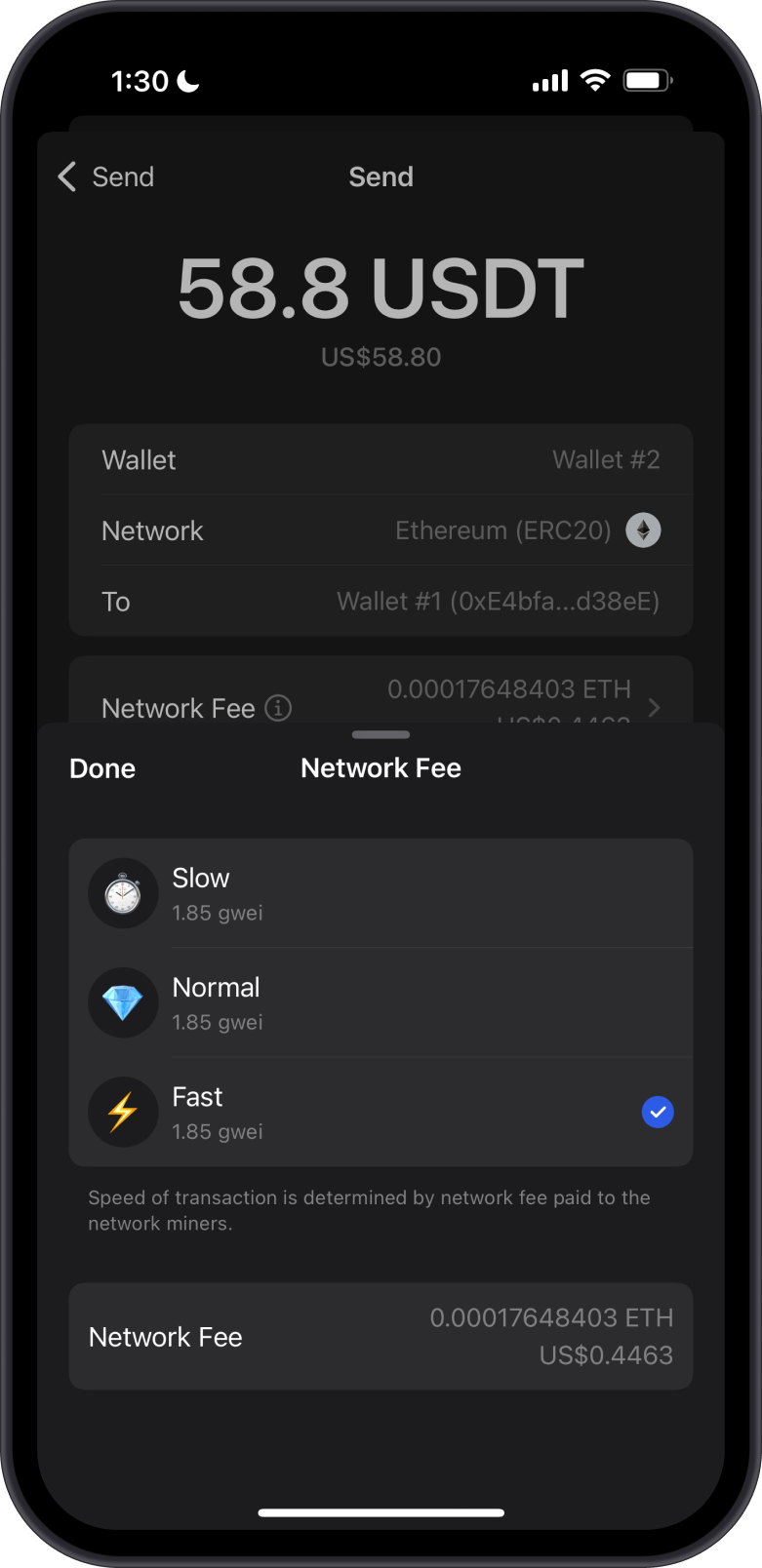
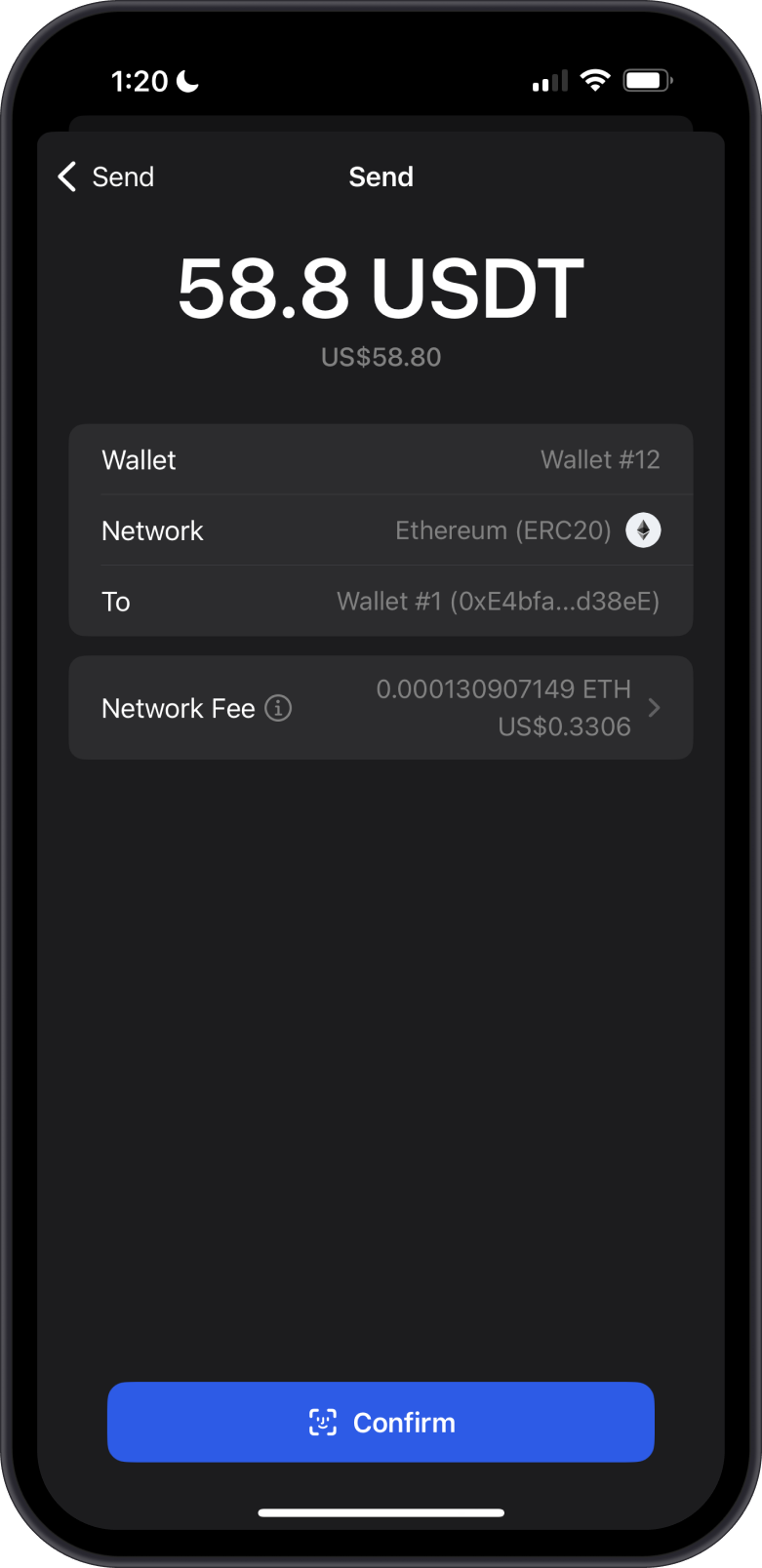
Learn more about Ethereum and network fees.
- Solana (SOL)
Solana uses its own Proof of History (PoH) consensus to achieve high throughput and low transaction costs. Solana's network fees are very low compared to other major blockchains.
SPL token transfers on Solana require a small amount of SOL for network fees.
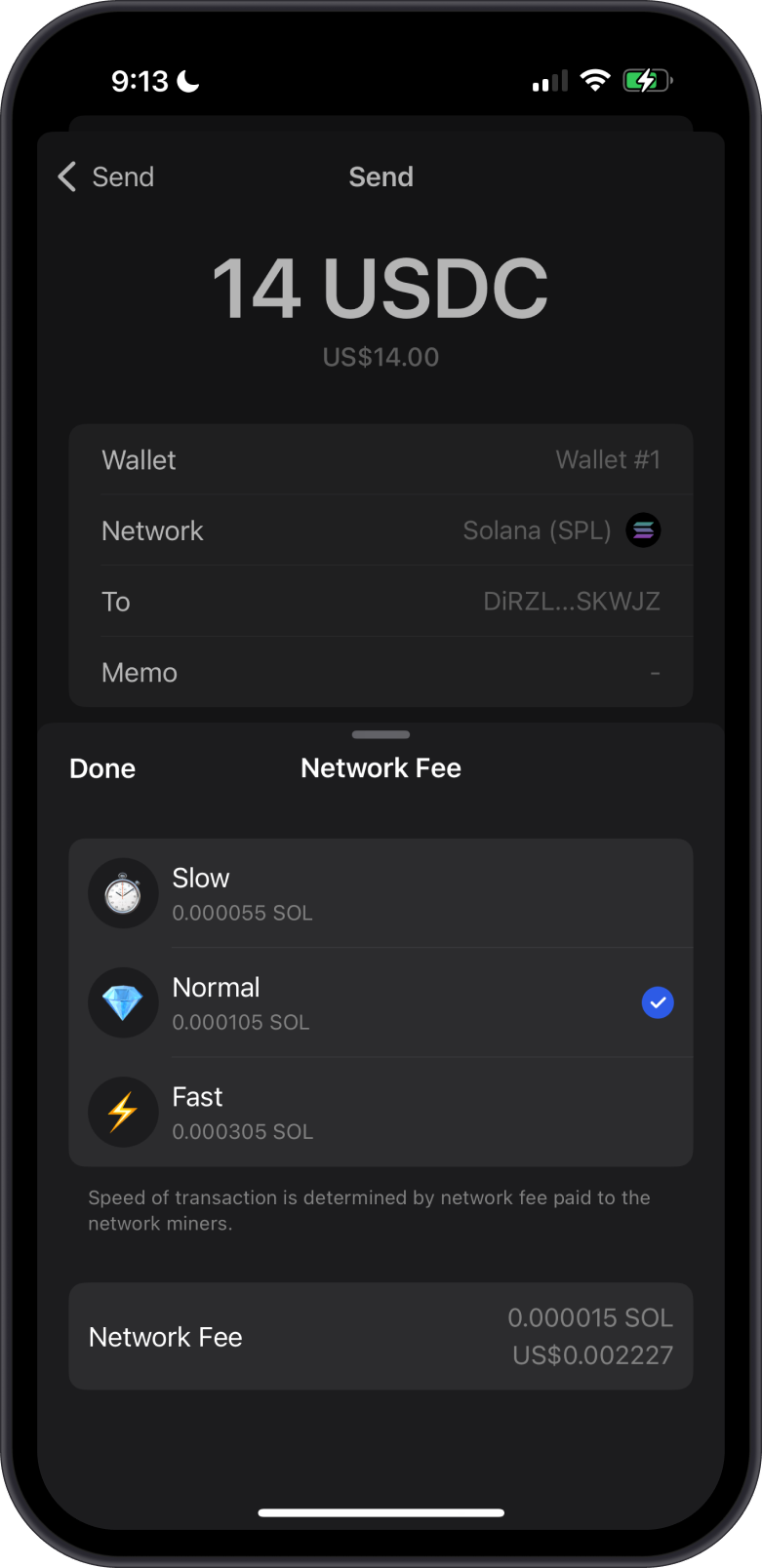
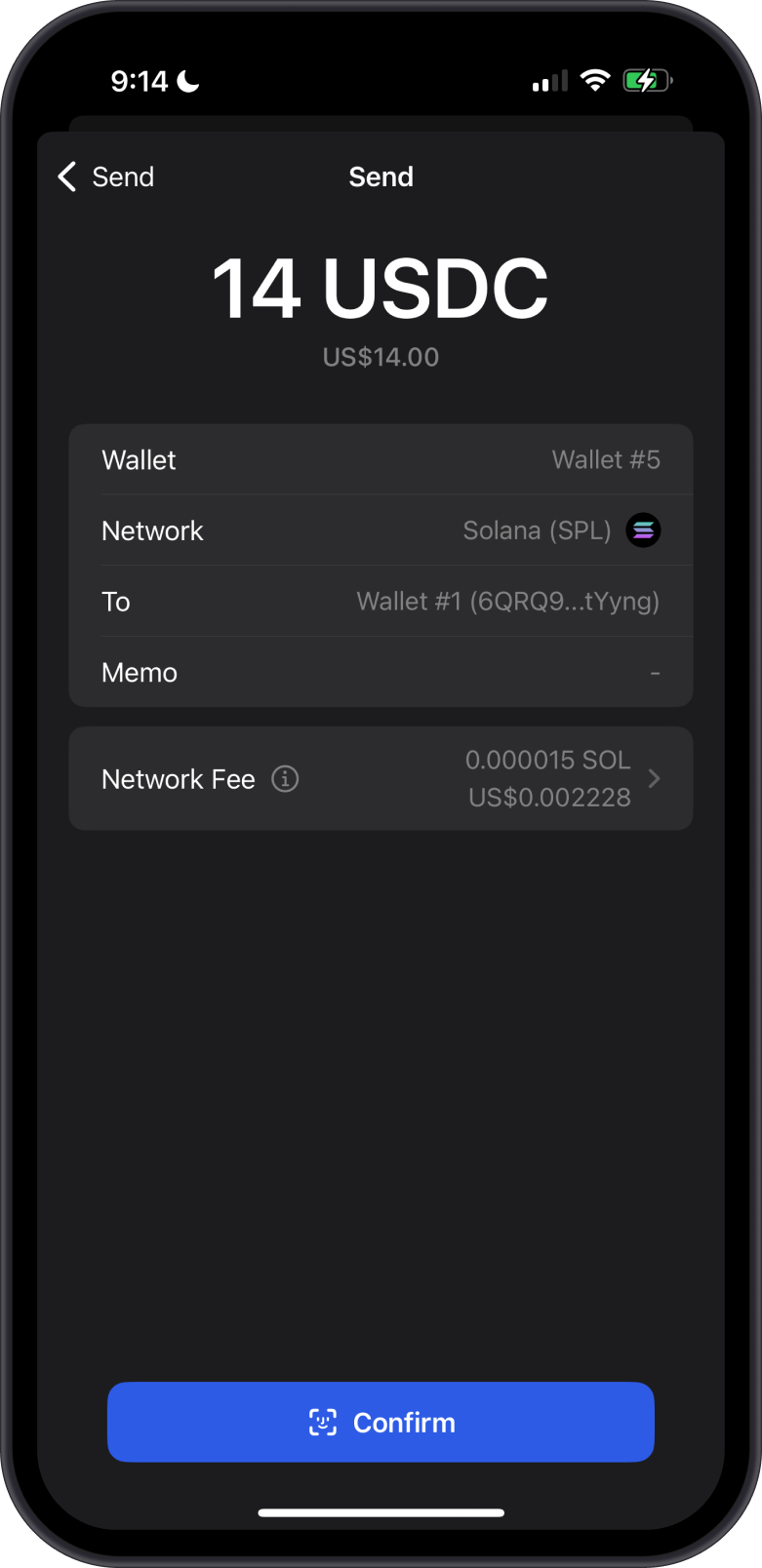
Learn more about Solana and network fees.
- TRON (TRX)
TRON uses TRX to pay network fees for TRX and TRC20 token transactions. If you have USDT-TRC20 but no TRX, you will not be able to send or swap the USDT until the wallet has enough TRX for the fee.
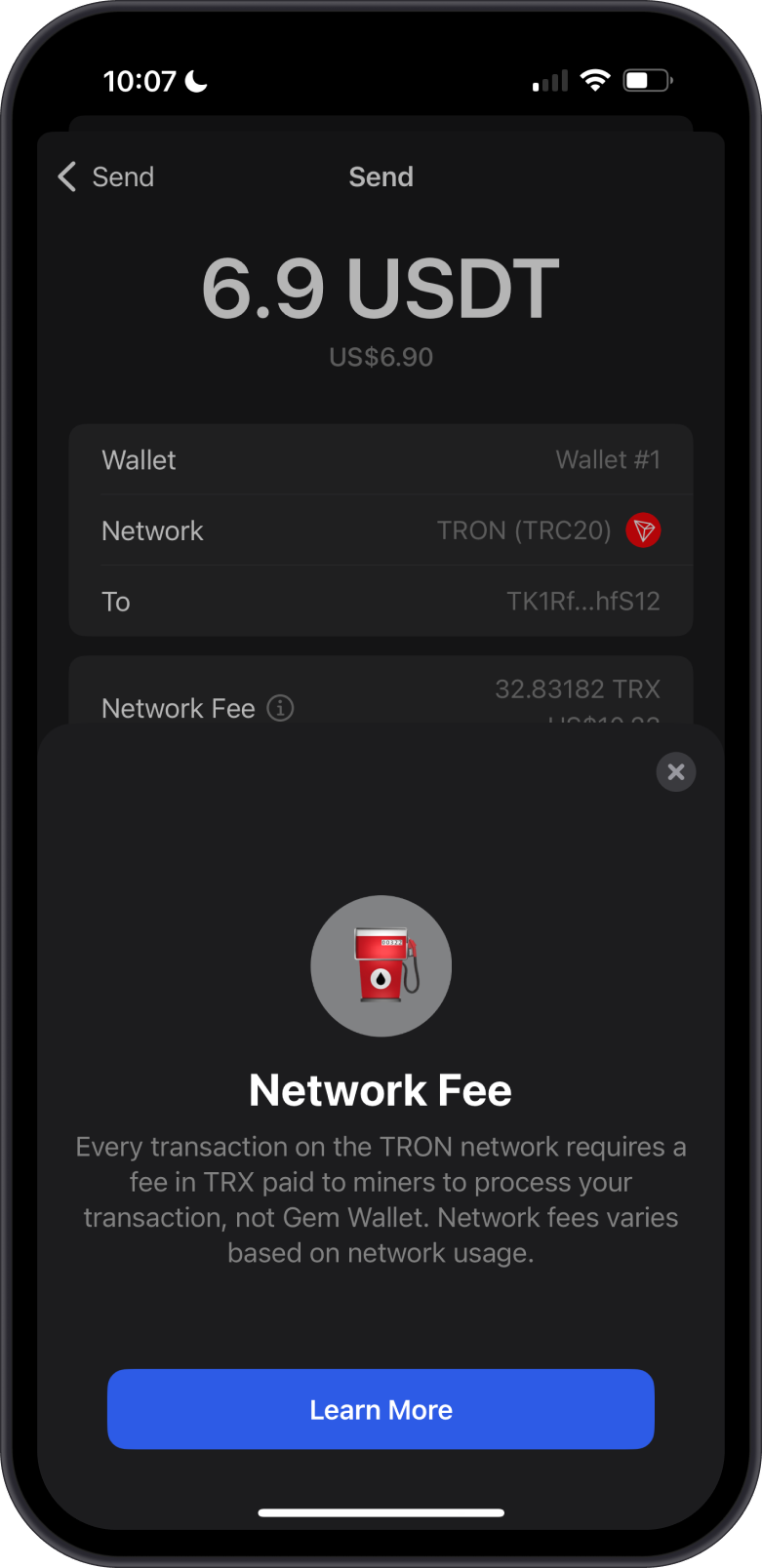
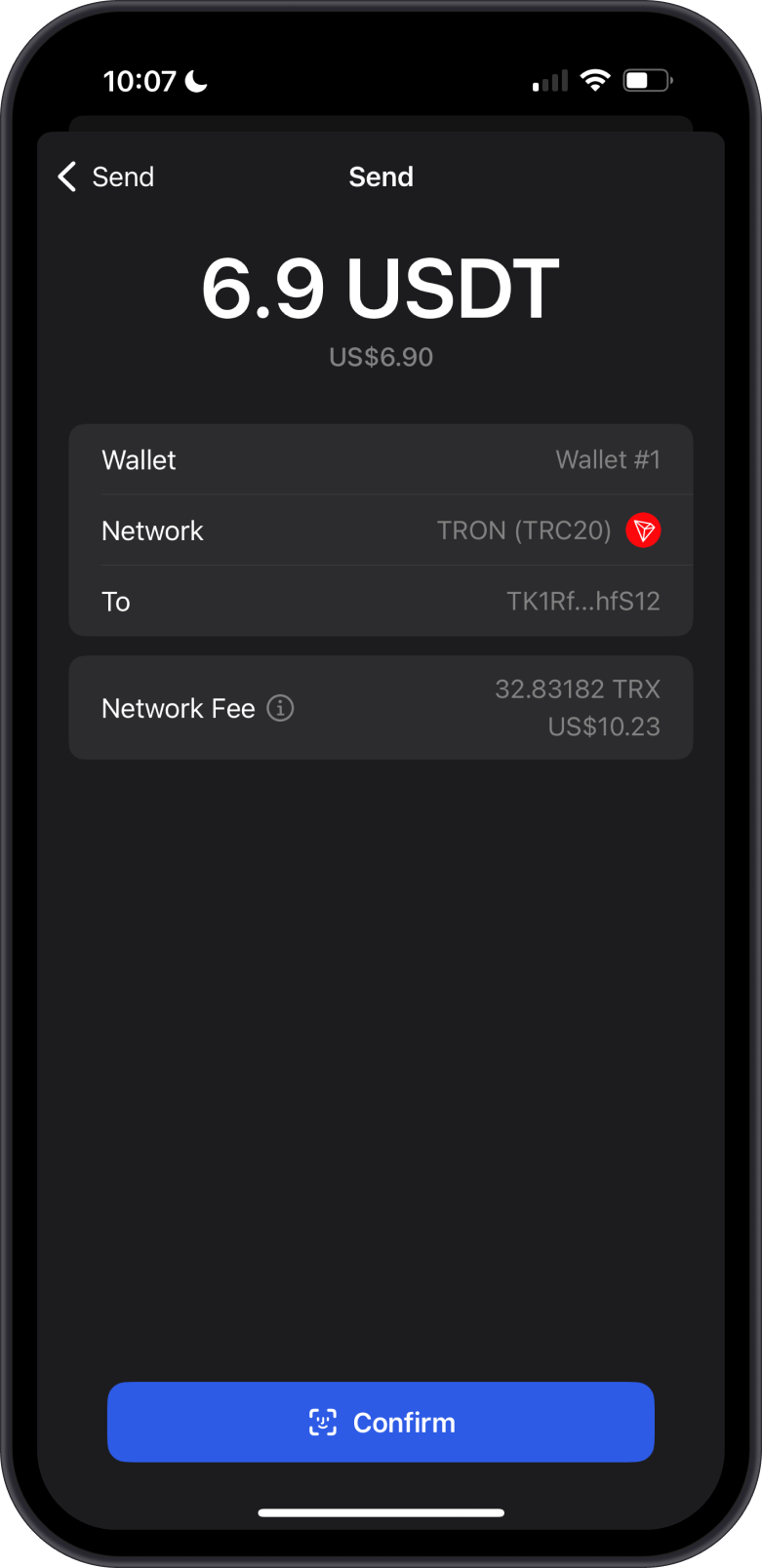
Learn more about TRON and network fees.
- BNB Chain (BNB)
BNB Chain uses BNB to pay network fees. This applies to sending BNB and sending or swapping BEP20 tokens on BNB Chain.
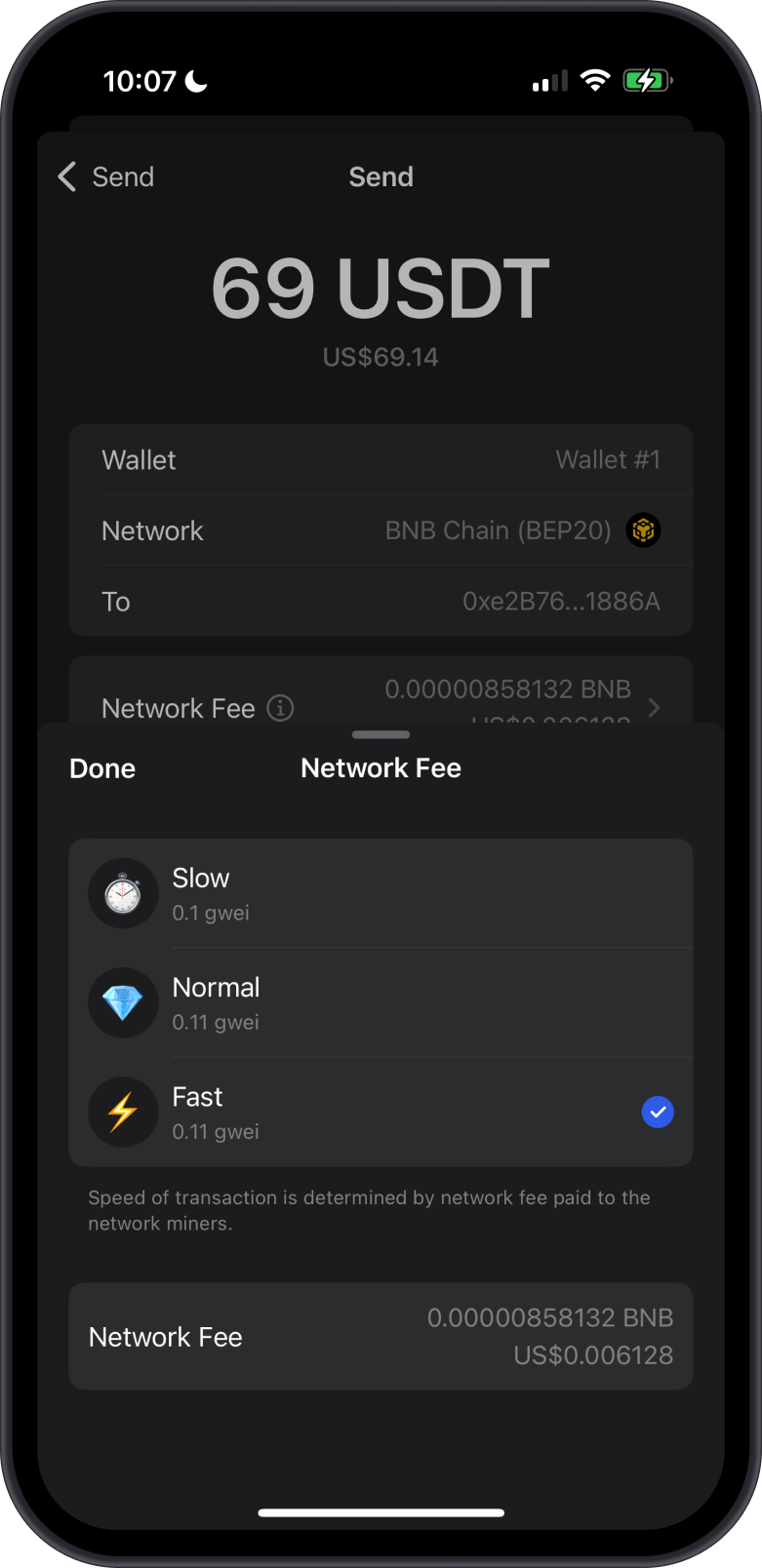
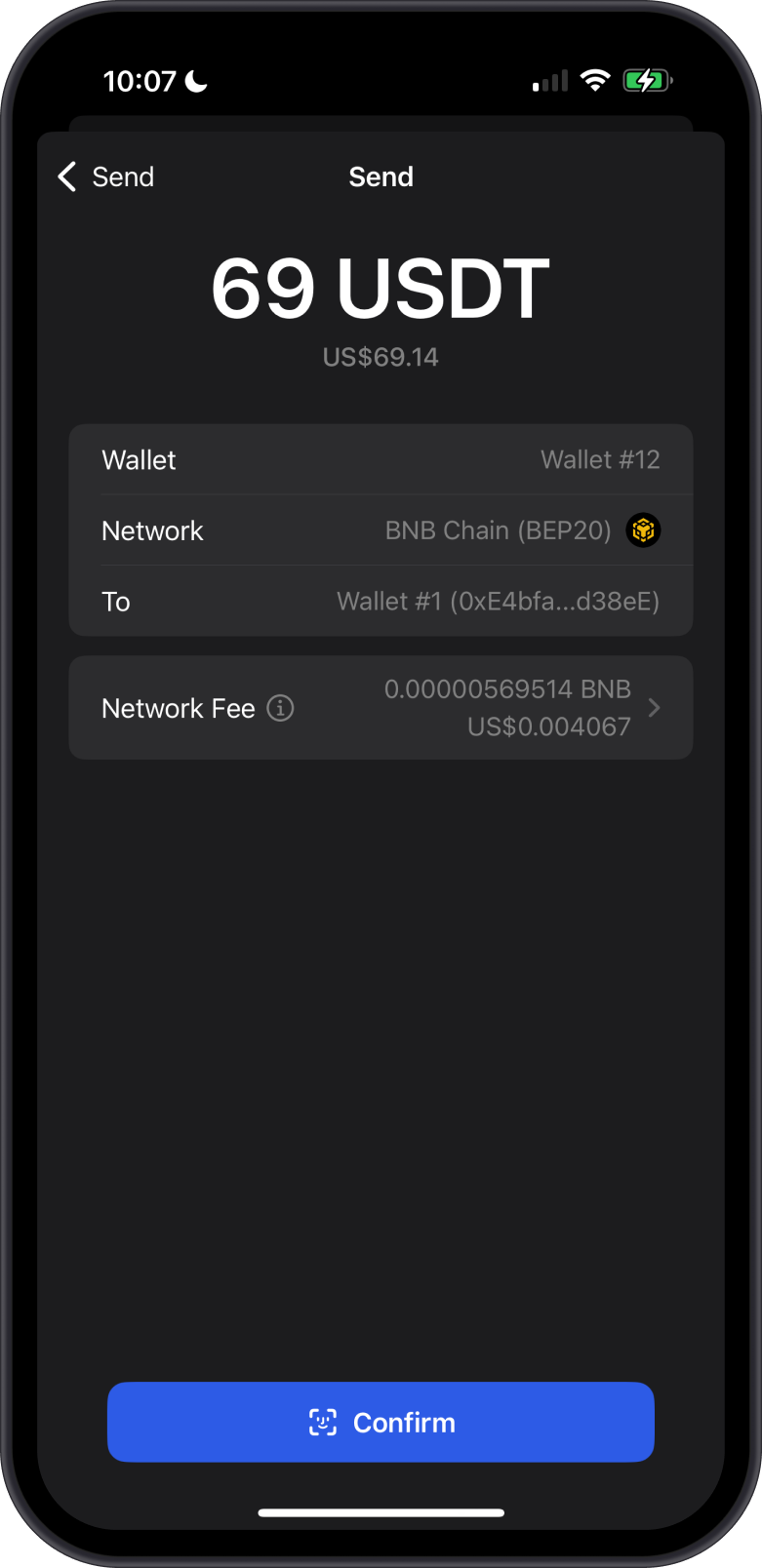
Learn more about BNB Chain and network fees.
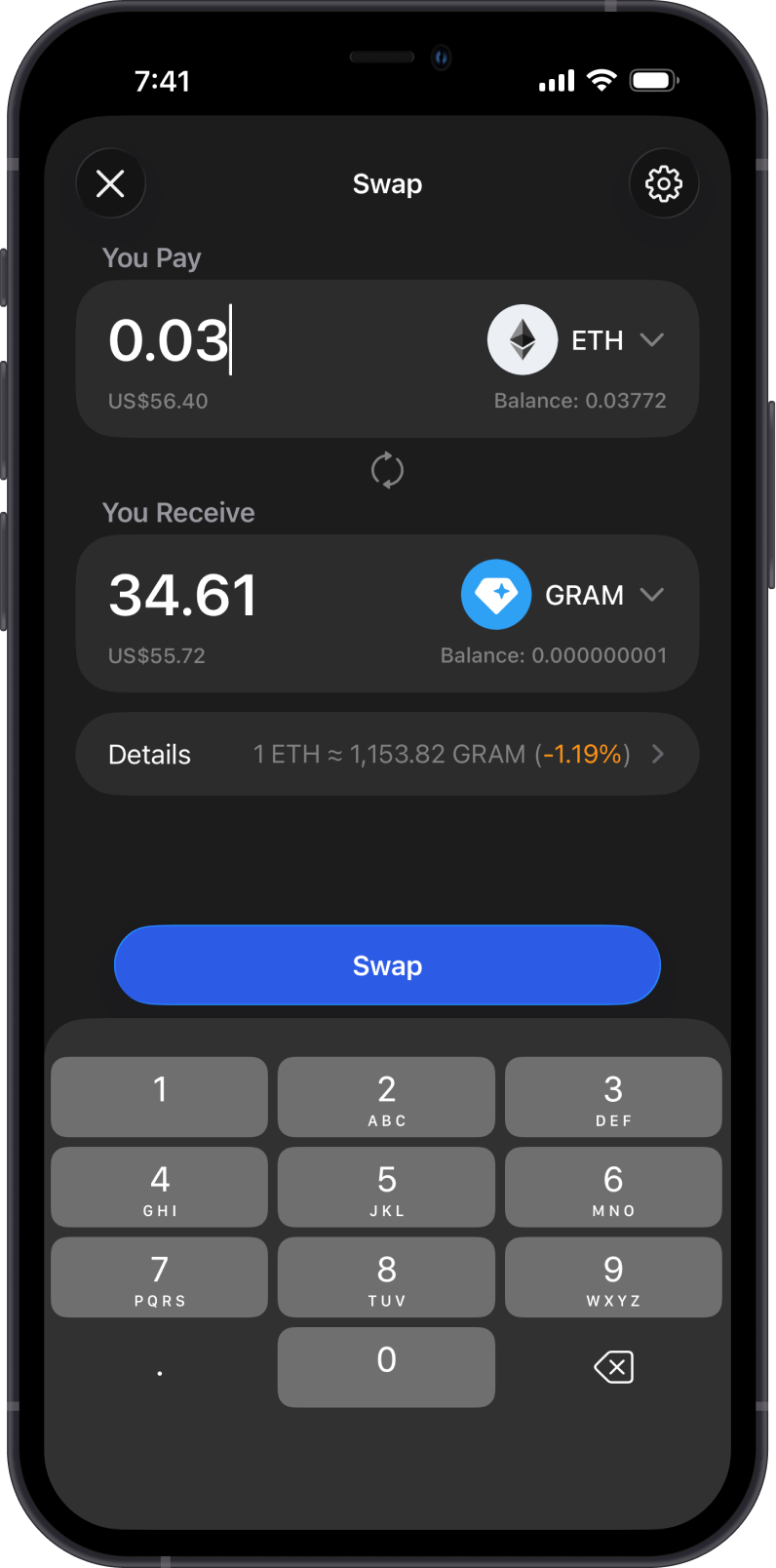
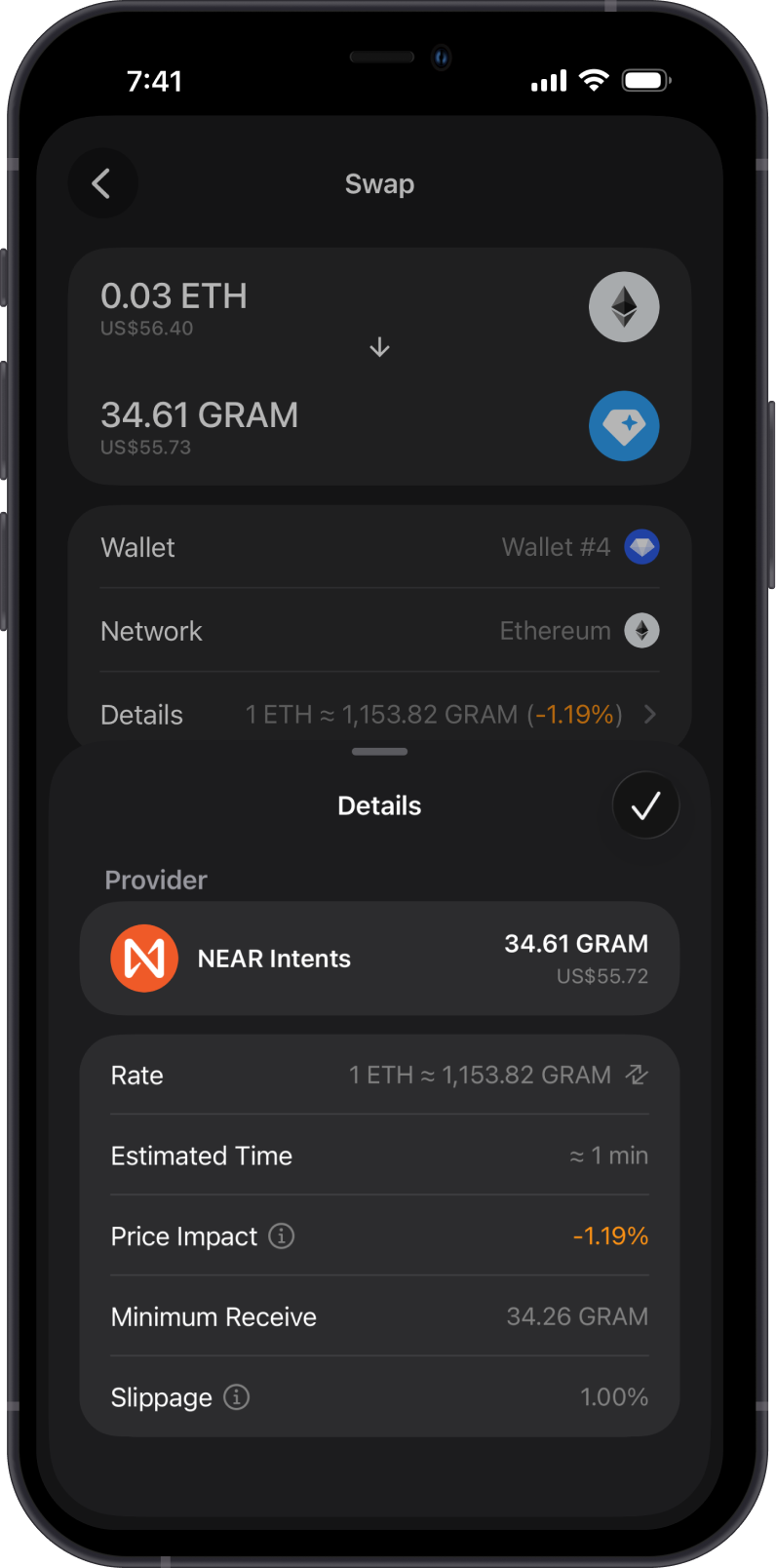
- TON (GRAM)
TON uses GRAM to pay network fees. Sending Jettons, such as USDT on TON, requires enough GRAM in the same wallet to pay for gas.
Learn more about TON and network fees.
More Network Fee Examples
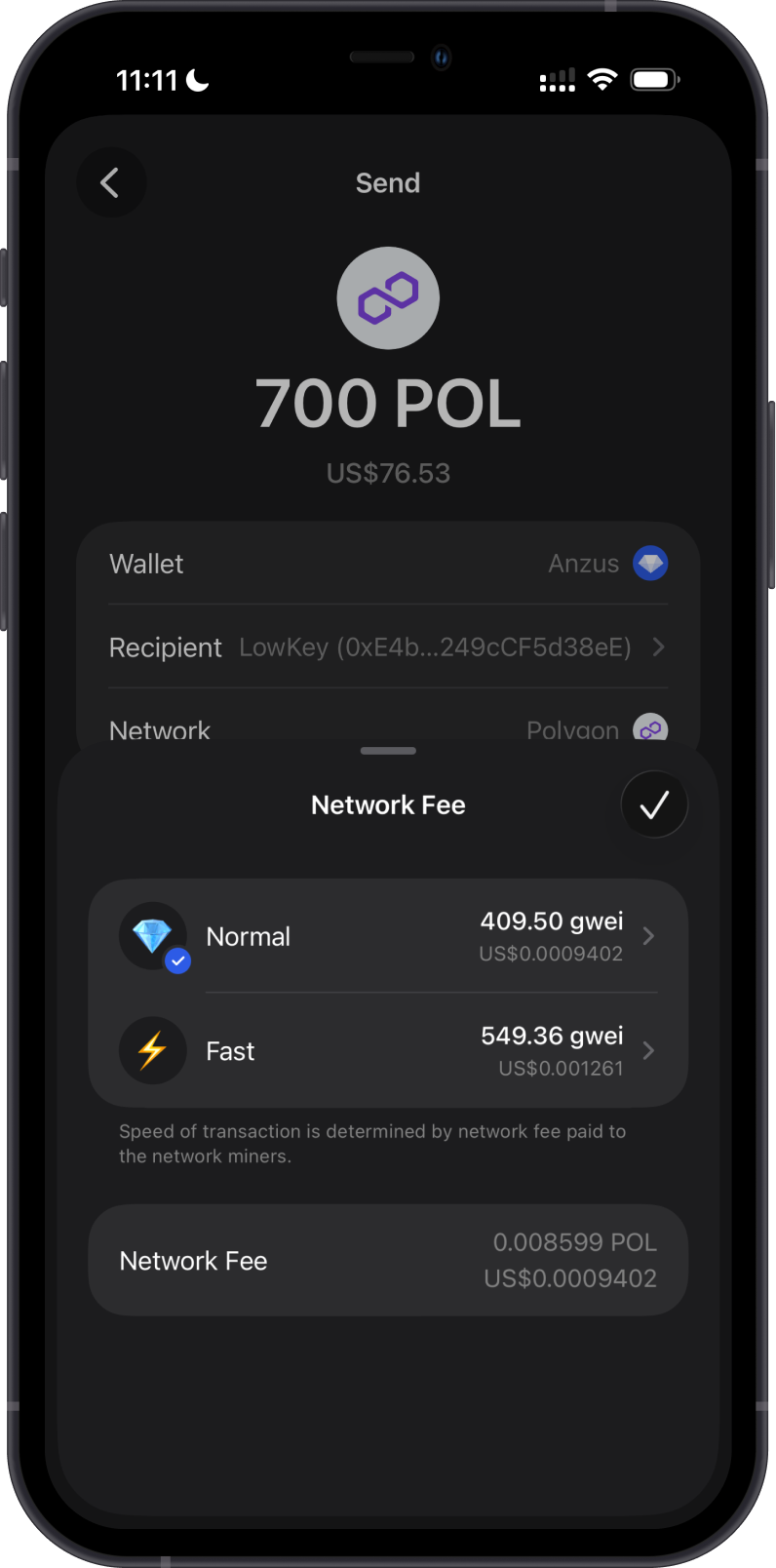
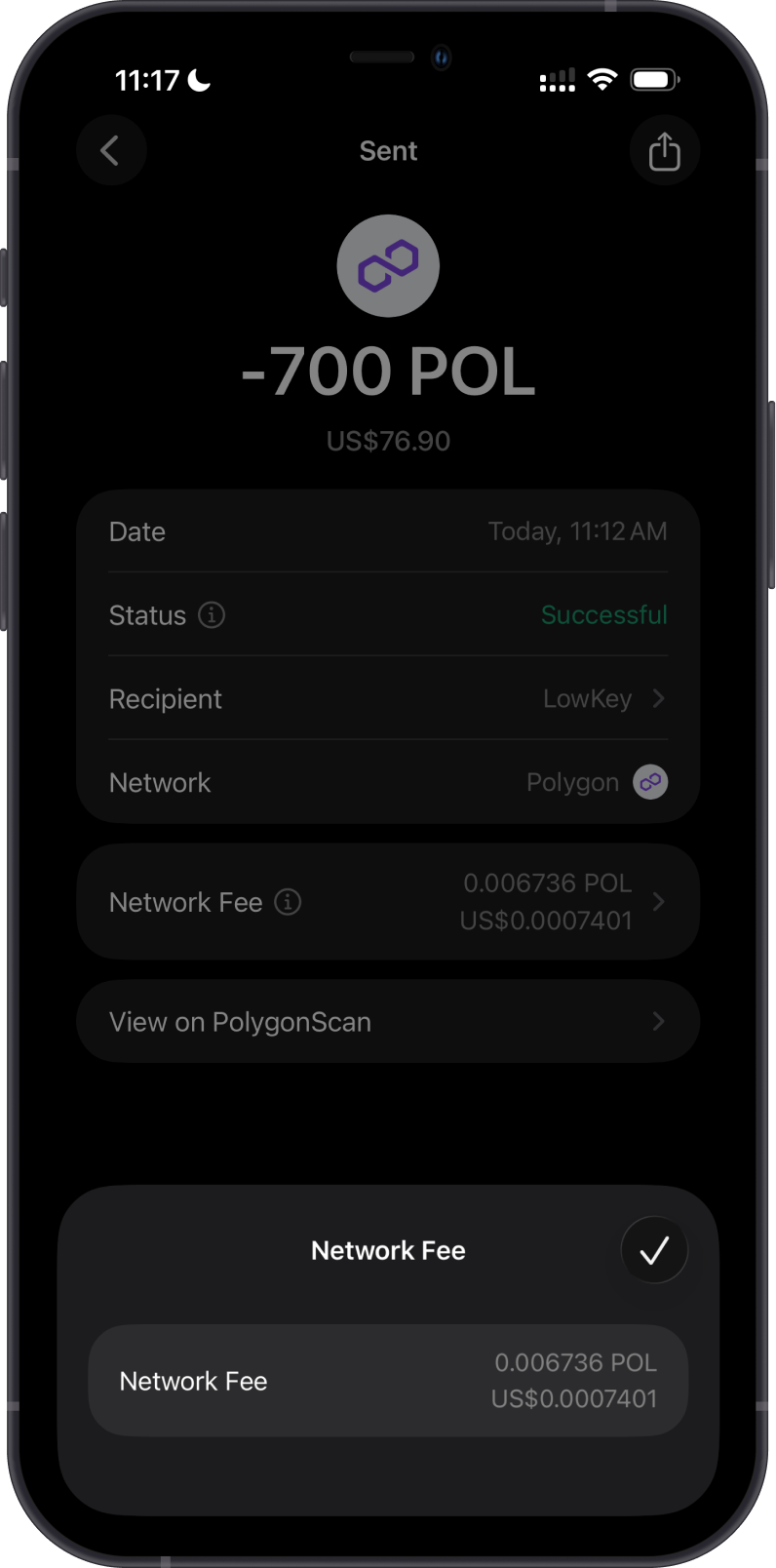
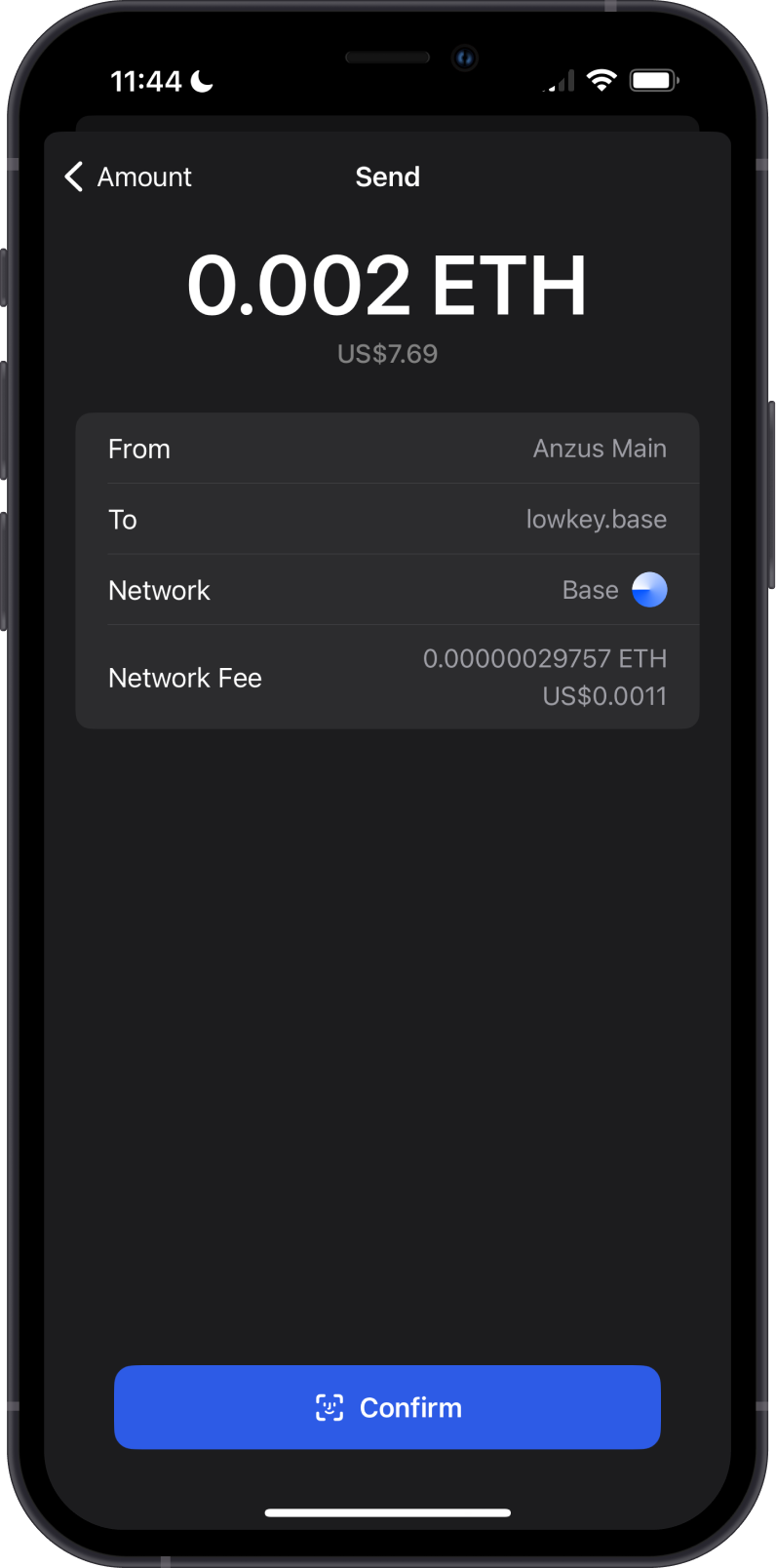
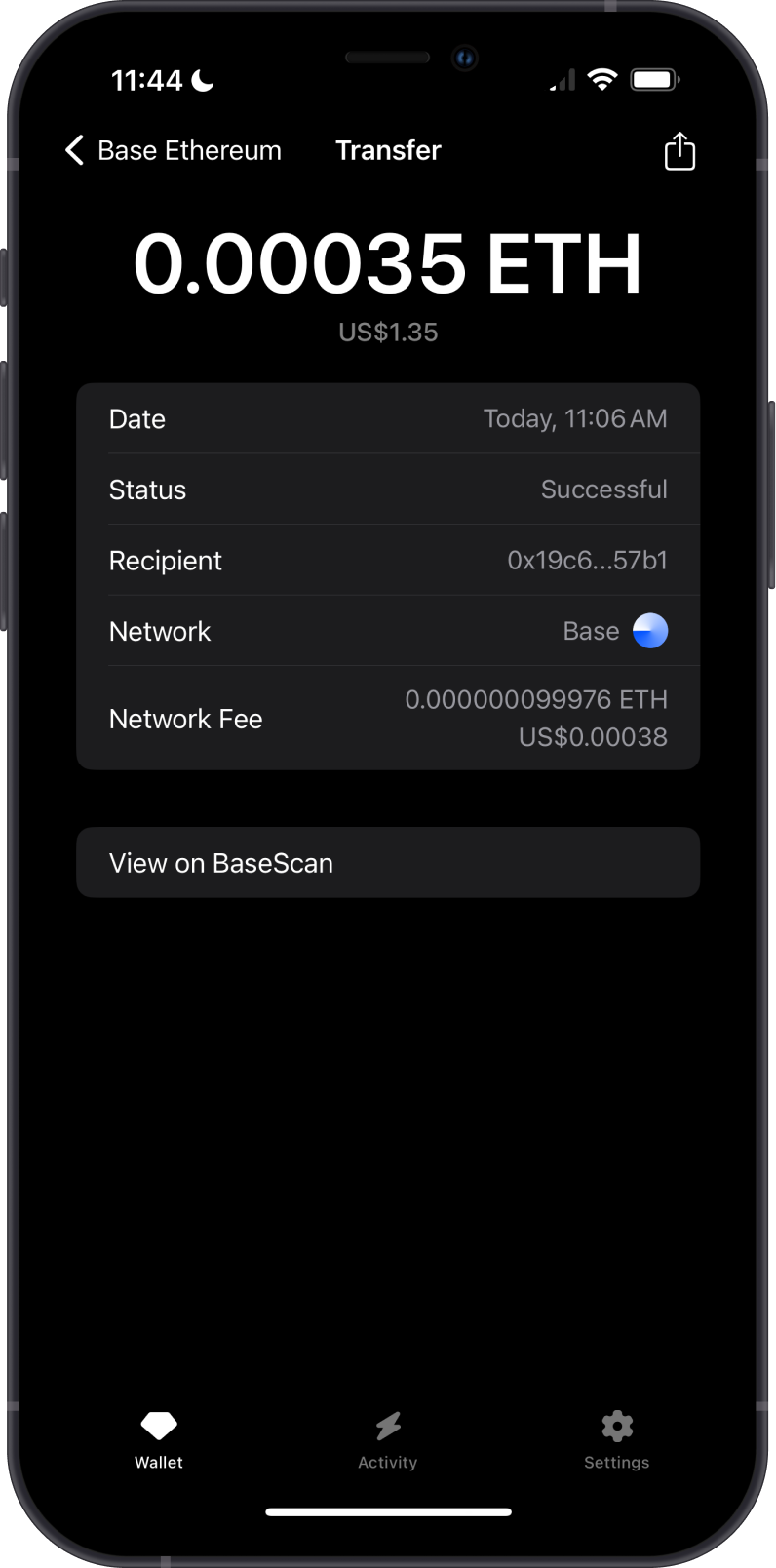
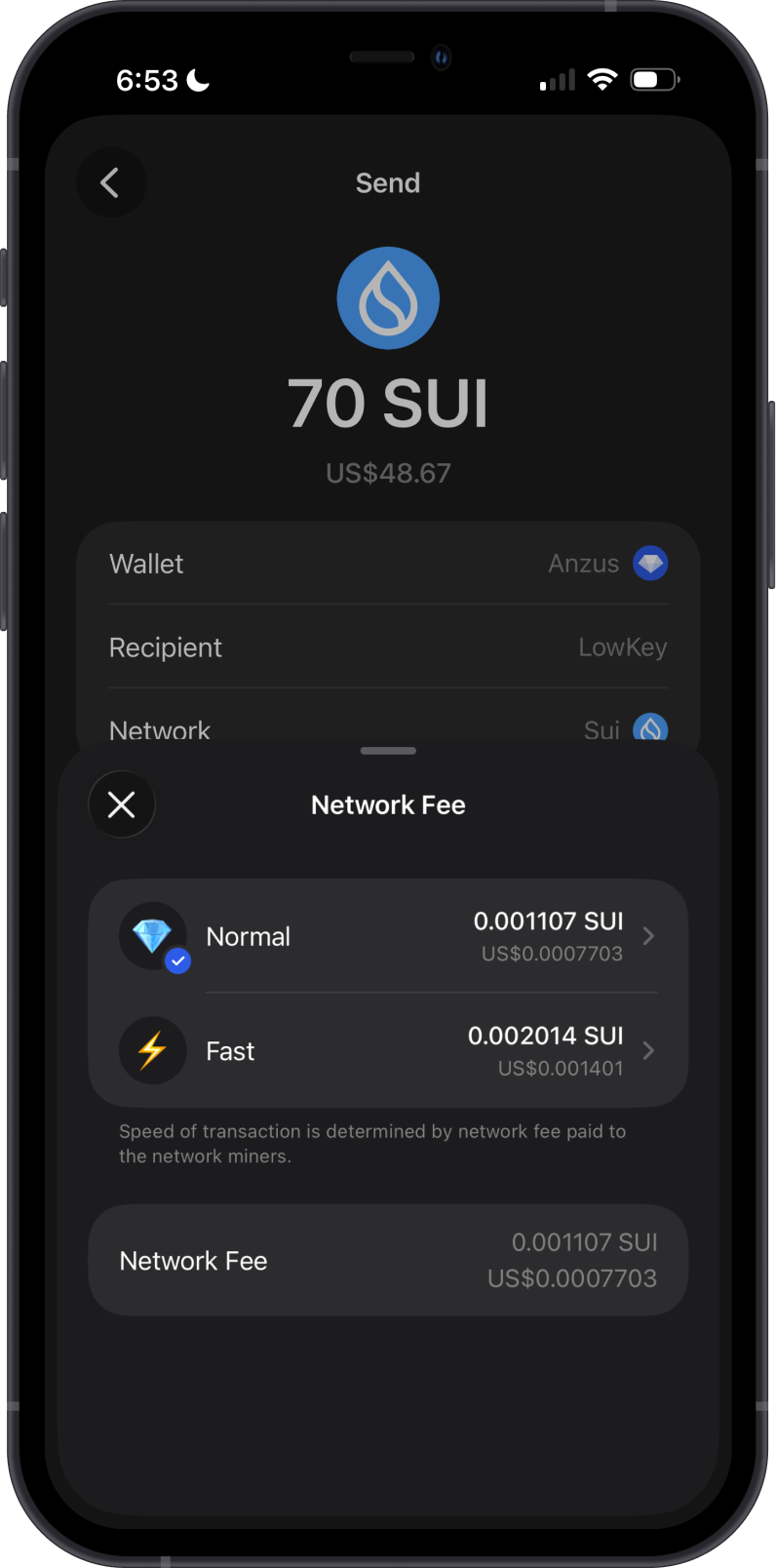
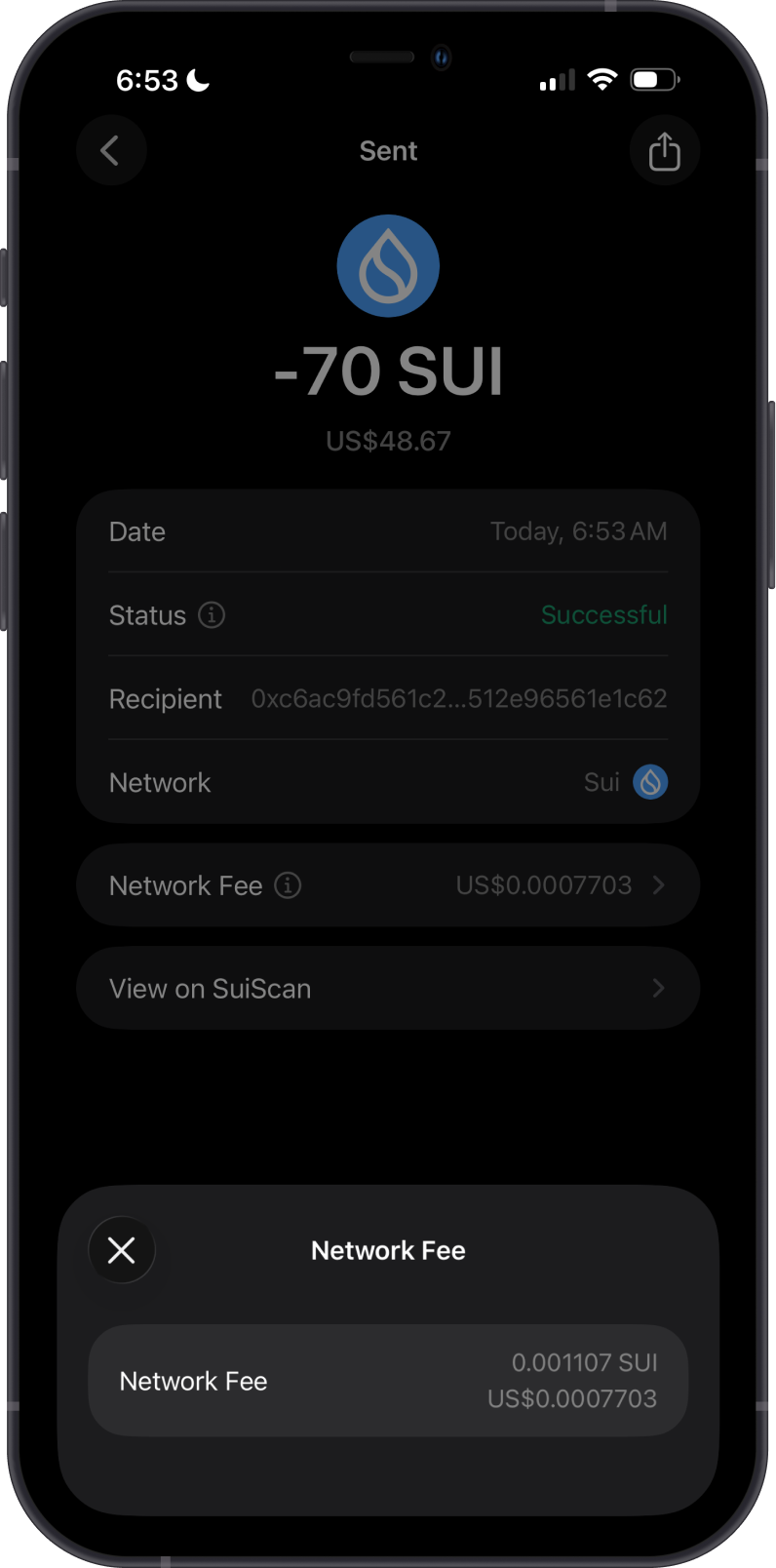
The examples below reuse screenshots from the blockchain FAQs. They show the same pattern: the network fee is paid with the native coin for that specific network.
- Polygon uses Polygon (POL) for network fees when sending POL or tokens on Polygon.
- Base uses Ethereum (ETH) on Base for network fees.
- Sui uses Sui (SUI) for network fees.
- Monad uses Monad (MON) for network fees when sending MON or Monad ERC20 tokens.
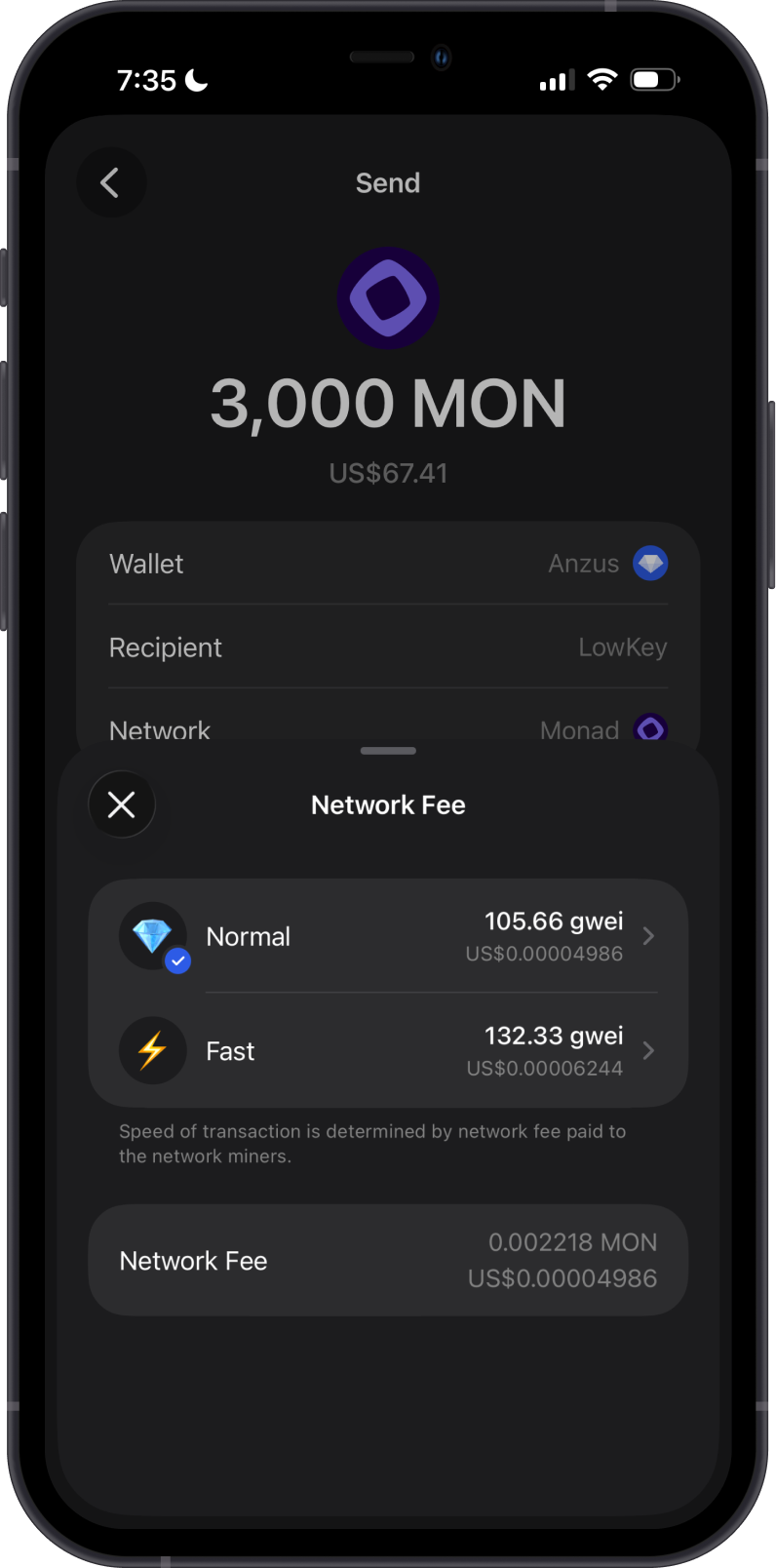
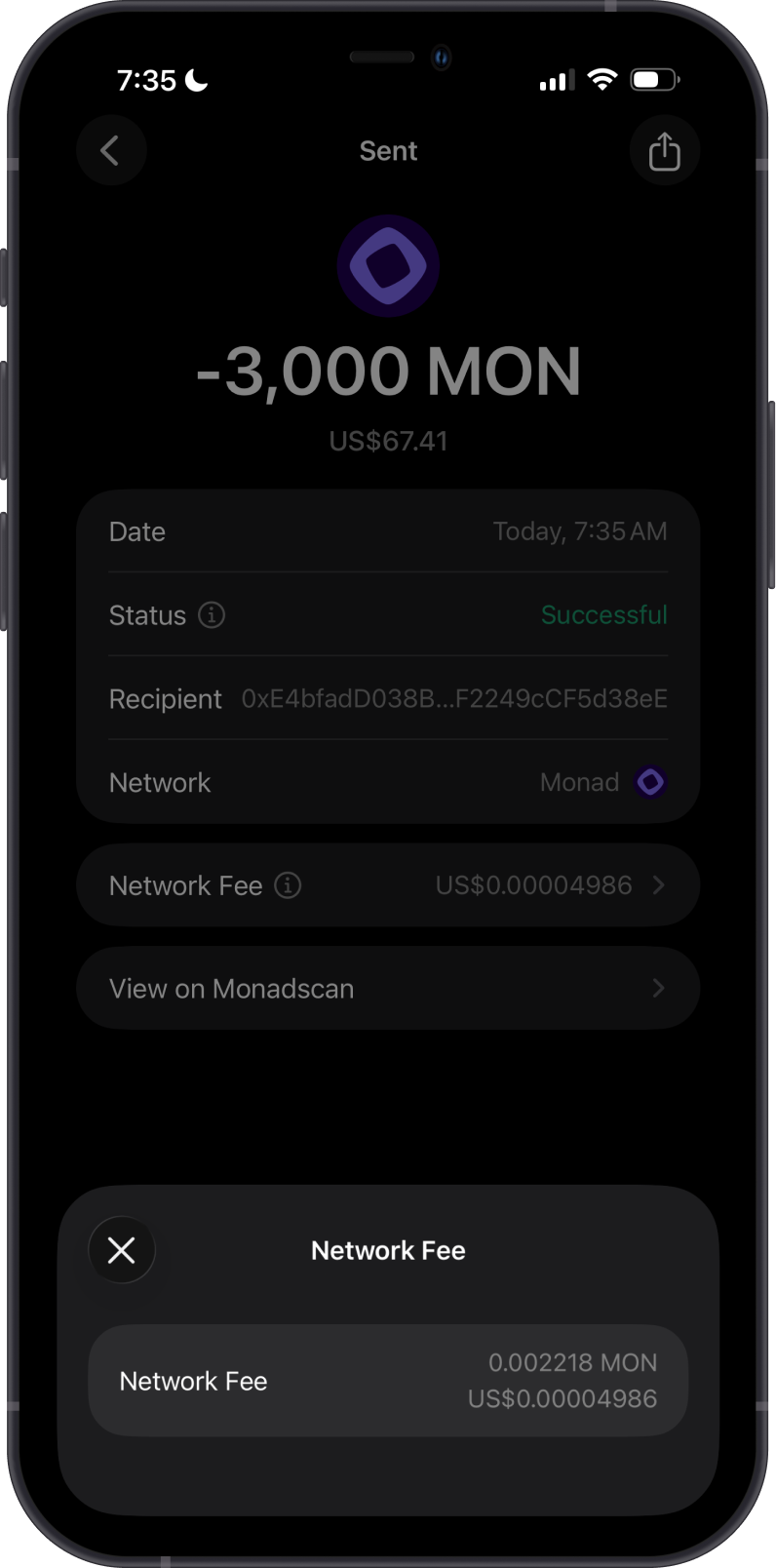
For other networks, check the full supported blockchains list and open the specific blockchain FAQ to learn which native coin is required for fees.
Does Gem Wallet Take Network Fees?
-
Gem Wallet is a non-custodial wallet, not a centralized exchange, enabling anonymous interaction with blockchains.
-
No personal information is collected from users, ensuring privacy.
-
Transactions are submitted directly to the blockchain network, with gas fees paid solely to miners or validators.
-
Gem Wallet holds no user funds and does not retain any portion of the network fees.
-
All fees are determined by the blockchain network (e.g., Ethereum gas fees) and vary based on network congestion.
Why Was a Fee Charged When the Transaction Failed?
If a transaction is included on-chain but its execution fails or reverts, the network can still charge for the validation and computation already performed. The requested transfer or contract action may be rolled back while the processing fee remains.
Follow Why Was I Charged a Network Fee for a Failed Transaction? to compare Gem Wallet with the confirmed explorer receipt and avoid repeating the same failure.